


Published Sep 14, 2026 | 7:00 AM ⚊ Updated Sep 14, 2026 | 7:00 AM

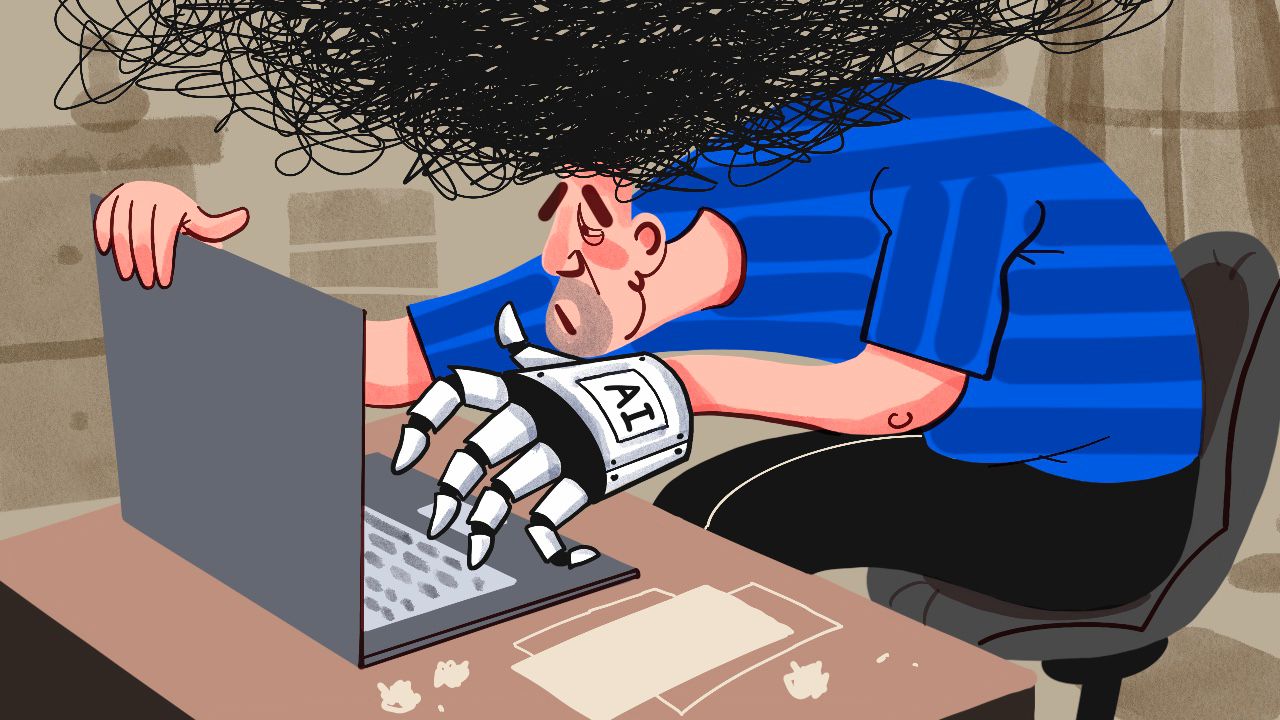
India’s AI talent base is expected to grow from about 6 to 6.5 lakh professionals to more than 12.5 lakh by 2027.

Synopsis: India is a developing country and a huge market, where the demand for goods and services is unlimited, at least for the next 20 years. The reasons include its diversity, wide collection of handmade authentic products, innovative products, strong human resources, availability of factors of production, huge population, etc. Robots cannot completely replace human effort; robots can ease the production process but do not make jobs completely unnecessary.
Globally, views diverge on whether AI creates jobs or kills jobs, but most people feel it kills jobs. While neoclassical economists treat technical progress exogenously, post-Keynesian economists like Kaldor and Solow, among others, demonstrated the role of technological change in economic growth.
Hicks, another famous economist, introduced Hicks’s neutrality, which means the capital-labour ratio remains the same even as production or output rises, implying no loss of jobs. This is indeed a fallacy. Any technological progress may bring a loss of jobs, as it may be labour-saving, meaning it requires less labour relative to capital in the production process.
Later, the concepts of ‘disembodied’ and ‘embodied’ technical progress emerged. Disembodied technical progress means more output could be produced without any change in inputs, ie; it may be some form of organisational reengineering without any new investment. Embodied technical progress, on the other hand, requires actual investment as part of upgrading technology, where technical progress is embodied in the new machines.
AI has the features of both disembodied and embodied technical progress. It is disembodied because existing employees in any business can learn Large Language Models or other machine learning tools without any physical investment by firms. This is about workflow and process optimisation to improve labour productivity and firms’ output.
It becomes embodied when dedicated physical infrastructure such as data centres, embodied AI, and Robots are newly built to scale up production.
In both cases, production or output increases. In the former, output can increase without adding labour or capital; over time, goods can pile up if demand is insufficient. This, in turn, may lead to labour layoffs, at least temporarily. In the latter, additional investment by firms may raise production costs, which may lead to permanent labour layoffs, as new work may be done with the help of AI robots.
The best examples are Chinese hospitals extensively using AI robots for medicine delivery to patients’ rooms, cleaning jobs, the rollout of driverless cars and so on. Thus, from any angle, AI can lead to job loss. It’s time to explore how this could be reversed and why it may not be factually correct in the Indian context.
Also Read: The power of serendipity in learning
India is a developing country and a huge market, where the demand for goods and services is unlimited, at least for the next 20 years. The reasons are its diversity, wide collection of handmade authentic products, innovative products, strong human resources, availability of factors of production, huge population, etc. Robots cannot completely replace human effort; robots can ease the production process but do not make jobs completely unnecessary.
India’s global trade partnerships are getting key focus these days with reduced tariffs, which means more output from automation can be sold quickly at low cost, and producing additional output requires both skilled and unskilled jobs, with more preference for skilled ones. The wide campaign on skilling in India through various government schemes may help, in the long run, create more such employment opportunities. Further, comparative advantage in key sectors, including the supply chain, is indeed a blessing for India and will improve overall exports.
India is a service-led economy, and there was a misnomer that India would be the worst affected by the advent of AI. But this is not factually correct, according to WTO data on “Other Commercial Services” for the past five years. Other Commercial Services (OTS) covers all commercial services traded internationally, excluding transport, travel, and goods-related services. This includes financial services, construction, insurance, pension services, telecommunications, professional consulting, similar business services, and recreational services, including information services and computer services.
The average annual growth of OTS (%) for India for the period 2015-2025 is 10.2%, compared with a higher growth of 15.2% for the period 2020-2025, which shows that AI is positively affecting India’s services sector. AI has become increasingly influential in recent years. The same statistics for the World are 6.3% and 12.8%, and for China are 8.8% and 12.7% for the period 2015-2025 and 2020-2025, respectively.
Also Read: Why disability is shaping India’s AI future
The Government of India launched the India AI Mission in March 2024 with an allocation of ₹10,371.92 crore, and it has made significant progress to date. The vision is “Making AI in India and Making AI work for India”. The programme includes IndiaAI Compute Pillar, IndiaAI Application Development Initiative, AIKosh (Dataset Platform), IndiaAI Foundation Models, IndiaAI Future Skills, IndiaAI Startup Financing and Safe and Trusted AI.
NASSCOM’s 2024 report highlights India’s AI talent base, expected to grow from about 6 to 6.5 lakh professionals to more than 12.5 lakh by 2027. This will largely solve the problem of skilling the labour force. The Centres of Excellence across various themes are commendable. BharatGen AI, our first government-funded, homegrown multimodal large language model supporting 22 Indian languages and tailored to India, strengthens our position.
India is leading the tech world with cost-effective software and more than 2,000 Global Capability Centres that manage AI agendas for their parent companies. The ‘digital ecosystem’ advantage of India across various sectors like UPI adds to its advantage. Thus, we have a significant advantage in the AI-led job growth story.
(Surjith Karthikeyan serves as Director, Ministry of Finance, Government of India. Niranjan R is a Computer Science Student. Views are personal. Edited by Majnu Babu).



