

Published May 22, 2026 | 7:00 AM ⚊ Updated May 22, 2026 | 7:00 AM

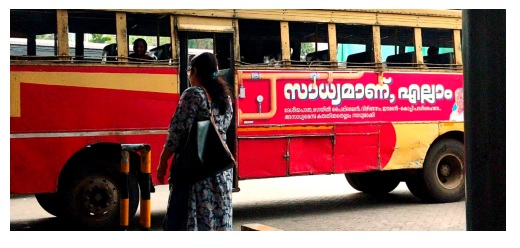
KSRTC bus with government ad ahead of elections.

Synopsis: Kerala’s new UDF government plans to implement free bus travel for women from 15 June under the Indira Guarantee programme. While promising mobility, savings, and empowerment, the scheme faces financial hurdles as KSRTC struggles with debt and losses. Subsidy costs could exceed ₹80 crore monthly, raising concerns for private operators and sustainability despite strong social benefits.
After the second Cabinet meeting held on 20 May, Kerala Chief Minister VD Satheesan reassured that from 15 June, women in Kerala will be able to travel free in KSRTC buses, marking one of the biggest welfare promises of the new UDF government.
The promise was made in the UDF manifesto before the Assembly elections and is part of the Indira Guarantee programme in Kerala.
Inspired by models already functioning in states like Tamil Nadu and Karnataka, the scheme aims to reduce travel expenses for women and improve mobility, employment access and economic independence.
However, this major welfare promise of the newly elected UDF government comes at a time when Kerala State Road Transport Corporation (KSRTC) itself is struggling to remain financially stable. Salary delays, pension arrears, mounting debt and operational losses have haunted the corporation for years.
That is why the debate surrounding free travel in Kerala has become far more intense, even though neighboring states have already implemented and successfully operated similar schemes.
For the new Transport Minister CP John, the challenge is about ensuring that a welfare scheme meant to empower women does not deepen the crisis of the state transport system itself.
Also Read: A minister for AI in Satheesan’s Cabinet: The new Kerala ministers and their portfolios
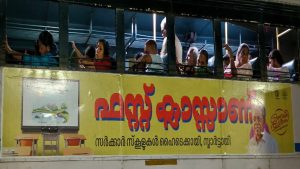
A local KSRTC bus service in Aluva
Speaking to South First, a KSRTC official said the free travel scheme for women is unlikely to be implemented as a blanket policy.
Initially, the benefit is expected to be limited to ordinary, limited-stop, city circular and fast passenger KSRTC buses, while premium services such as Super-Fast AC, Volvo and sleeper buses may be excluded.
The official also clarified that a final decision is yet to be taken and an official notification is expected soon.
Meanwhile, KSRTC introduced a ”gender ticketing” system on 9 May, 2026, to record the number of women, men and children travelling daily. Conductors mentioned the passenger category in the Electronic Ticketing Machines (ETMs) and it is printed on the ticket. It was a preparatory step.
According to KSRTC officials:
There is still uncertainty over whether there will be travel distance limits, if women of all age groups and transgenders will be included and whether the scheme will be limited to Kerala residents through smart cards or ID verification.
Officials are also considering introducing digital zero-fare tickets to accurately track passenger numbers and subsidy payments.
Also Read: UDF government in Kerala de-notifies LDF’s ambitious SilverLine Project
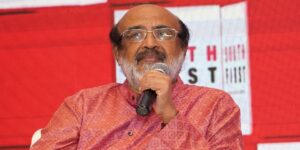
Former Finance Minister Dr. T.M Thomas Isaac
Former Finance Minister and economist TM Thomas Isaac told South First that the actual monthly cost of the proposed free bus travel scheme for women could eventually rise to around ₹75–82 crore, as many women commuters from private buses may shift to KSRTC services once the scheme begins.
According to him, the government may ultimately have to provide nearly ₹175–182 crore every month to KSRTC, including the corporation’s existing salary and pension support.
He pointed out that data from other states show passenger numbers often increase sharply after free public transport schemes are introduced.
”Karnataka reportedly spends around ₹4,000–₹5,000 crore annually on its scheme, while Telangana spends nearly ₹3,000–₹3,500 crore every year. Tamil Nadu’s annual expenditure is estimated at around ₹1,200–₹1,600 crore, Punjab spends nearly ₹50 crore per month, and Andhra Pradesh spends around ₹162–243 crore monthly.” he told.
Thomas Isaac clarified that he is not opposing the scheme but said he is keen to understand how the newly elected UDF government plans to implement it without weakening the state’s public transport system.
”Karnataka and Tamil Nadu have a better financial position than Kerala. Free public transport can make cities more livable, but in India it comes with several challenges.” he said.
Also Read: Ground Report: Do women in Kerala need free travel in KSRTC buses?
Speaking to South First, Aparna KM, a call centre employee in Kochi, said ”I came from Muvattupuzha, where there is no access to metro or city bus services. So, I need to spend ₹55–70 on ordinary services and ₹85–95 on fast passenger buses daily. I voted for Congress candidate after hearing about the guarantee. So, I expect it to be implemented soon without any conditions, because there were no conditions when the scheme was announced.” she said.
For many like Aparna, the social impact of free travel could be enormous. Especially for domestic workers, nurses, students, daily wage labourers, elderly passengers and women working in the unorganised sector, transport costs form a major part of monthly household expenditure.
A ground report by South First, conducted when the scheme was announced, showed that the scheme could also improve access to jobs and education.
Women may become more willing to travel longer distances for employment opportunities. Increased female presence in buses and public spaces could also improve mobility and safety.
Also Read: Kerala’s search for an elder-care model from Japan runs into fiscal and social realities
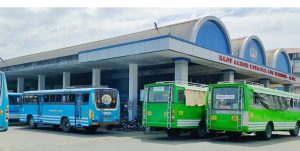
Aluva private bus stand
Thomas Isaac warned that KSRTC is already financially dependent on government support for salaries and pensions and that any delay in free-travel reimbursements could seriously affect operations, including fuel purchases and service maintenance.
Meanwhile, another major concern comes from Kerala’s struggling private bus sector.
Private bus owners argue that more than half of their passengers are women. If free travel becomes available in KSRTC buses, a large section of passengers may shift away from private operators.
They claim that around 25,500 private buses have stopped operating over the past 15 years, leading to nearly 35,000 job losses.
Operators also say that nearly 60 percent of their daily income already goes toward diesel expenses. A major fall in passenger revenue, they argue, could force more buses off the roads.
T Gopinathan, a private bus owner and chief of the All-Kerala Private Bus Operators Organisation, told South First that, ”If free travel is implemented, public transportation in Kerala will collapse. Most students and women depend on private buses, not KSRTC. Around 80 percent of public transport is handled by private buses, while KSRTC accommodates only 20 percent. The government decides our ticket rates, employee wages and even service timings and routes. So how can they ignore us?” he asked.

Transport Minister CP John.
Policy experts suggest that public transport is never meant for profit-making anywhere in the world. Its purpose is to serve the public.
The major discussion among women circles is that if women in neighbouring states can enjoy free travel benefits, why can’t women in Kerala enjoy the same? Like others, women in Kerala also pay taxes and they should not be forced to bear the financial burden of either the government or the corporation.
For many women, this is not just about saving money. It is about freedom, dignity and greater access to public life. But welfare schemes can succeed only when they are backed by sustainable financial planning.
Kerala now stands at a difficult crossroads.
If implemented efficiently, the scheme could become one of the most transformative public transport reforms in the state’s history. But if subsidy payments are delayed, passenger numbers overwhelm or KSRTC’s losses deepen further, the same project could trigger a larger transport crisis.
(Edited by Amit Vasudev)



