
Published Jul 25, 2026 | 11:52 AM ⚊ Updated Jul 27, 2026 | 3:13 PM

Certain regional parties have chosen to remain silent over the Delhi Police's crackdown on students. It could prove costly

Synopsis: Some regional parties and smaller outfits have chosen to stay silent about the Delhi Police’s crackdown on students. They could have their reasons, two of which are outlined below, but such silence can prove costly.
Why have some political parties stayed largely quiet about the heavy-handed police response to student demonstrators at Jantar Mantar? Is it wariness of the Modi-Shah power centre, or a calculated political strategy? That question sits at the heart of the current debate.
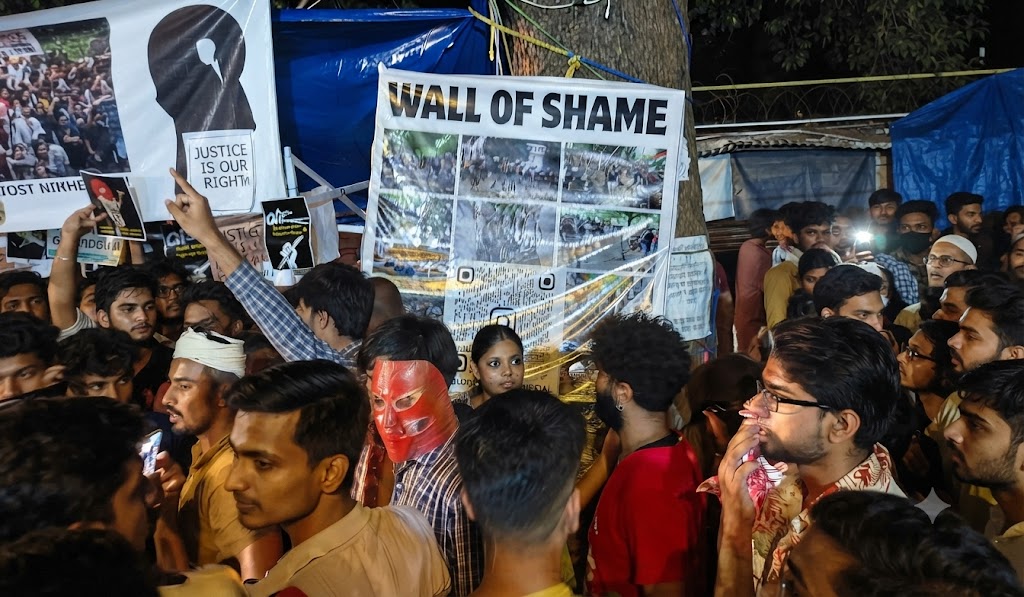
The flashpoint came on July 20 when the student-led demonstrations at Delhi’s Jantar Mantar, organised largely under the Cockroach Janta Party (CJP) banner over alleged irregularities in examinations including the NEET paper leak, attempted a “Chalo Sansad” march towards Parliament on the opening day of the monsoon session. The Delhi Police and supporting forces used baton charges and tear gas to stop the students from advancing past barricades.
Videos and eyewitness accounts went viral, showing injured students, claims of heavy-handed action including against women and those not at the front, and allegations of plainclothes personnel using harsh measures. One undercover cop (identified in reports as Vishal Tomar) was caught on camera walking around with a baton fitted with metal nails. Police reported injuries to their own personnel as well—over a hundred in some accounts—along with stone-pelting by the protesters and attempts to breach security. Both sides suffered. Hospitals treated dozens, with several students being admitted with fractures and severe bruising. One student ended up in the ICU. The protest site was later cleared and then reclaimed; the agitation continued and spread.
Claims of police excess have drawn sharp criticism from several opposition figures. Leaders from the Congress, AAP, Samajwadi Party, Trinamool Congress and others condemned the use of force, questioned the need for such measures against largely student demonstrators, and linked it to the larger demand for accountability over exam failures and the Education Minister’s position. Rahul Gandhi and others publicly highlighted the injuries; some opposition MPs faced detention while trying to show solidarity. Courts have been approached: the Delhi High Court directed preservation of CCTV footage and sought responses on claims of disproportionate force; the Supreme Court has also been moved on related petitions. Bar associations have called for impartial inquiry.
Yet the muted response or limited commentary from certain political parties remains striking. Not every opposition voice has been equally loud or sustained on the specific issue of police conduct. Some regional parties and smaller outfits have stayed quieter, focusing more on the original exam-leak grievances or other political battles. Why?
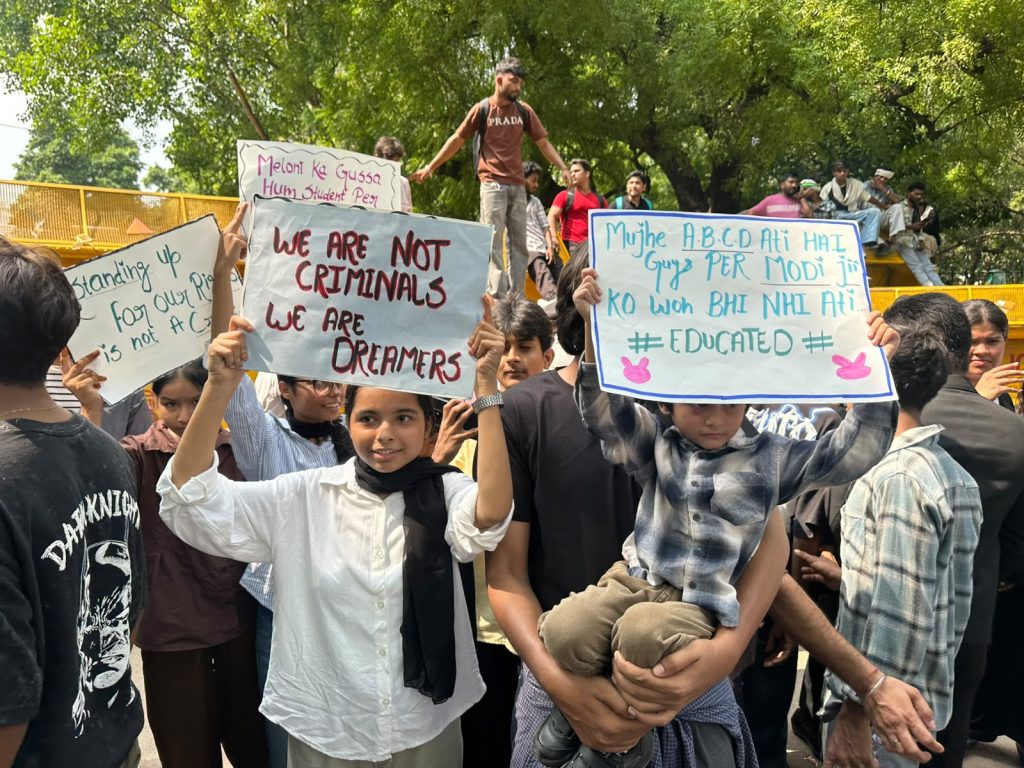
The CJP said it will continue the agitation seeking Pradhan’s resignation. (Likhitha Nair)
One explanation offered by critics is wariness of the Modi-Shah power centre. Delhi Police reports to the central government. Home Minister Amit Shah oversees internal security. The ruling BJP has shown a readiness to project strength on law-and-order issues and to frame certain protests as disruptive. Parties that depend on central cooperation, face cases, or govern states where they need Delhi’s goodwill may calculate that strong condemnation of the police risks repercussions—investigations or political isolation. In a polarised environment, calling the police action “brutality” can be spun as soft on disorder or anti-national, especially when stone-pelting and injuries to officers are also documented. Restraint, or carefully worded statements that avoid naming individuals, can look like self-protection.
A second, less dramatic explanation is political strategy and calculation. Student anger over paper leaks and examination integrity is real and widespread. Many parties want to share or channel that anger without fully embracing a movement whose leadership and methods they do not control. Some earlier viewed the CJP with scepticism or as linked to rivals. Raising the police-action issue too aggressively can shift focus from the exam failures onto a law-and-order debate where the government can claim it was defending Parliament and public order. Parties may prefer to keep pressure on the Education Ministry and systemic reform rather than turn the story into a pure police-versus-students confrontation. A calculated approach, or selective outrage, allows them to criticise the government on the core demand while avoiding full ownership of every street clash.
There is also the practical reality that accounts differ. Police maintain they acted to prevent an unauthorised march and that some protesters turned violent. Demonstrators and supporting voices insist the force was disproportionate, targeted the non-violent, and included avoidable excesses. Independent verification takes time; courts are examining records. Parties that wait for clearer facts before escalating rhetoric are not necessarily cowed—they may simply be cautious.
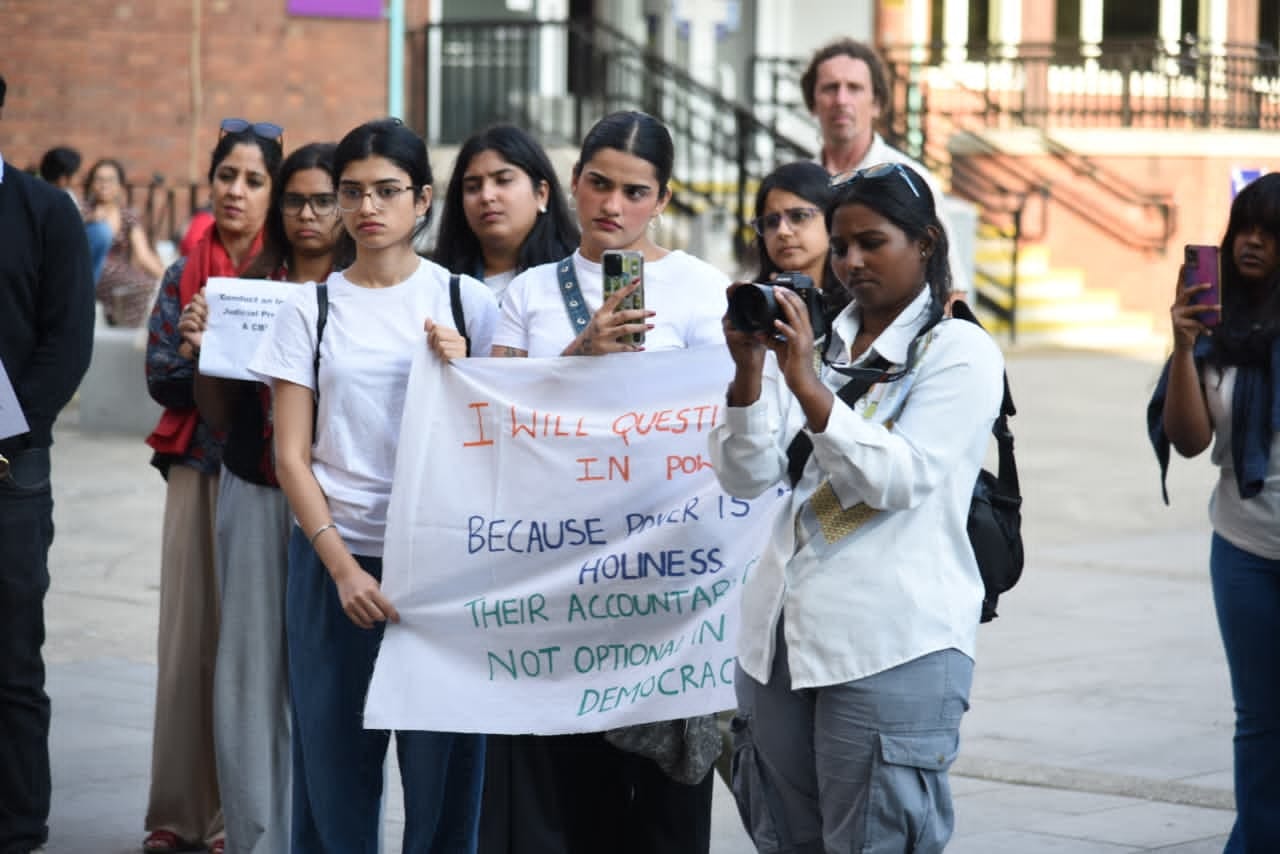
I will question those in power because power is not holiness: Student protesters seen in UK’s Manchester. (Special Arrangement)
Whatever the mix of motives, prolonged or selective quiet carries costs.
When young citizens believe the state responded to their grievances with batons rather than dialogue, trust erodes. The right to peaceful assembly is constitutional; so is the state’s duty to maintain order. Excessive force, if proven, must face accountability regardless of who holds power. Equally, violence from any side cannot be excused. An independent, time-bound inquiry into the July 20 events—examining injuries, video evidence, command decisions and proportionality—would serve the public better than partisan point-scoring or studied restraint.
Political parties exist to represent citizens, including the youth who feel the examination system has failed them. Concern about the powerful is understandable in a hard-edged political culture; tactical calculation is inevitable—neither excuses ignoring credible claims of overreach when students are involved.
The demonstrations at Jantar Mantar have already drawn national and international attention. How parties respond—or fail to respond—will shape whether the next generation sees democratic institutions as responsive or merely self-protective. Accountability for both the exam failures and any proven police excess should not depend on who finds it politically convenient to speak.
Also Read:
Jantar Mantar protests mark the birth of fear among Modi and his men
Why traditional media is at the receiving end at the Jantar Mantar protests
(Edited by R Rajesh Kumar.)



