

Published Sep 14, 2026 | 9:30 AM ⚊ Updated Sep 14, 2026 | 9:30 AM

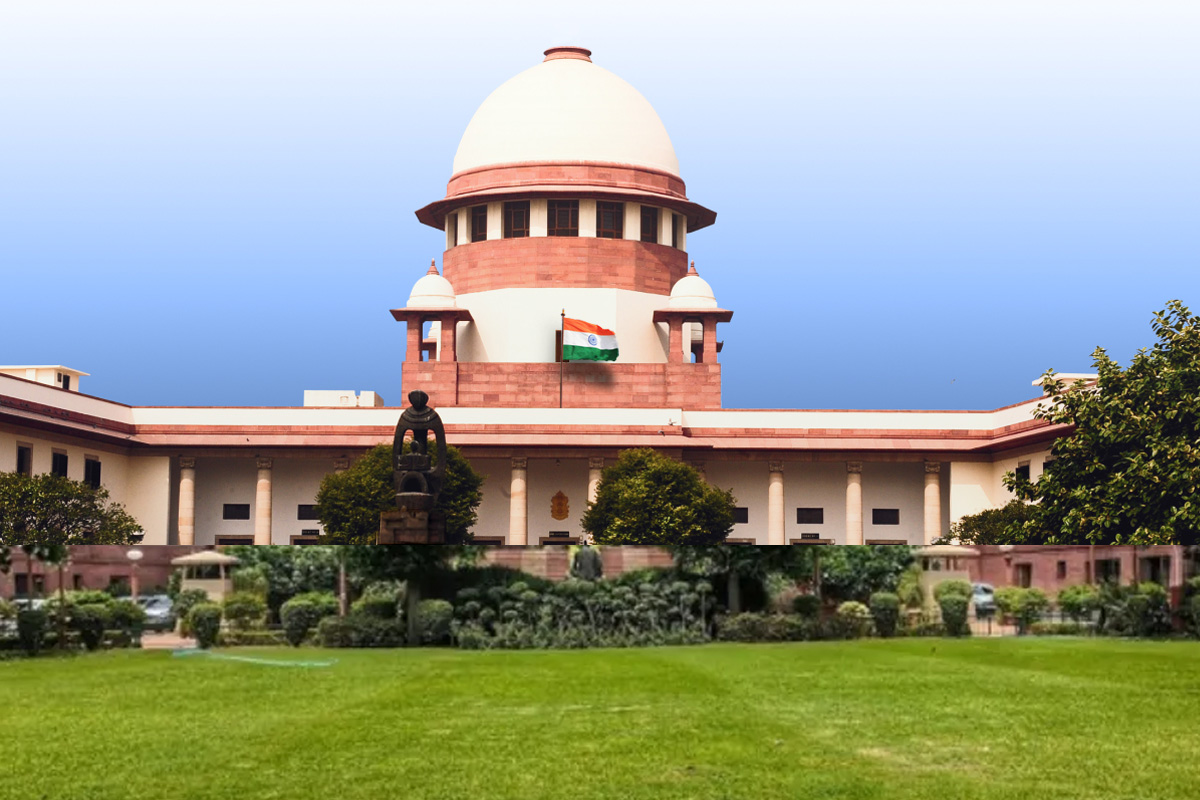
Supreme court of India

Synopsis: The Indian Supreme Court now confronts complex, frontier challenges: algorithmic bias, digital constitutionalism, biotechnology, the erosion of federal equilibrium, and subtle forms of systemic discrimination. Addressing these crises through case-by-case disposal without deep doctrinal grounding has increasingly left Indian jurisprudence fragmented and inconsistent.
“While our Constitution has a provision for the appointment of a jurist as a judge of the Supreme Court, no jurist has been appointed so far to the Supreme Court, though the Constitution has been in force for more than 76 years,” observed Justice Ujjal Bhuyan at the 13th convocation of the National Law University, Delhi.
Calling it one of the Republic’s most glaring “unused mandates,” the sitting Supreme Court judge’s candid diagnosis pierced decades of institutional complacency. His intervention compels the Indian legal establishment to confront an uncomfortable structural reality: the republic has consistently barricaded its highest judicial doors against its finest legal minds, reducing an imaginative constitutional gateway into an absolute dead letter.
Under Article 124(3) of the Constitution, a citizen qualifies for appointment to the apex court through three distinct avenues: having served for at least five years as a High Court judge; having practised for at least 10 years as an advocate in a High Court; or being, “in the opinion of the President, a distinguished jurist.”
Yet across nearly eight decades and hundreds of judicial elevations, the third route has never once been traversed. The bench has remained the exclusive preserve of career judicial officers climbing the ladder of state judiciaries and a select fraction of senior advocates elevated straight from the appellate Bar.
This total omission is an explicit betrayal of the Constituent Assembly’s deliberate design. On 24 May 1949, when HV Kamath moved the amendment to insert the “distinguished jurist” clause, his objective was unmistakable: to liberate apex appointments from the narrow confines of courtroom litigation.
Drawing inspiration from Article 2 of the Statute of the International Court of Justice, which explicitly permits “jurisconsults of recognised competence” to sit on the world court, Kamath argued that constitutional interpretation requires individuals possessed of outstanding juristic learning who may never have spent decades arguing routine property disputes or criminal appeals.
Supporting Kamath, M Ananthasayanam Ayyangar pointedly reminded the Assembly that practising lawyers, consumed by the commercial realities of day-to-day litigation, rarely grapple with the deeper philosophy of public law. Ayyangar cited the celebrated American precedent of Felix Frankfurter—elevated by Franklin D. Roosevelt straight from a Harvard Law professorship—arguing that at least one member of the Indian Supreme Court ought to be an eminent scholar. Dr B.R. Ambedkar accepted the amendment without demur.
Yet, despite this unambiguous founding intent, the provision was immediately frozen in institutional amber.
Also Read: SC judge Ujjal Bhuyan demands transparency in judicial appointments
The Constituent Assembly’s faith in the academic jurist was not an idealistic flight of fancy; it was grounded in a rich global reality. Legal academia has never functioned as a detached observer of the law. Across mature democracies, it operates as the intellectual vanguard of constitutionalism, forging the doctrines, conceptual tools, and normative vocabularies that courts later institutionalise as binding precedent.
In the United States, apex jurisprudence has repeatedly drawn its greatest intellectual strength from outside the judicial civil service. Long before Elena Kagan was elevated from the deanship of Harvard Law School, figures like Joseph Story, Harlan Fiske Stone, and William O. Douglas brought academic rigour to the bench.
It was legal academia that built modern American public law: James Bradley Thayer’s canonical 1893 essay, The Origin and Scope of the American Doctrine of Constitutional Law, formulated the modern doctrine of judicial restraint; Herbert Wechsler’s 1959 critique forced apex courts to justify rulings on durable, “neutral principles”; and John Hart Ely’s Democracy and Distrust: A Theory of Judicial Review (1980) provided the process-reinforcing theory of judicial review that sustained civil rights jurisprudence.
A similar cross-pollination defined Israel’s constitutional trajectory. When Aharon Barak was elevated from the dean’s chair at the Hebrew University of Jerusalem to the Supreme Court, he brought an academic discipline that revolutionised comparative public law. Synthesising German constitutional theory—particularly Robert Alexy’s structural rights analysis—Barak developed the modern four-pronged proportionality test. His framework for assessing state limitations on fundamental rights became a global export, adopted across Europe, Canada, and South Africa, and ultimately embedded in Indian jurisprudence through the landmark Puttaswamy privacy judgment.
In post-apartheid South Africa, the drafters of the 1996 Constitution recognised that a society emerging from institutionalised oppression could not rely solely on magistrates trained under the apartheid legal order. Section 174 was consciously structured to seat a broad spectrum of legal traditions alongside traditional judges.
The elevation of scholars like Kate O’Regan (Associate Professor of Law at the University of Cape Town) allowed the Constitutional Court to embrace “transformative constitutionalism”—a doctrine coined by American legal scholar Karl Klare—which transformed the South African bench into an engine of socio-economic justice.
Across continental Europe, apex constitutional courts in Germany and Italy statutorily reserve seats for university professors of public law, ensuring that constitutional interpretation is never reduced to mechanical, black-letter dispute disposal.
Also Read: ‘Female judge lost job for refusing to dance at male colleague’s anniversary party’
Why, then, has India maintained such resolute resistance? As Justice Bhuyan pointed out, the orthodox objection that academics lack “practical experience” is profoundly shallow. The Supreme Court of India is not a routine court of appeal, a trial forum, or a tribunal of facts.
It is the moral, legal, and constitutional conscience-keeper of the nation. To insist that a constitutional thinker spend thirty years mastering the mechanics of procedural adjournments, trial cross-examinations, and evidentiary technicalities is to confuse commercial litigation management with jurisprudential wisdom.
The human and intellectual cost of this parochialism has been devastating. Decades ago, Professor Upendra Baxi quipped with characteristic bite that successive Presidents looking through telescopes had failed to find a single jurist worth appointing, concluding the clause was a dead issue.
The irony of Baxi’s remark underscores the tragedy of the void. Baxi did not merely comment on Indian law; he laid its modern foundations. Alongside Professor Lotika Sarkar, his epistolary interventions—such as their open letter in the Mathura rape case and petitions on the horrors of the Agra Protective Home—dismantled the archaic constraints of locus standi and gave rise to what he termed Social Action Litigation (SAL).
Together with giant legal scholars like Dr PK Tripathi, Prof SP Sathe, and Prof MP Jain, Indian legal academia provided the vocabulary that rescued fundamental rights after the dark chapter of the Emergency. When Constitution Benches sought to define the contours of secularism and federalism in SR Bommai, or rewrite the expansive scope of Article 21, they leaned heavily on academic treatises. Yet, while the bench eagerly mined academic scholarship for intellectual authority, the institutional hierarchy deemed the authors of that scholarship unfit to sit among them.
Overcoming the structural impasse
Two deep-seated structural barriers sustain this enduring paralysis. The first is the Collegium system’s procedural insularity. Since the Second Judges Case (1993), an inward-looking judicial committee has held appointment power almost exclusively. By its very composition, the Collegium draws from what it sees: High Court seniority rosters and the familiar senior advocates arguing before it daily. Lacking objective metrics and institutional imagination, the Collegium has reduced judicial appointments to an internal promotion ladder and an extension of the appellate Bar.
The second barrier is a protectionist regulatory framework. Rule 49 of the Bar Council of India Rules strictly prohibits full-time law professors from practising in courts. In jurisdictions like the United States, law professors routinely engage in strategic appellate litigation, maintaining a dynamic bridge between theoretical scholarship and courtroom realities. India’s artificial regulatory firewall has fostered an intellectual apartheid, deepening the bench’s suspicion that academics inhabit an ivory tower unsuited to the rough-and-tumble of judicial decision-making.
The Indian Supreme Court now confronts complex, frontier challenges: algorithmic bias, digital constitutionalism, biotechnology, the erosion of federal equilibrium, and subtle forms of systemic discrimination. Addressing these crises through case-by-case disposal without deep doctrinal grounding has increasingly left Indian jurisprudence fragmented and inconsistent.
Activating Article 124(3)(c) requires no constitutional amendment; it requires only institutional humility and political will. The Collegium and the Union Executive must shed their historical scepticism toward the academy. Decades ago, Justice V. R. Krishna Iyer warned against this very institutional ossification:
“A cynical jurist or acid sociologist writing an epitaph on an imaginary curial tomb may well inscribe: ‘Here lies the Law, innocent of justice, obedient to the Establishment and unconcerned with the commonalty’. Be buried or build anew, rewriting the procedural corpus juris is the message that commands Operation Judicial Reform, humanising justice, justices, and justicing.”
To heed Justice Iyer’s warning and truly humanise our “justices and justicing,” the court must break out of its self-referential silo. Bringing distinguished academic minds to the Supreme Court is not an exercise in academic patronage—it is an urgent democratic imperative to build anew, infusing our apex bench with the intellectual courage and transformative vision the republic demands.
(Views are personal. Edited by Majnu Babu).



