
Published Jun 03, 2026 | 11:00 AM ⚊ Updated Jun 03, 2026 | 11:00 AM

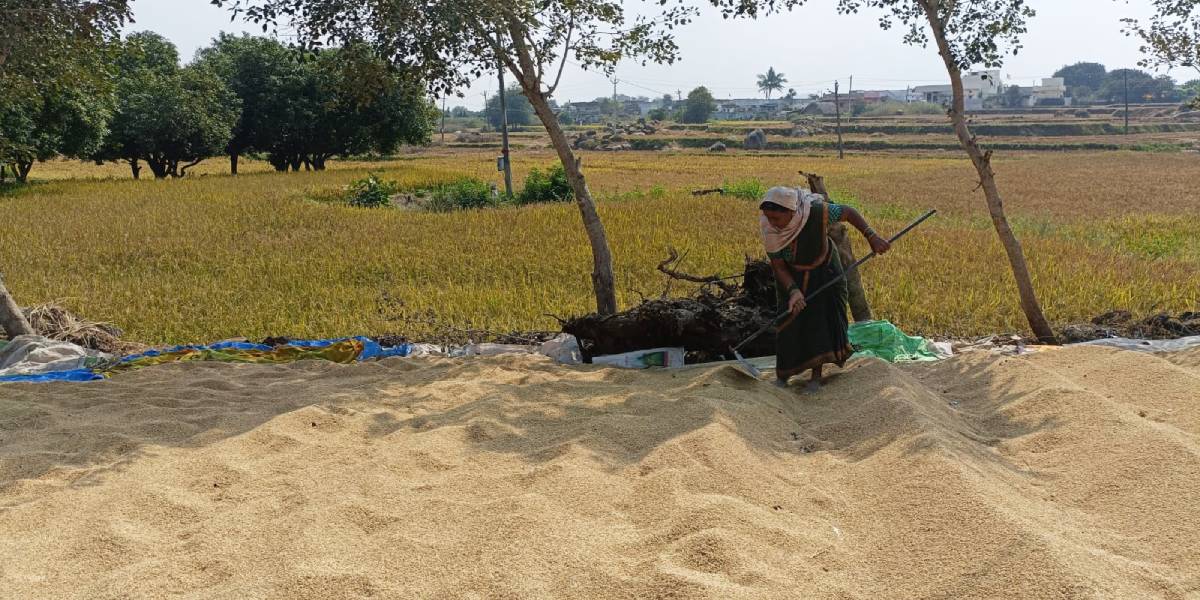
A woman seen drying paddy in Dharmapur village in Telangana. (Sumit Jha/South First)

Synopsis: Telangana’s journey of twelve years has seen notable successes. The government focused on key areas from the beginning. Yet, a new survey paints a sobering reality in rural areas.
Twelve years ago, on June 2, 2014, the dream of millions became reality.
After decades of struggle, Telangana emerged as a separate state. People celebrated with tears of joy, believing that self-rule would bring water to parched fields, jobs to the youth, dignity to farmers, and development to every village. The slogan “Neellu, Nidhulu, Niyamakalu” (water, funds, and jobs) echoed across the region. The aspiration was fulfilled geographically. But in the hearts of rural folk, many long-cherished hopes remain unfulfilled.
A recent rural survey conducted across Telangana’s ten undivided districts—Adilabad, Karimnagar, Khammam, Mahbubnagar, Medak, Nalgonda, Nizamabad, Rangareddy, Warangal, and Hyderabad (rural parts)—reveals a mixed picture. While urban centres like Hyderabad shine with IT growth and infrastructure, villages tell a story of partial progress and persistent struggles. The survey, covering thousands of households, highlights achievements alongside deep gaps in daily life.
The journey of twelve years has seen notable successes. The government focused on key areas from the beginning.
Mission Bhagiratha brought piped drinking water to nearly all rural households, a historic step that ended the long treks women made for water. Mission Kakatiya revived thousands of traditional tanks, improving irrigation and groundwater levels. The massive Kaleshwaram Lift Irrigation Project helped paddy production rise dramatically—from around 4-5 million tonnes before statehood to over 15 million tonnes in recent years. Farmers received support through Rythu Bandhu, an investment support scheme that provided direct cash to landholders.
Electricity supply became more reliable, with many villages getting 24-hour power. Literacy rates improved, and schemes for housing, sanitation, and health reached many. Per capita income rose significantly, making Telangana one of the better-performing states economically. Land records were digitised through Dharani, reducing some disputes. These steps brought visible changes and honoured the sacrifices of those who fought for statehood.
Yet, the survey paints a sobering reality in rural areas. Despite the progress, many core aspirations remain distant.
Farmers still face challenges with irrigation in tail-end areas. While overall production increased, small and marginal farmers, tenant cultivators, and those in rain-fed regions report continued distress. Crop failures due to erratic rains, rising input costs, and limited market access compound their problems. Many families depend on daily wage labour or migrate to cities in search of work.
The survey shows disparities across social groups. Scheduled Castes, Scheduled Tribes, and Backward Classes in remote villages often lag in education, stable income, and access to quality healthcare. Youth unemployment remains high. Young people who participated enthusiastically in the statehood movement expected better job opportunities. But government jobs are limited, and private sector growth has not reached most rural areas equally.
While education and health facilities have improved on paper, quality remains an issue. Many schools in interior villages lack teachers or basic infrastructure. Higher education and skill training are still urban-centric. Healthcare access is better, yet serious illnesses force people into debt. Women, who played a big role in the movement, continue to bear the burden of unpaid work and limited economic opportunities in many places.
Rural infrastructure tells a tale of uneven development. Roads have improved, but connectivity to mandal headquarters and markets is still poor in several pockets. Internet and digital services, which power modern opportunities, remain uneven in their reach. Climate change adds new worries, with droughts and floods affecting vulnerable districts like Mahbubnagar, Adilabad, and parts of Warangal.
The survey also captures a sense of emotional longing.
People feel proud of having their own state and its identity. They appreciate the welfare schemes and cultural recognition. But they express disappointment that the “Telangana spirit” of self-respect and equitable growth has not fully translated into better lives for the last person in the village. The dream was not just for a new map, but for dignity, security, and opportunity in their fields and homes.
Twelve years is a short time in a state’s life, yet long enough to expect stronger foundations in rural areas. Achievements in water, power, and agriculture are commendable and have laid a base. But the next phase must focus on sustainable rural livelihoods, quality education and health, agro-processing industries, and youth skilling in every district. Special attention is needed for backward and tribal areas.
The people of Telangana showed remarkable patience and resilience during the long movement. They deserve the same commitment now to bridge the rural-urban divide. True fulfilment of the Telangana aspiration will come when a farmer in a remote village of Nalgonda or Khammam can send his children to good schools without worry, earn a decent living from his land, and live with dignity and security.
As Telangana marks another Formation Day, the survey serves as both a report card and a reminder. Much has been done. Much remains to be accomplished. The journey continues—not just in celebration, but in honest reflection and renewed action for the villages that formed the backbone of the movement. Only then will the long-cherished aspirations of rural Telangana truly become reality.
ALSO READ: Telangana on the eve of Formation Day: Politics of diversion taking roots



