
Published Jun 29, 2026 | 4:20 PM ⚊ Updated Jun 29, 2026 | 4:20 PM

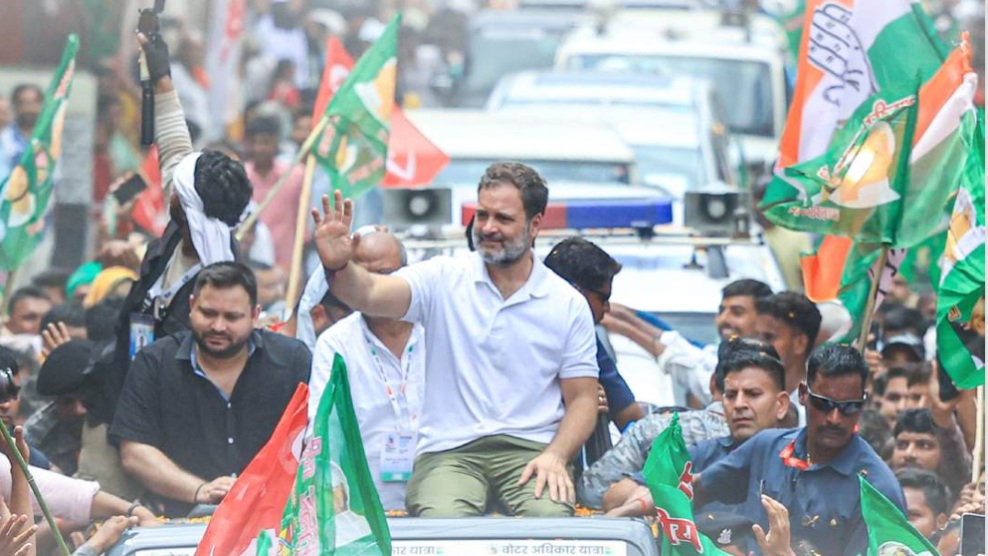
Critics argue that his parliamentary performances have often lacked the depth expected from the principal challenger to the government. (File)

Synopsis: Rahul Gandhi has definitely made the Congress more visible and vocal in national politics. But the criticism that his interventions are largely episodic and that he has failed to galvanise the Opposition behind him remains valid. Rahul needs to invigorate his party’s organisation and take a leaf out of earlier stalwarts like Atal Bihari Vajpayee and Madhu Dandavate, among others.
When Rahul Gandhi assumed office as the Leader of the Opposition in the 18th Lok Sabha after the 2024 general election, it marked a significant moment in India’s parliamentary democracy. For the first time in a decade, Parliament had a formally recognised Leader of the Opposition, restoring an institutional balance that had remained absent since 2014.
Expectations were understandably high. Rahul Gandhi had emerged politically rejuvenated after the Bharat Jodo Yatra and Bharat Jodo Nyay Yatra, while the INDIA alliance had succeeded in substantially reducing the BJP’s parliamentary dominance. Many expected the Opposition to evolve into a more coordinated, assertive and credible democratic force.
Two years later, however, the record presents a more complex picture. While Rahul Gandhi has succeeded in keeping several important issues alive in public discourse, his tenure as Leader of the Opposition has not translated into sustained political leadership capable of reshaping the national narrative. Parliamentary criticism has often generated headlines, but it has rarely matured into enduring political campaigns or organisational momentum.
The most visible shortcoming has been the inability to transform the INDIA alliance from an electoral understanding into a cohesive political coalition. Coalition politics requires continuous dialogue, institutional coordination and collective leadership. Instead, alliance partners have increasingly pursued independent political strategies, with disagreements over state-level electoral contests frequently overshadowing the alliance’s national objectives.
The Congress has struggled to build a permanent coordination mechanism capable of bringing together regional allies on common national issues. Joint consultations have remained infrequent, common political programmes have been largely absent, and coordinated campaigns against the Union government have been limited.
Political developments in several states have further exposed these coordination challenges.
Differences with alliance partners have surfaced in states such as Kerala and West Bengal, while emerging political equations in Tamil Nadu have also generated uncertainty regarding the future direction of opposition politics. Instead of functioning as the principal coordinator of anti-BJP forces, the Opposition has often appeared fragmented, allowing the ruling alliance to dominate the national political discourse.
Equally significant has been the failure to convert public grievances into sustained democratic mobilisation.
During the past two years, the country has witnessed several issues capable of generating nationwide political movements. The controversy surrounding the National Eligibility cum Entrance Test affected nearly 2.2 million aspirants. Questions over electoral roll revisions and allegations regarding voter deletions generated widespread concern in several states. Farmers continued to face challenges relating to remunerative prices, input costs and agricultural distress. Rising unemployment among educated youth, increasing prices of essential commodities, and inflation in fuel and household expenses remained central public concerns.
Yet despite the political potential of these issues, the Opposition failed to sustain nationwide campaigns that could keep pressure on the government over an extended period. Parliamentary speeches, media interactions and social media campaigns were visible, but organised mass mobilisation remained limited. One recurring criticism of Rahul Gandhi’s political leadership has been the absence of consistency. In democratic politics, consistency is not merely a personal virtue. It is the foundation of political credibility. Political leaders earn public confidence not simply by identifying issues but by pursuing them with sustained commitment until they produce institutional or political outcomes.
Rahul Gandhi has repeatedly highlighted themes such as caste census, economic inequality, constitutional values and unemployment. However, these interventions have often remained episodic rather than evolving into structured campaigns with organisational follow-up and measurable political objectives. Consequently, moments of political momentum have frequently faded before translating into lasting public engagement or electoral advantage.
This inconsistency has also affected the broader Opposition’s ability to set the national agenda.
A Leader of the Opposition is expected not merely to react to political developments but to define the public conversation, maintain continuous pressure on the government and keep alliance partners politically aligned. Instead, the Opposition has often appeared reactive, allowing several important national debates to dissipate without sustained follow-through. The challenge, therefore, has not been the absence of issues but the inability to build a continuous political narrative around them.
Historically, India’s parliamentary democracy has witnessed Opposition leaders who combined legislative interventions with powerful public movements.
Atal Bihari Vajpayee, Sushma Swaraj, George Fernandes, Madhu Dandavate and several socialist and communist leaders demonstrated remarkable parliamentary agility, subject knowledge and political timing. Their speeches inside Parliament reflected campaigns already unfolding across the country. They consistently compelled governments to respond, shaped public opinion and often dictated the national political conversation. By comparison, Rahul Gandhi’s parliamentary interventions, though occasionally effective in attracting media attention, have rarely placed the government under sustained political pressure.
The parliamentary office of the Leader of the Opposition also demands exceptional legislative preparedness. The Leader of the Opposition occupies a constitutional position second only to the Prime Minister in parliamentary importance. Every intervention carries institutional significance.
While Rahul Gandhi has consistently raised questions concerning constitutional governance, social justice and concentration of wealth, critics argue that his parliamentary performances have often lacked the depth expected from the principal challenger to the government. Opportunities during debates on the Union Budget and other major legislative discussions could have been used to present detailed policy alternatives across sectors such as agriculture, education, employment, defence and economic management. Instead, his interventions have frequently returned to familiar political themes without sufficiently expanding into comprehensive policy critiques.
Also Read | ‘Resistance works’: What Rahul Gandhi needs to do to keep his tryst with destiny
Another concern has been the absence of effective floor coordination among Opposition parties in both Houses of Parliament.
Successful parliamentary opposition requires meticulous planning, issue-based coordination and strategic management of legislative business. Despite commanding a substantially larger opposition presence after the 2024 elections, Parliament has rarely witnessed coordinated strategies capable of compelling the government to alter its legislative priorities or political messaging. Walkouts, protests and procedural objections have occurred, but they have seldom evolved into sustained parliamentary campaigns with measurable outcomes.
Leadership within Parliament also depends upon intellectual authority and institutional confidence. Effective opposition leaders possess the ability to respond spontaneously during debates, synthesise complex policy issues and engage the government through detailed legislative arguments. Such qualities strengthen both parliamentary credibility and public perception. In Rahul Gandhi’s case, critics argue that prepared speeches have often overshadowed spontaneous parliamentary engagement, limiting his effectiveness during fast-moving debates and reducing opportunities to dominate proceedings through persuasive argumentation.
Outside Parliament, organisational renewal within the Congress party has remained slow. Electoral revival requires more than political messaging. It demands rebuilding the party’s institutional foundations. District units continue to remain weak in many states. Frontal organisations have lost much of their earlier organisational vitality. Internal elections and structural reforms have progressed slowly despite repeated commitments. Even the promise of strengthening district-level organisations, repeatedly articulated during Congress organisational discussions, has yet to produce visible institutional transformation.
Equally concerning is the leadership vacuum below the party’s top leadership. Earlier generations of the Congress possessed multiple nationally recognised leaders capable of independently articulating policy positions, managing Parliament and leading organisational campaigns. Today, decision-making remains concentrated within a small leadership circle, while the emergence of a broad second line of national leadership has remained limited. This concentration has inevitably affected both policy depth and organisational resilience.
The Congress has also struggled to expand organisationally in northern India, where parliamentary representation remains decisive for national politics. Although the party improved its electoral performance in 2024, rebuilding the organisation across Uttar Pradesh, Bihar, Rajasthan, Haryana and Madhya Pradesh remains critical to any long-term national revival. Greater engagement with grassroots workers, regular organisational tours and systematic cadre building initiatives have not yet acquired the urgency such political reconstruction demands.
The broader Opposition has similarly suffered from the absence of a unifying political centre. The Leader of the Opposition is expected to function as the principal coordinator of all democratic opposition forces, including parties outside formal alliances, whenever constitutional or institutional issues arise. Frequent consultations, joint conventions, common resolutions and coordinated statements on national questions could have strengthened the Opposition’s collective voice. Instead, such institutional coordination has remained sporadic.
None of this diminishes Rahul Gandhi’s contribution in raising debates around constitutional values, social justice, federalism and economic inequality. These remain important themes in contemporary Indian politics. However, raising issues and building political movements are fundamentally different responsibilities. Effective opposition leadership requires transforming parliamentary interventions into public mobilisation, public mobilisation into organisational expansion, and organisational strength into electoral credibility.
Ultimately, governments are judged by their performance in office, but oppositions are judged by their preparedness to govern. After two years as Leader of the Opposition, Rahul Gandhi has undoubtedly restored visibility to the Congress in national politics. Yet visibility alone cannot substitute for sustained political leadership. For a political leader, consistency is not optional.
It is the defining attribute that converts ideas into movements, criticism into credibility and electoral gains into lasting political alternatives. That consistency in coalition management, parliamentary strategy, organisational rebuilding and public mobilisation remains the missing element of Rahul Gandhi’s leadership. Whether he can bridge that gap before the next general election may well determine not only the future of the Congress but also the shape of India’s democratic opposition in the years ahead.
Also Read: A birthday, ‘estranged brothers’ and a vision: Will Stalin accept Rahul Gandhi’s olive branch?
(Edited by R Rajesh Kumar.)



