
Published Nov 09, 2026 | 7:30 PM ⚊ Updated Nov 09, 2026 | 7:30 PM

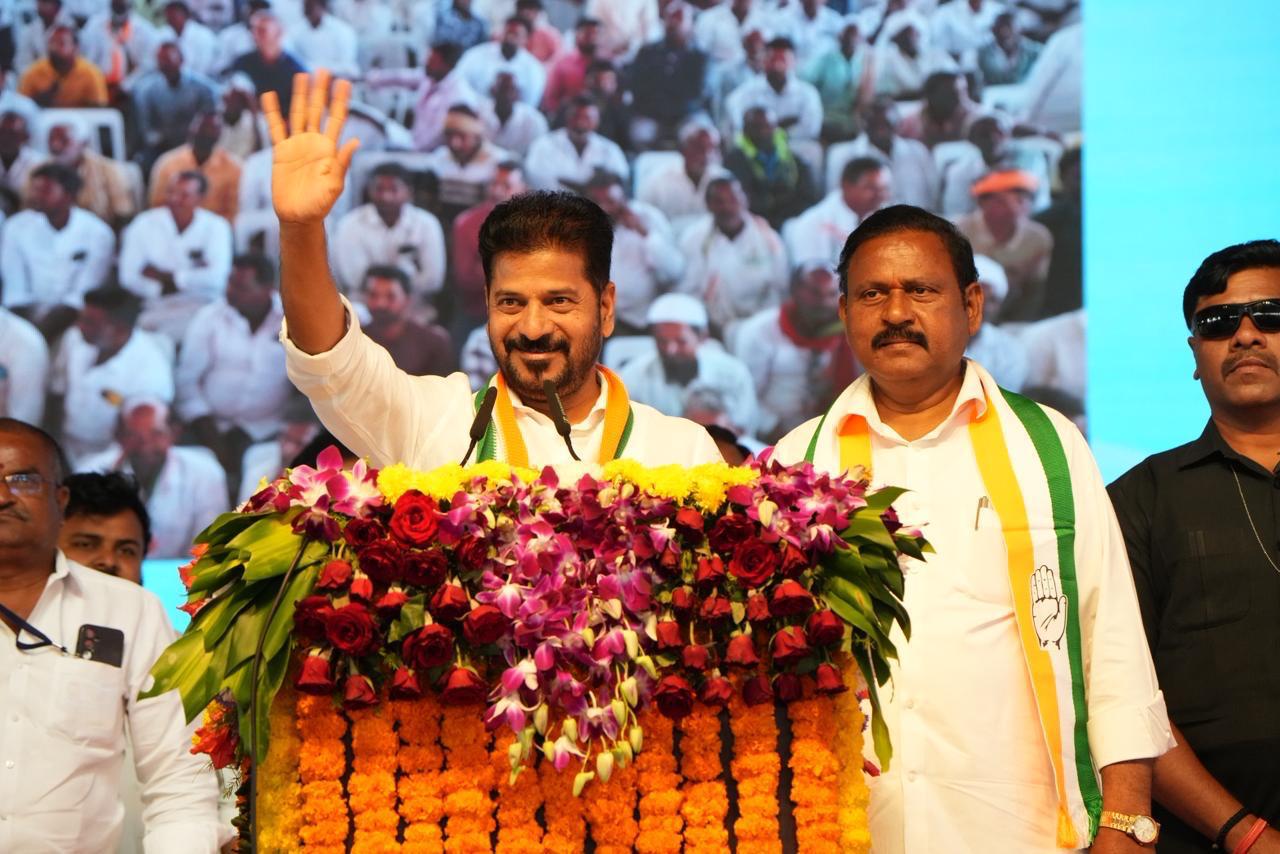
Telangana CM Revanth Reddy. (x.com/revanth_anumula)

Political parties often discover that retaining organisational strength after winning power is more challenging than mobilising support to win an election. For the Congress in Telangana, the prolonged process of filling nominated positions in government corporations, boards and other public institutions has emerged as an important organisational concern. While the government has made appointments in several institutions, uncertainty over the remaining vacancies and repeated postponements have kept a section of the party cadre waiting for political recognition.
The Congress returned to power in December 2023 after a decade in opposition. Its electoral success was supported by a network of grassroots workers, local leaders and constituency-level organisers who sustained the party during difficult years. For many of them, participation in governance through nominated positions was an expectation arising from their organisational contribution. Such appointments were also expected to strengthen the party’s presence in districts and communities where its electoral support needed consolidation.
The government appointed chairpersons to several corporations in 2024. In May 2026, it announced another round of appointments involving 17 chairpersons and 11 vice-chairpersons in community-based and cooperative institutions. These included the Brahmin Samkshema Parishad, Washermen Cooperative Corporation, Toddy Tappers’ Cooperative Corporation, Yadava Cooperative Corporation, Munnurukapu Cooperative Corporation and Telangana Handloom Development Corporation. Appointments to the Sheep and Goat Development Federation and Livestock Development Agency also formed part of the exercise. However, these measures have not brought the larger process of filling nominated positions to a conclusion.
Several other institutions, including the Telangana State Industrial Infrastructure Corporation (TGIIC), Sports Authority of Telangana (SAAP), Telangana State Seeds Development Corporation and other development agencies, remain part of the wider discussion surrounding appointments, extensions and institutional representation. The issue is not simply the number of vacancies but the uncertainty surrounding the selection process and the time required to complete it.
The political leadership has cited the need to ensure adequate representation for Scheduled Castes, Scheduled Tribes, Backward Classes, minorities and women. Regional balance, seniority, organisational contribution and the accommodation of leaders who joined the Congress from other parties are also factors in the exercise. These considerations are legitimate in a politically diverse State like Telangana. However, balancing competing claims requires a transparent framework and a reasonable timetable. Without these, the appointment process can become a prolonged exercise in political negotiation.
Also Read: NGT steps in to protect Ramappa Temple from proposed coal mining project
The distinction between administrative appointments and political accommodation also deserves attention. Corporation chairpersons and board members are expected to contribute to institutional functioning, not merely occupy positions as rewards for party loyalty. Their responsibilities include monitoring programmes, addressing sector-specific concerns and ensuring that public institutions remain responsive to citizens. Appointments to the Civil Supplies Corporation, for instance, have implications for procurement and the public distribution system. Those associated with transport, industrial development, handlooms and livestock institutions have responsibilities that extend to workers, entrepreneurs, farmers and traditional occupational groups.
There is also a question of organisational equity. Leaders who worked for the Congress during its years in opposition naturally expect their contribution to be considered when opportunities arise. At the same time, the party cannot ignore the political realities of expansion and the need to accommodate new entrants. The challenge is to maintain a balance without creating the perception that established workers have been displaced by those who joined after the party came to power.
The issue has acquired greater visibility because the leadership has periodically indicated that appointments would be completed within particular timeframes. In October, TPCC president B. Mahesh Kumar Goud indicated that announcements were expected around Dasara, but the process was subsequently deferred. Reports have suggested that some existing chairpersons could receive extensions while new leaders may be accommodated in other institutions. Such uncertainty inevitably encourages lobbying and competition among aspirants. It can also divert the attention of local leaders from organisational work to the pursuit of positions.
The consequences need not be exaggerated, but they should not be underestimated either. Disappointment over nominated posts does not automatically translate into desertion of the party. Nevertheless, prolonged uncertainty can affect the willingness of grassroots workers to participate actively in organisational activities. A party’s strength between elections depends on more than its elected representatives. It requires local networks capable of communicating government policies, responding to public grievances and maintaining political engagement.
This becomes particularly relevant as the Congress prepares for municipal and local body electoral contests. The Bharat Rashtra Samithi (BRS) and the Bharatiya Janata Party (BJP) continue to compete for political space in Telangana. In such circumstances, organisational consolidation assumes importance alongside governance. A government may implement welfare and development programmes, but their political communication and local monitoring also depend on an active party structure.
Chief Minister A. Revanth Reddy and the Congress leadership therefore face the task of reconciling administrative priorities with organisational expectations. A time-bound appointment schedule, clearly defined selection criteria and periodic reviews of institutional performance could reduce uncertainty. Equally important is the need to entrust meaningful responsibilities to leaders who may not secure nominated positions.
Ultimately, nominated posts should serve two purposes: strengthen public institutions and sustain political participation. Treating them exclusively as instruments of political accommodation would diminish their institutional value, while indefinitely postponing appointments would weaken their organisational purpose.
The Congress has to ensure that the process is neither reduced to patronage nor allowed to become an endless exercise in negotiation. The durability of its electoral success will depend, in part, on how effectively it converts the enthusiasm of its campaign machinery into a functioning organisational structure.
(Edited by Fayisa CA)



