
Published Nov 08, 2026 | 5:47 PM ⚊ Updated Nov 08, 2026 | 5:47 PM

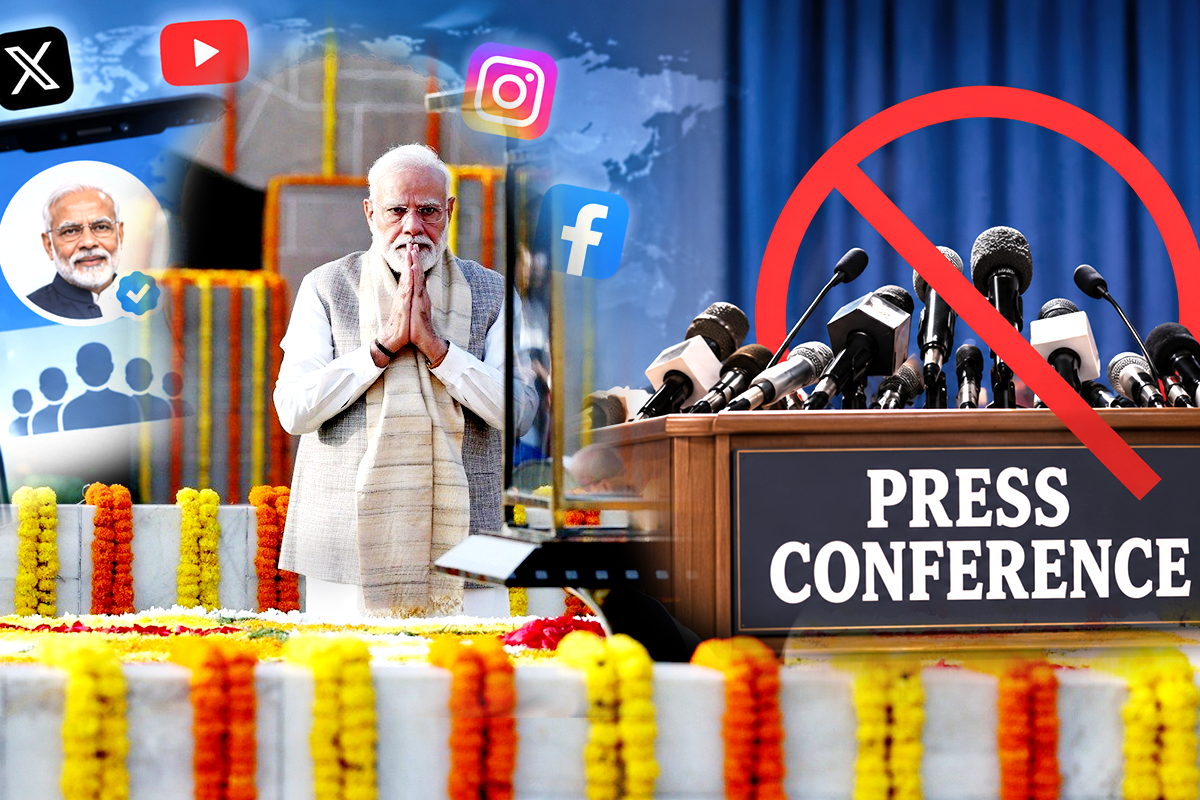
Prime Minister Narendra Modi is world's most followed leader on social media platforms.

Has social media strengthened political parties in India, or has it introduced new challenges to democratic communication?
This question has become increasingly relevant as political arguments, government announcements, opposition criticism and public controversies now play out on digital platforms. Social media has given political parties an unprecedented opportunity to communicate directly with citizens. At the same time, it has encouraged misinformation, political polarisation and artificial amplification. Its impact, therefore, cannot be described as entirely positive or negative.
One of the most significant changes is that political parties now depend less on traditional media.
Earlier, newspapers, television channels and public meetings were the principal means of communicating political positions. Today, a party can publish a statement, circulate a parliamentary intervention, explain a policy decision or respond to criticism within minutes. This direct access has transformed political communication and widened its reach.
A prime example is Prime Minister Narendra Modi, the world’s most followed leader on these platforms. His faith in the medium is so strong that he has not felt the need to take questions from the press at a single press conference in his twelve years at the helm at the Centre. The Congress has also realised the medium’s importance, with even Sonia Gandhi making her debut on social media this October at the age of 79.
The change is particularly important in a diverse country such as India. Social media enables national parties to reach regional audiences and smaller political organisations to communicate beyond their geographical boundaries. Regional-language content has made political information more accessible to people who may not regularly follow national television debates or English-language newspapers. It has also provided younger citizens with new avenues to engage with political issues.
Research by Shahana Sheikh, published by the Carnegie Endowment for International Peace in 2024, examined the changing role of technology in Indian election campaigns. Based on fieldwork and surveys involving approximately 4,000 voters and 400 party functionaries, the research highlighted the growing importance of digital communication in political mobilisation. It also indicated that social media complements rather than replaces traditional campaigning and direct interaction.
This transformation is reflected in the growing importance of specialised digital teams within political organisations. The BJP, Congress and other parties maintain official communication channels at national and State levels. Their digital activities involve content production, research, media monitoring, regional-language communication and responses to emerging developments. Research on digital campaigning in Karnataka has documented how specialised teams and volunteers were used for online communication, rebuttals and campaign material.
The positive implications are considerable. Parliamentary interventions, legislative proposals and policy positions need not remain confined to official records. They can be explained through short videos, infographics and detailed presentations. Government expenditure, implementation gaps and local development concerns can reach wider audiences. Citizens can also question political representatives directly, making public communication more accessible.
However, the same platforms have created serious challenges.
The speed with which information circulates makes verification difficult. Misleading photographs, edited videos, fabricated statements and unsubstantiated allegations can reach thousands of people before corrections are issued. Political communication can become a competition in which the speed of circulation receives more attention than factual accuracy.
Research on misinformation during India’s 2019 general election documented the circulation of misleading political material through social-media networks. Such content covered issues including religion, nationalism, corruption, gender and development.
The findings underline that misinformation is not merely an individual problem. Political organisations and their associated communication networks also have a responsibility to prevent its spread.
Artificial amplification presents another concern.
Research by Shruti Phadke and Tanushree Mitra, presented at the International AAAI Conference on Web and Social Media in 2024, identified more than 3,800 political amplification campaigns involving modified versions of similar messages across Indian social-media platforms. Such practices can create an exaggerated impression of public opinion. Repeated circulation of an argument should not be mistaken for independent public support.
Political parties also risk becoming excessively dependent on digital visibility. Followers, likes, shares and trending hashtags are frequently presented as indicators of political strength. But online popularity does not necessarily translate into public acceptance. A widely circulated message may generate attention without producing informed discussion or changing public perceptions. Political credibility cannot be measured through engagement statistics alone.
There is also the danger of personalising political communication. Discussions about public policies and institutional performance can be overshadowed by the promotion or criticism of individual leaders. Political differences then become personal exchanges between supporters and opponents, leaving little space for substantive debate.
The answer lies not in reducing the use of social media but in improving the standards governing its use. Political parties need research-based content, factual verification, responsible language and transparent communication. Dedicated teams for parliamentary documentation, policy research, regional content and public grievance monitoring can make digital platforms more informative. Equally important is the willingness to correct inaccurate claims.
Social media should also remain connected to grassroots political organisation. It can extend the reach of public meetings, represent local concerns and make elected representatives more accessible. But it cannot replace direct interaction with citizens, organisational work or the responsibility to address public grievances.
Ultimately, social media is neither inherently beneficial nor inherently harmful to political parties. Its impact depends on how political organisations use it. It can strengthen democratic participation and make political communication more transparent. It can also deepen divisions and weaken public trust when used irresponsibly.
The real measure of a party’s digital presence should not be how frequently it trends online, but whether it contributes to informed public debate. Technology can amplify a political voice; credibility must come from the quality of what is communicated. That distinction will determine whether social media becomes an instrument of democratic engagement or merely another arena of political confrontation in India.
Also Read:
The ‘quirky neurodivergent’: How social media is turning struggle into aesthetic
(Edited by R Rajesh Kumar.)



