
Published Jun 07, 2026 | 2:00 PM ⚊ Updated Jun 07, 2026 | 2:27 PM

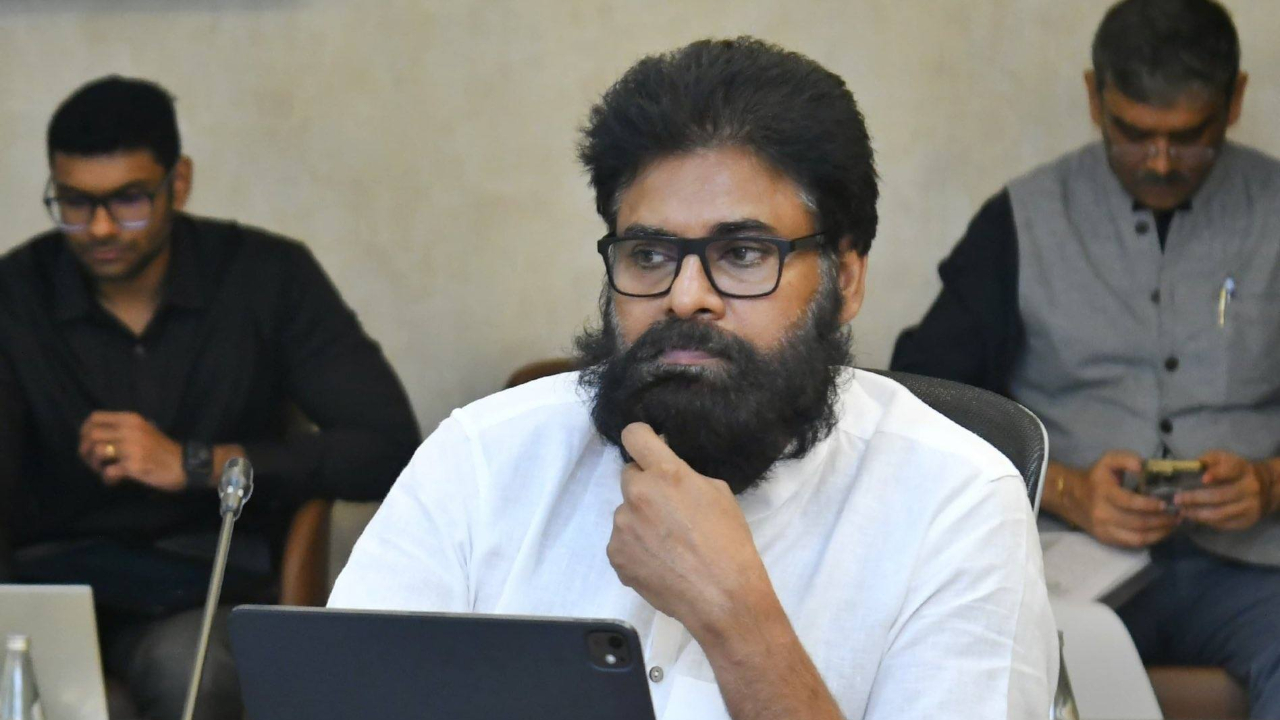
Andhra Pradesh DyCM and Jana Sena Party chief Pawan Kalyan. (facebook.com/PawanKalyan)

Synopsis: Recently, during a press conference in Hyderabad, Andhra Pradesh Deputy Chief Minister Pawan Kalyan made some adverse remarks on Telangana. It has reminded people of the dangers posed by migrant political forces and renewed public vigilance. The people of Telangana may welcome people, accommodate them, do business with them and live alongside them. What they are far less willing to do is hand over their political future to those who arrive carrying ready-made narratives and borrowed notions of nationalism.
A new nationalist has set out to teach his grandfather how to cough. That nationalist is Andhra Pradesh Deputy Chief Minister Pawan Kalyan. In recent times, he has been seized by a fervour for proclaiming his commitment to Sanatana Dharma. However, the remarks he made at a press conference in Hyderabad on 2 June sounded very much like an attempt to teach the grandfather what he already knows.
At that press conference, Pawan Kalyan suggested that if Telangana is allowed to continue on its present course, people there may one day stop singing Vande Mataram and Jana Gana Mana. The irony is hard to miss. Not too long ago, it was Pawan Kalyan himself who questioned why the national anthem should be played in cinema halls.
“We come to watch films with our families and friends for entertainment. Why should we be expected to stand up and display patriotism every time Jana Gana Mana is played?” he had argued then.
One need not go that far back. Before 2019, he repeatedly attacked the BJP, asking, “Why should the domination of North Indians be imposed on us?” Today, having draped himself in a fresh saffron mantle, he appears convinced that nobody except him qualifies as a nationalist and that everyone else must be instructed in nationalism.
In many instances, it is difficult to understand what exactly Pawan Kalyan is trying to say. Perhaps because there is little clarity in his thinking, confusion inevitably follows when those thoughts emerge as public statements.
Political leaders may not know world history or even Indian history in depth, but they should at least know the history of their own region. That lends clarity to thought and coherence to speech. Pawan Kalyan has consistently lacked both. In 2024, fortune smiled upon him. Three parties came together in an alliance, and he won 21 seats. Since then, he has become difficult to contain.
Also Read: Pawan’s Pandora’s box — Will it ignite a fresh struggle in Telangana?
Let us now turn to the nationalism he preached on 2 June. When India attained Independence in 1947, Hyderabad was a princely state. The Nizam refused to accede to the Indian Union and declared his intention to remain independent.
At that crucial moment, nationalists in Hyderabad, filled with patriotic zeal, rose in defiance. Under the leadership of freedom fighter Padmaja Naidu, the tricolour was hoisted on 15 August 1947 atop the Residency building in Hyderabad, today known as Koti. Arya Samaj activists also hoisted the national flag in Sultan Bazaar and Secunderabad on the same day.
This was not merely an important chapter in Telangana’s history. Under the circumstances of the time, it was an act of extraordinary courage. The Razakars, the Nizam’s private militia, and the Hyderabad police violently suppressed these expressions of nationalism.
Until Operation Polo in September 1948, when Indian forces defeated the Nizam’s army and integrated Hyderabad into the Union, the hoisting of the national flag remained a clandestine movement across Telangana.
Unfortunately, these chapters do not seem to have found a place among the “thousands of books” that Pawan Kalyan seems to have read. Perhaps none of those books dealt with the nationalist struggles within the Hyderabad State or the later struggles through which Telangana liberated itself from domination and eventually achieved statehood.
That may explain why he could so casually and dismissively ask, “Telangana mee ayya jagira?” Translated literally, the phrase means, “Is Telangana your father’s jagir (feudal land)?” Indeed, Telangana belongs to its people.
It is the inheritance of thousands who sacrificed their lives and futures in successive struggles for self-respect and statehood. It belongs to those who treated their lives lightly and their cause seriously in the long struggle for a separate state.
If Pawan Kalyan wishes to understand Telangana’s generosity, he would do well to listen to veteran editor Dolendra Prasad of Nellore. In a recent interview, Prasad recounted the desperate circumstances of Andhra’s rulers after they were compelled to leave Madras.
His newspaper, Zamin Ryot, earned enormous credibility during the united Andhra Pradesh era. When Andhra’s leaders found themselves in distress, it was Telangana’s leader Burgula Ramakrishna Rao, then chief minister of Hyderabad State, who extended a helping hand.
He not only agreed to make Hyderabad the capital but also graciously stepped aside and allowed Neelam Sanjiva Reddy to occupy the chief minister’s chair.
According to Dolendra Prasad, conditions in Kurnool (the capital of the erstwhile Andhra State) were so primitive that even senior officials, including the chief minister and chief secretary, had to carry water vessels and venture outside town for basic necessities. This is the tradition Telangana comes from.
Why then would Telangana object to Pawan Kalyan visiting Hyderabad? For years, he lived freely in the city. His films ran successfully in Telangana theatres. Governments permitted higher ticket prices. Producers, directors and film personalities associated with him lived comfortably and prospered here.
Like many others from Andhra Pradesh, he accumulated wealth, acquired properties and conducted business in Hyderabad. Not only film personalities but lakhs of people from Andhra Pradesh and other states have made Hyderabad their home. They work as labourers, employees, traders, professionals and domestic workers. Telangana has never had a quarrel with them.
Nobody objected to Pawan Kalyan’s residence in Hyderabad. Nobody stopped him from seeking medical treatment here. Nobody questioned his business interests or farmhouses. Nobody prevented him from entering politics in Telangana either.
His party, Jana Sena, contested the 2023 Telangana Assembly elections and lost its deposits. Is that a reason to be angry with Telangana’s people? After all, in 2019, it was the people of Andhra Pradesh who defeated him in both constituencies he contested and reduced him to political insignificance.
Likewise, the TDP, which shifted its base to Vijayawada after bifurcation, returned in 2018 to contest Telangana elections under the Congress umbrella and learned what Telangana voters thought of it. The issue, therefore, is not migration, residence, business or political participation.
Also Read: Pawan Kalyan would do well to bother about Andhra. He’s a non-entity in Telangana
The real question is why such strong opposition arose against Pawan Kalyan’s proposed 2 June programme and why permission was denied.
The answer is straightforward. If his professed affection for Telangana were genuine, he would not have chosen 2 June for political provocation. For Telangana’s people, 2 June is a sacred day. It marks the achievement of statehood after decades of struggle and sacrifice.
If he had extended sincere greetings on State Formation Day and held his programme on another date, there might have been little objection. Instead, he chose confrontation. He convened a press conference, challenged Telangana’s sentiments, injected nationalism into a local political issue and sought to provoke intervention from the Union government.
That was a serious mistake. In one sense, however, this episode has benefited Telangana. Twelve years after achieving statehood, it has reminded people of the dangers posed by migrant political forces and renewed public vigilance.
Even after all this, nobody can object if Pawan Kalyan wishes to do politics in Telangana or contest elections there. The Constitution grants him that right, as it does every citizen. But he and those encouraging him from behind the scenes should understand one thing by now.
The people of Telangana are not inclined to provide political feed to migrant political forces. They may welcome people, accommodate them, do business with them and live alongside them. What they are far less willing to do is hand over their political future to those who arrive carrying ready-made narratives and borrowed notions of nationalism.
If Telangana’s assertion of regional identity is to be condemned as anti-national, what then of Potti Sriramulu? He sacrificed his life demanding that the Andhra region be separated from Madras State. Was he also acting against national unity? If not, why did Pawan Kalyan travel directly from Telangana on 3 June to pay homage at Potti Sriramulu’s statue, a day that was neither his birth anniversary nor his death anniversary?
Those in the Union government who are encouraging Pawan Kalyan’s interventions in Telangana would do well to reflect on that question.
(Views are personal.)



