
Published Jul 25, 2026 | 9:45 PM ⚊ Updated Jul 25, 2026 | 9:45 PM

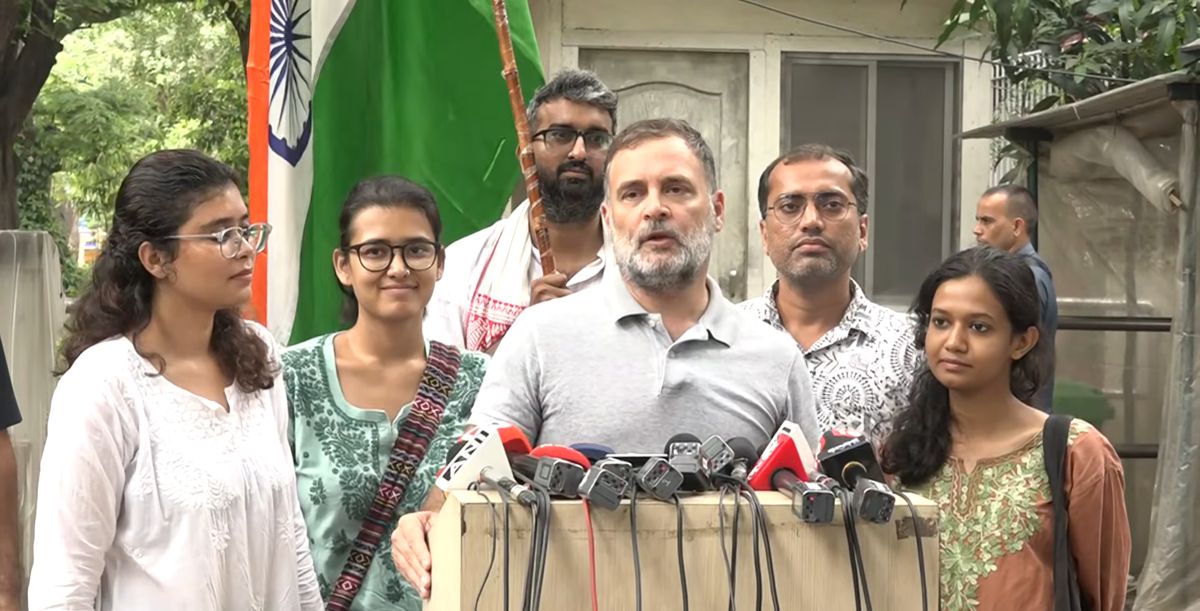
Rahul Gandhi at a press conference he addressed with student protesters on Saturday. (Screengrab)

Synopsis: The Jantar Mantar protests have highlighted not only the exam paper leaks but also wider problems such as the commercialisation of education in India, rising coaching fees, delays in recruitment. The President of the Congress in Telangana argues that restoring credibility to the education system is a priority while reaffirming his party’s commitment to student movements.
A nation’s future is shaped not merely by its economic growth but by the confidence it inspires in its young people. Every year, millions of students across India devote years of relentless effort, perseverance and financial sacrifice in pursuit of education, believing that merit and hard work will determine their future. That belief, however, is increasingly under strain.
In recent years, repeated allegations of examination paper leaks, cancelled recruitment processes, delayed appointments and growing uncertainty in the education system have shaken the confidence of students and job aspirants alike. For young Indians, education is not simply an academic pursuit. It is the principal pathway to social mobility, economic security and personal dignity. Any failure to protect the integrity of that system carries profound consequences.
The controversy surrounding the 2026 NEET examination intensified these concerns. Reports of question paper leaks, the subsequent cancellation and re-conduct of the examination, and widespread anxiety among aspirants triggered protests across the country. Students demanded accountability, transparency and structural reforms rather than temporary assurances. The emotional toll of repeated examination failures caused by administrative lapses has been immense, with many families bearing significant psychological and financial burdens.
The demonstrations at Delhi’s Jantar Mantar reflected a broader frustration among India’s youth. Protesters argued that they were seeking nothing more than a fair opportunity to compete on equal terms. Police action against demonstrators further intensified the political debate over the government’s handling of student protests and its willingness to engage with legitimate public concerns.
The Congress party has positioned itself alongside protesting students, arguing that education must remain a constitutional and democratic priority rather than becoming a casualty of administrative failures. Leader of the Opposition Rahul Gandhi has repeatedly called for greater accountability, transparency in examinations and comprehensive reforms in the recruitment process. Through the nationwide Chatron Ki Goonj initiative, the party says it aims to directly engage with students, understand their concerns and elevate them to the national policy agenda.
Beyond individual examinations, the crisis points to larger structural issues confronting Indian education. Increasing commercialisation of education, rising coaching costs, delays in government recruitment, and persistent allegations of irregularities have made access to quality education increasingly unequal. Families often spend substantial sums on coaching institutions, hostel accommodation, study material and examination fees, placing enormous financial pressure on middle-class and economically weaker households.
India possesses one of the world’s youngest populations—a demographic advantage that has long been viewed as the country’s greatest strength. Yet this dividend can be realised only if educational institutions command public trust, examinations remain credible and employment opportunities expand in step with educational attainment. When students begin to doubt the fairness of competitive examinations, confidence in public institutions inevitably erodes.
The Congress contends that public investment in education deserves greater priority and argues that expanding access to quality schooling and higher education should remain a central objective of national policy. It also maintains that examination reforms, stronger safeguards against paper leaks, faster recruitment processes and enhanced transparency are essential to restoring faith among students.
The debate extends beyond partisan politics. Regardless of political affiliation, safeguarding the credibility of India’s education system is a national responsibility. Students should never be compelled to question whether their years of preparation will be undermined by administrative failures or criminal malpractice. Merit must remain the cornerstone of opportunity.
The aspirations of India’s youth deserve protection, not uncertainty. Every examination conducted fairly strengthens public confidence; every transparent recruitment process reinforces democratic institutions. As the country seeks to harness its demographic potential, rebuilding trust in education must become an urgent national priority.
The Congress maintains that it will continue supporting students’ movements, advocating institutional reforms and pressing for accountability until examination integrity, transparent recruitment and equal educational opportunity become enduring features of India’s governance. Whether through parliamentary intervention, public engagement or mass outreach programmes, the party argues that standing with students today is essential to safeguarding India’s future.
Also Read:
Jantar Mantar protests mark the birth of fear among Modi and his men
No country for the young: The grim numbers fuelling the angst among India’s youth
Gen Z protest is not ‘unserious’, it is civil disobedience dismantling Modi’s crafted image
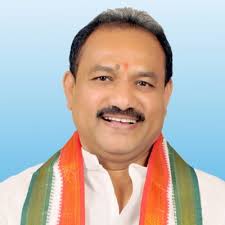
(B Mahesh Kumar Goud is MLC and President, Telangana Pradesh Congress Committee. Views are personal. Edited by R Rajesh Kumar.)



