

Published Aug 12, 2026 | 5:02 PM ⚊ Updated Aug 12, 2026 | 5:02 PM

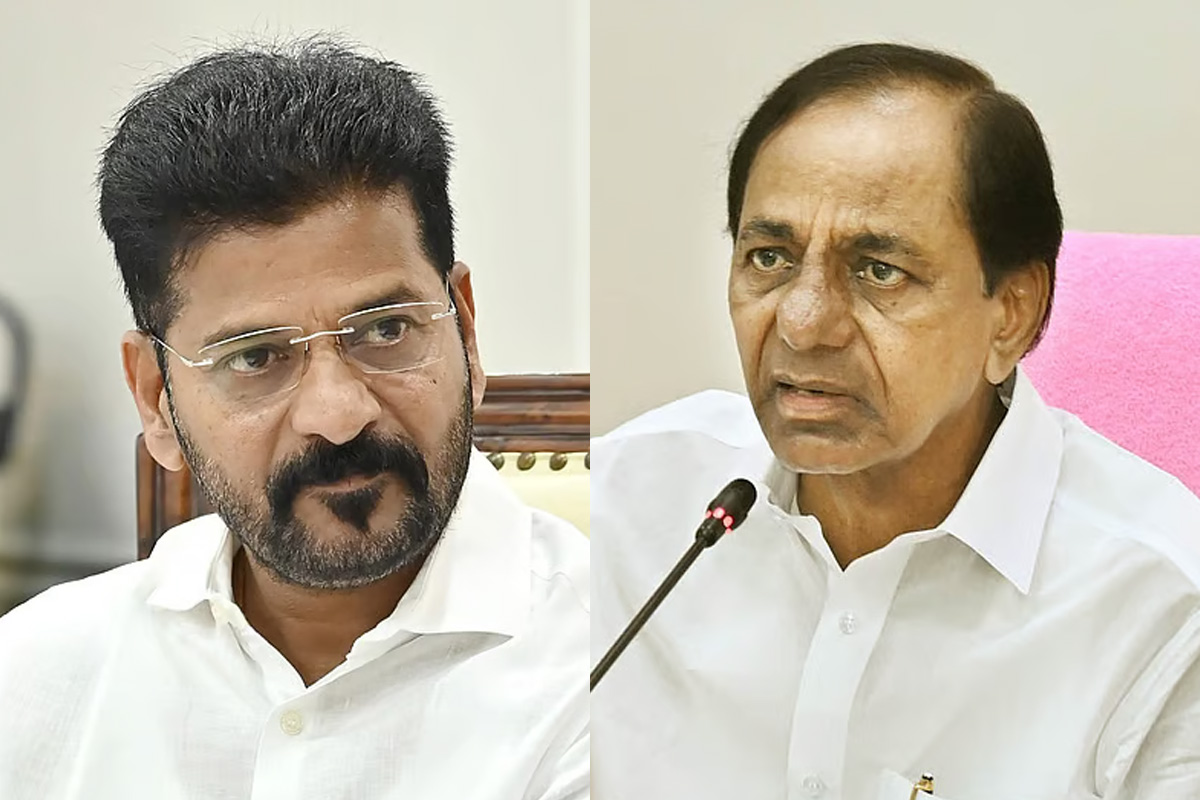
Telangana chief minister Revanth Reddy and BRS leader K Chandrasekhar Rao

Synopsis: Multiple opinion polls suggest that Congress is falling behind in Telangana. But the “Congress is finished” and “BRS is back” narrative is simplistic. The tide may be turning, but not towards any one party.
Opinion polls may suggest a political reversal in Telangana. The electoral evidence, however, points to a more complicated picture: Congress remains the stronger organisation on the ground, BRS has recovered some of its lost political space, and BJP is steadily consolidating pockets of influence. The “tide” is moving, but it has not yet acquired a clear direction.
The political narrative in Telangana has changed noticeably in recent months. Barely two years after the Congress displaced the Bharat Rashtra Samithi from power, claims of a BRS revival have become increasingly confident. Recent surveys and political claims have projected a dramatic recovery for BRS, with some estimates even placing it comfortably ahead of Congress if Assembly elections were held today.
Such numbers make for compelling headlines. They should not, however, be mistaken for an electoral verdict.
The problem begins with the methodology employed. Most political surveys in circulation do not provide enough information on sample size, sampling design, fieldwork, weighting or constituency-level methodology to treat their projections as statistically authoritative forecasts. Internal party surveys, meanwhile, are inherently political documents. They may be useful to party strategists, but they cannot be treated as independent evidence. Opinion polls are indicators of sentiment; they become dangerous when converted into certainties.
The harder evidence from elections tells a more nuanced story.
Congress continues to possess a significant organisational advantage. Its performance in the recent local elections demonstrated that the party has not suffered the collapse that some political narratives suggest. It retains substantial support in rural and urban Telangana and, more importantly, has the advantage of being the incumbent with control over the machinery of government.
Yet it would be equally misleading for Congress to interpret electoral victories as a permanent endorsement. A sizeable proportion of the electorate remains opposed to it. The party’s victories have not eliminated the underlying political dissatisfaction, particularly among sections that expected faster delivery on employment, welfare guarantees, agriculture, infrastructure and urban development.
This is where the possibility of a political tide turning begins to acquire substance.
The BRS has shown unmistakable signs of recovery. Its organisational network has survived the 2023 defeat, and the party continues to possess a committed cadre and a recognisable political identity. Its renewed confidence is also visible in its aggressive campaign against the Congress government.
But recovering political space is not the same as recovering power.
Challenges before the BRS and the Congress
The BRS faces the more difficult task of persuading voters that it has learnt the lessons of its defeat. The 2023 verdict was not merely a rejection of individual policies. It reflected accumulated fatigue with a government that had been in power for nearly a decade. A return to power will therefore require more than criticism of Revanth Reddy. The BRS must articulate why voters who once rejected it should now reconsider their decision.
Congress, meanwhile, faces the classic second-half-of-the-term challenge. When a party is in opposition, promises create expectations; when it is in government, those promises become performance benchmarks. The electorate is increasingly judging Congress not by what it promised in 2023 but by what it has actually delivered since taking office.
Employment is likely to remain one of the most sensitive issues. For younger voters, political loyalty is often weaker than it was in earlier generations. Government jobs, recruitment, private-sector employment, education and migration increasingly influence political preferences. Similarly, farmers and rural households will judge the government through the practical impact of its agricultural policies rather than through political messaging.]
The BJP complicates what might otherwise have become a straightforward Congress-BRS contest.
The party has steadily expanded its footprint in Telangana, particularly in selected urban and northern pockets. Its challenge is different from that of BRS. It does not need to replace Congress everywhere to influence the Assembly arithmetic. A modest increase in its vote share in strategically important constituencies could alter the outcome by dividing anti-incumbent or anti-BRS votes.
This makes Telangana’s emerging political landscape considerably more complex than a simple pendulum between Congress and BRS.
The real question, therefore, is not whether Congress is losing support. There are signs that it is. Nor is the question whether BRS is recovering. There are indications that it is. The more important question is whether the erosion of Congress is large enough, and sufficiently uniform, to translate into a BRS majority.
At present, the evidence does not conclusively establish that.
There is another factor that surveys cannot easily capture: leadership. Telangana politics remains heavily personalised. Revanth Reddy’s ability to project himself as the political face of the government, K Chandrashekar Rao’s continuing influence over the BRS and the BJP’s evolving leadership structure will all shape voter choices. Candidate selection, caste equations, local grievances and constituency-level alliances could ultimately matter more than statewide polling averages.
The electorate also has nearly two years in which to change its mind.
That is perhaps the biggest reason to treat current surveys cautiously. Telangana voters have demonstrated that they are willing to change governments. They removed the BRS in 2023 after a decade in power. They subsequently gave Congress a strong mandate, while letting both BRS and BJP retain meaningful support in different regions.
The most objective reading of the available evidence is therefore neither that “Congress is finished” nor that “BRS is back”.
Congress still has the advantage of incumbency, governmental machinery and a substantial support base. BRS has regained political visibility and appears capable of exploiting dissatisfaction with the government. BJP is gradually widening its electoral footprint and could become an important factor in a number of constituencies.
The tide may indeed be turning—but perhaps not towards one party. What is changing is the certainty that Telangana belongs to any one political formation.
For Congress, the warning is unmistakable: electoral victories cannot indefinitely substitute for delivery. For BRS, the lesson is equally important: dissatisfaction with the government does not automatically translate into renewed faith in the opposition.
The next Assembly election will ultimately be decided not by today’s opinion polls but by which party can convert sentiment into organisation, dissatisfaction into an alternative and promises into measurable performance.
Until then, declaring a political tide would be premature. Telangana’s electorate appears restless rather than settled. And in a closely contested political landscape, that distinction could prove decisive.
Also:
No Krishna can save this Kurukshetra: Telangana Congress tears itself apart
Living on less than Rs 5000 a month: Reviving Telangana’s handloom economy
(Edited by R Rajesh Kumar.)



