
Published Aug 06, 2026 | 7:00 AM ⚊ Updated Aug 06, 2026 | 7:00 AM

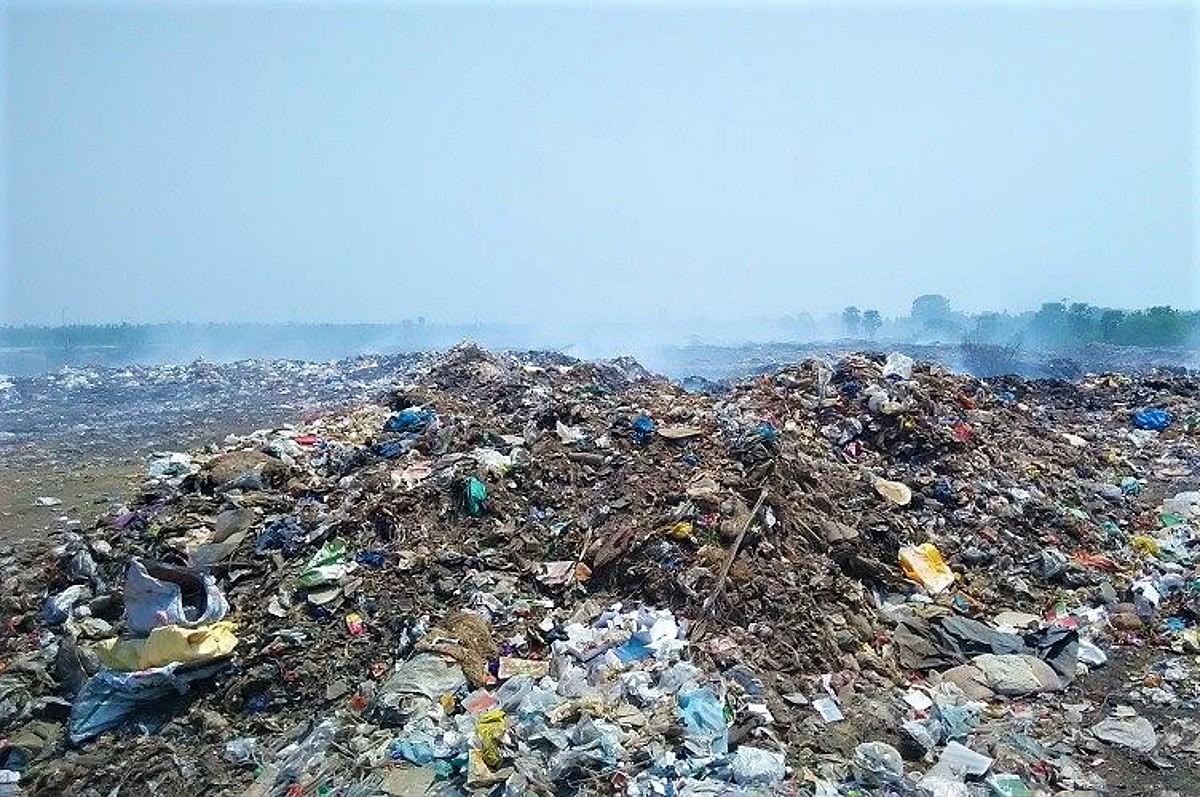
Representational Image. (Special Arrangement)

Synopsis: Indian cities cannot continue hiding their garbage beyond boundaries. After all, today’s dump yards are tomorrow’s neighbourhoods in waiting…
Seen the mountains of solid waste rising on the fringes of India’s cities? They are no longer mere dump yards; they have become hazardous chemical reactors that continuously release toxic gases, poisonous leachate and disease-causing pathogens into the environment.
Unlike rural waste, which traditionally returned to the soil as organic manure, urban waste is an indiscriminate mix of plastics, biomedical refuse, electronic waste, chemicals and construction debris. Left untreated, every truckload dumped at the city’s edge triggers a chain of chemical and biological reactions that neither municipal boundaries nor administrative complacency can contain. The pollution generated in these sprawling garbage mounds does not remain where it is dumped; it travels through the air people breathe, the water they drink and the food they consume. What is projected as urban sanitation is, in reality, the steady relocation of an environmental crisis.
That contradiction lies at the heart of India’s waste management policy. Municipal bodies have become remarkably efficient at removing garbage from public view but conspicuously ineffective at managing it scientifically. The prevailing philosophy remains deceptively simple—collect, transport and dump. It is a model that values optics over outcomes, cleanliness over sustainability and administrative convenience over environmental responsibility. Garbage disappears from city streets only to reappear as pollution on the urban periphery.
This illusion of cleanliness has been politically rewarding. Cities celebrate sanitation rankings, Smart City achievements and improved civic services, while the ecological costs remain hidden beyond municipal limits. The dump yard has become the invisible backyard of urban development, receiving everything that modern consumption discards but nothing that scientific waste management demands. The result is that India’s expanding cities are creating environmental liabilities faster than they are creating urban infrastructure.
Science has repeatedly demonstrated that an unmanaged landfill is not a passive storage site but an active chemical reactor. Organic waste decomposes anaerobically, generating methane—a greenhouse gas far more potent than carbon dioxide. As methane accumulates beneath layers of waste, spontaneous fires become inevitable, releasing toxic smoke containing particulate matter, dioxins and other carcinogenic compounds. During the monsoon, rainwater filters through decomposing garbage to produce highly contaminated leachate that infiltrates soil and groundwater. Throughout the year, plastics gradually disintegrate into microplastics that spread through rivers, agricultural fields and eventually the human body. Every season activates a different form of pollution.
Yet public policy continues to behave as though the problem ends once garbage leaves the municipal ward. It does not. Air carries pollutants across cities. Groundwater ignores administrative boundaries. Rivers transport contaminants downstream. Even microplastics have now been detected in human blood, lungs and placental tissue, demonstrating that waste dumped outside the city inevitably returns to its residents in invisible forms.
The greatest planning failure is the assumption that locating dump yards on the outskirts guarantees safety. Indian cities rarely stop expanding. What was once an isolated landfill soon becomes surrounded by residential colonies, schools, hospitals and commercial establishments. Urban expansion is steadily converting yesterday’s peripheral dumping grounds into tomorrow’s neighbourhoods. Instead of protecting future generations from environmental hazards, city planning is bringing those hazards closer to where people live.
Also Read | Bengaluru’s garbage crisis: Blocked landfills, unpaid workers and piling waste
Telangana mirrors this national challenge. Hyderabad has undoubtedly strengthened waste collection and processing systems, but the daily volume of municipal waste continues to outgrow available scientific disposal capacity. In many municipalities across the State, open dumping remains the dominant practice despite statutory rules mandating segregation and scientific processing. Around rapidly growing cities such as Warangal, Karimnagar, Khammam and Nizamabad, expanding urbanisation is steadily eroding the buffer zones around existing dump sites, exposing larger populations to long-term environmental risks.
The tragedy is that the consequences unfold too slowly to generate political urgency. Landfill pollution seldom produces the dramatic images associated with floods or industrial accidents. Instead, it contaminates groundwater one monsoon at a time, pollutes the atmosphere one landfill fire at a time and spreads disease through persistent exposure rather than sudden catastrophe. The communities that bear these costs are often those with the least political voice—waste pickers, peri-urban settlements and economically weaker households living closest to the dump yards.
The answer is not to identify larger parcels of land for future dumping but to fundamentally rethink urban waste management. Segregation at source cannot remain a voluntary civic appeal; it must become a rigorously enforced obligation. Organic waste should be composted or converted into biogas near the point of generation. Plastic and electronic waste must be recovered through an effective circular economy backed by genuine producer responsibility. Legacy dump sites require urgent biomining, scientific capping, methane capture and groundwater monitoring before they become permanent ecological scars.
Ultimately, a city cannot call itself clean simply because its garbage is hidden beyond its boundaries. True urban cleanliness is measured not by the speed with which waste disappears from the streets but by the responsibility with which it is processed after collection. Until governments abandon the outdated doctrine of ‘collect, transport and dump’, India’s growing dump yards will continue to function as giant chemical reactors—silent, expanding and increasingly dangerous monuments to a model of urbanisation that mistakes displacement for disposal.
Also Read:
Tamil Nadu’s rivers are carrying plastic into the sea — and possibly back onto people’s plates
AI robot for filth: Kerala’s costly cover-up of civic failure
(Edited by R Rajesh Kumar.)



