
Published Sep 09, 2026 | 9:05 AM ⚊ Updated Sep 09, 2026 | 9:05 AM

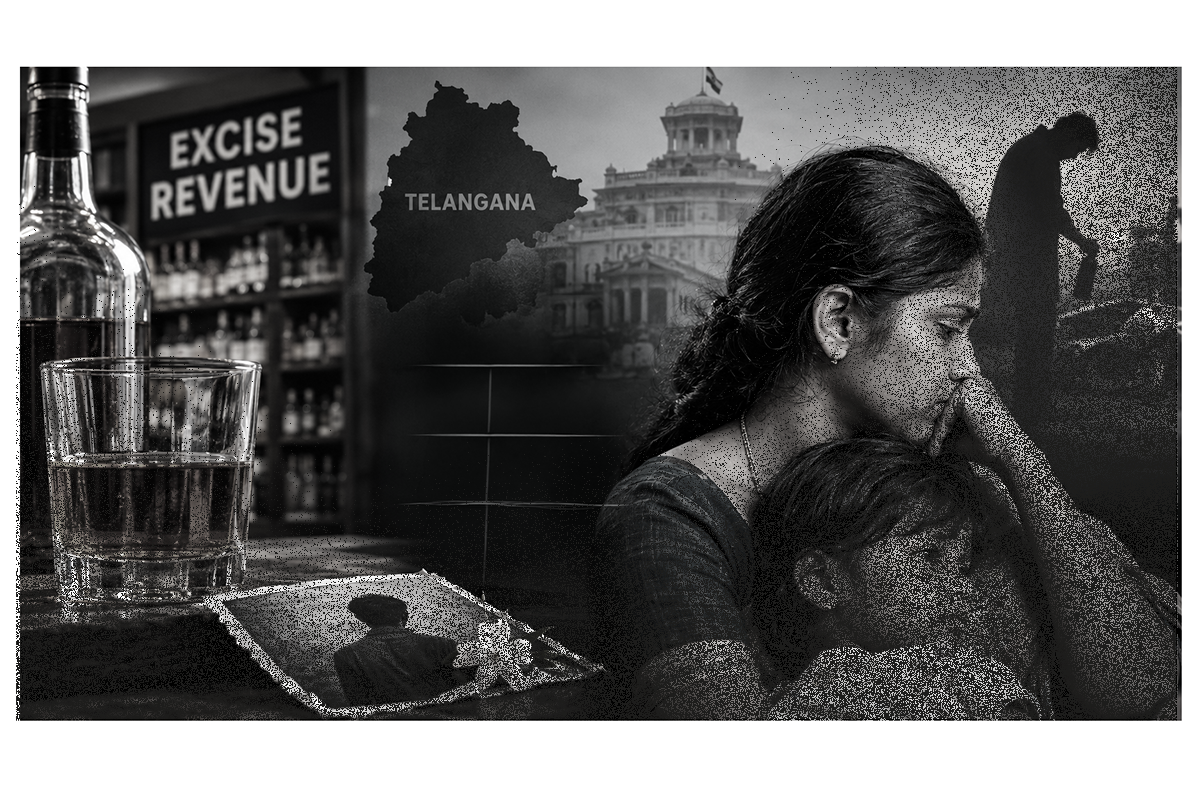
Image used for representational purpose. (AI generated)

Synopsis: The warning signs are unmissable. With 43.9% of Telangana’s men aged 15 and above consuming alcohol, according to NFHS-6, the state does have a drinking problem it needs to confront. The high concentration of young widows in the state also highlights the need for an urgent investigation into premature male deaths, alcohol abuse, accidents, suicides and inadequate healthcare.
Telangana counts every bottle sold and every rupee earned through excise, but it does not adequately count the young men dying from alcohol-related disease, suicide and accidents—or the women left behind with children, debts and shattered lives. The state’s alcohol policy is judged primarily by revenue, while its human cost remains fragmented across hospital records, police files and pension databases.
The warning signs are unmistakable. According to NFHS-6, conducted in 2023–24, 43.9% of Telangana’s men aged 15 and above consume alcohol, compared with the national average of 18.9%.
Telangana has the highest male alcohol consumption rate in India among the major states. Female alcohol consumption in Telangana is also exceptionally high at 7.1%, against 1.1% nationally.
A 2026 Journal of Global Health study, based on NFHS-5 household data, found that 5.2% of Telangana’s ever-married women below 45 were widowed in 2021, compared with the national average of 2.7%. Thus, premature widowhood in Telangana was approximately 93% higher than the national average.
The Telangana widow-pension database reveals an alarming social reality.
Of 14.54 lakh beneficiaries, 5.92 lakh—or 40.7%—are below 45, including 1.02 lakh (7%) below 30. Such a high concentration of young widows demands urgent investigation into premature male deaths, alcohol abuse, accidents, suicides and inadequate healthcare.
Demographic data reinforces the concern: 5.2% of Telangana’s ever-married women below 45 are widowed, nearly double India’s 2.7%, and higher than Karnataka and Tamil Nadu (3.9%), Maharashtra (3%) and Kerala (1.8%). These comparisons concern widowhood prevalence, not pension coverage.
The highest incidence of widow pensioners belongs to the districts of Hyderabad (63%), Kothagudem and Narayanpet (45%), and Khammam, Rangareddy and Vikarabad (43%). A total of 7% of widow pensioners are below the age of 30. These alarming numbers demand a serious study into how young married women are becoming widows and why they are not getting remarried.
More disturbing is the large number of women who remain unmarried after early widowhood, bearing financial and childcare responsibilities alone. Yet the government treats them merely as pension recipients, without studying why husbands are dying young or creating meaningful pathways for employment, remarriage, counselling and social reintegration.
The crisis begins before widowhood. NFHS-5 found that approximately 36.9% of Telangana’s married women had experienced physical or sexual violence at the hands of their spouses. The relationship with alcoholism was stark: reported violence stood at approximately 23% where the husband did not drink, increased to 44% where he drank but was not frequently drunk, and reached 70% where the husband was frequently intoxicated.
The implication is clear. Alcohol is not the only cause of domestic violence—patriarchy, control and economic dependency are fundamental drivers—but repeated intoxication clearly magnifies the danger.
Women therefore suffer twice: first as wives facing lost household income, debt and violence, and later as widows carrying responsibility for children and elderly dependants.
Telangana urgently needs an Alcohol Mortality and Premature Widowhood Commission. It must link hospital, civil-registration, police, Aarogyasri and pension records; conduct verbal autopsies for unexplained male deaths below 60; and publish district-wise figures for alcohol-attributable mortality and widows below 30, 40 and 45. A fixed share of excise revenue should fund de-addiction, liver screening, domestic-violence services, young widows’ employment and their children’s education.
The central question is brutally simple: Can a government celebrate rising liquor revenue when the social bill is being paid by widows and children? Until Telangana counts broken families with the same precision with which it counts liquor sales, its alcohol policy will remain not merely short-sighted, but morally indefensible.
Also Read:
Village of widows: Women pay the price for Puducherry’s alcohol-dependent economy
(Amarnath Sarangula is a spokesperson for the BJP in Telangana. Views are personal. Edited by R Rajesh Kumar.)



