
Published Aug 17, 2026 | 7:00 AM ⚊ Updated Aug 17, 2026 | 7:00 AM

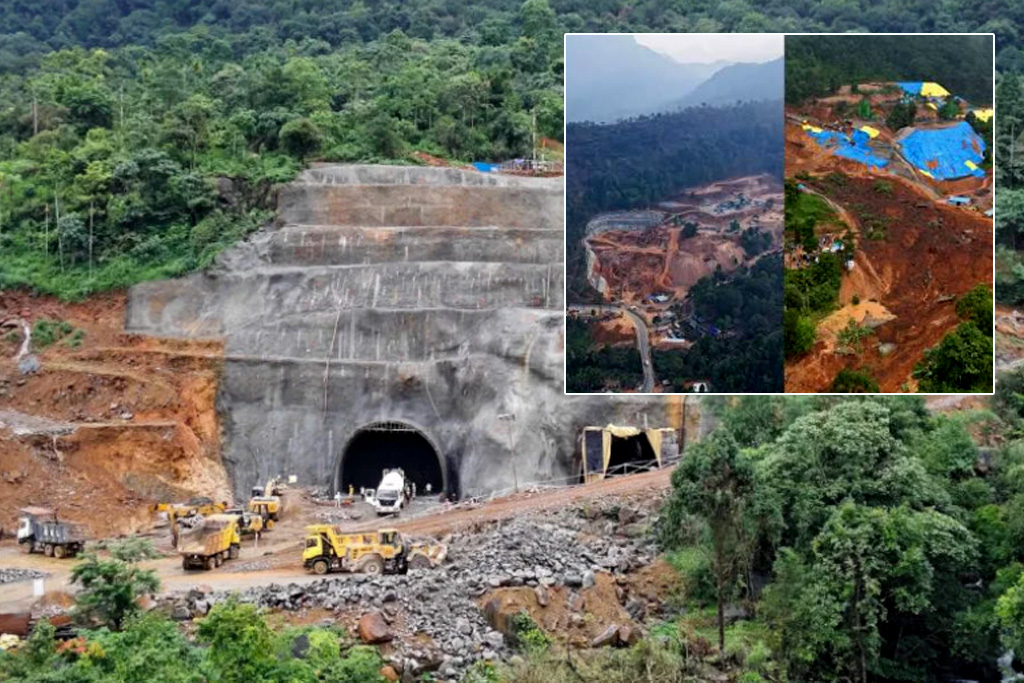
Anakkampoyil-Meppadi tunnel road project.

Synopsis: Wayanad has been seen as too fragile to build a life-saving hospital for poor citizens, but strong enough to accommodate daily convoys of heavy trucks hauling stone, cement, and metal up the hills for luxury resorts. Such greed, coupled with disregard for the warnings of experts like Madhav Gadgil, has meant that Wayanad is running out of time. Something needs to be done—and fast. Is the Kerala government willing?
Whenever dark monsoon clouds begin to gather over the misty peaks of Wayanad, a familiar, paralysing fear takes hold of our hearts. It is not just the rain we fear anymore; it is the terrifying thought of what the rain will take away from us this time. As news of swelling rivers and collapsing hillsides fills our screens, one agonising, silent question echoes through every home on this plateau: Have we lost our home forever?
Living in Wayanad today feels like watching a loved one slowly bleed to death, not just from the fury of nature, but from human greed, systemic corruption, and sheer indifference.
In places like Meppadi, people haven’t lived in peace for years. Long before the disaster at Mundakkai, whenever heavy rains lashed the hills, families would pack their bags with trembling hands and flee to relatives’ homes in safer districts. They lived with their hearts in their mouths, haunted by the ghost of past landslides like Punchirimattam. Yet, in a cruel paradox born out of economic pressure and the lure of tourism, three- and four-story concrete houses kept rising on those very fragile slopes. People built bigger homes hoping to rent rooms to tourists, piling tons of concrete on soil that was already crying out for relief.
Now, with news of the new Anakkampoyil-Meppadi tunnel road project, a fresh gold rush has begun. Outsiders are pouring in, renting places, and frantically setting up new resorts and commercial ventures, completely ignoring the fragile earth beneath their feet.
What breaks our spirit as long-time residents is the painful double standard of governance. For decades, the people of Wayanad have begged for a government medical college. When a critically ill patient needs emergency care, we have to endure hours of a perilous journey down the winding Ghat roads to neighbouring districts. Yet, our plea for a hospital was recently rejected on the grounds that Wayanad is an “ecologically fragile zone.”
How is it that our environment is too fragile to build a life-saving hospital for poor citizens, but strong enough to accommodate daily convoys of heavy trucks hauling stone, cement, and metal up the hills for luxury resorts? Official reports suggest that nearly half of the tourism properties in Wayanad operate without proper licenses or environmental clearances, misusing online single-window schemes or building illegal extensions in high-hazard zones. While a common man faces endless red tape and strict rules just to build a small house, massive illegal commercial empires flourish with impunity.
We once had a young District Collector who truly understood this landscape. He conducted thorough topographical studies and strictly restricted building heights—limiting structures to one, two, or three floors based on the soil’s carrying capacity. But before the ink on his orders could dry, he was quietly transferred because of what many believed was political pressure.
Predictably, high-rise flats and concrete monsters shot up across Vythiri and Kalpetta after that. Tragic as it is, the administration only called that same officer back as a special disaster management official after massive landslides had already destroyed lives.
We act like rebellious teenagers when it comes to nature. When visionary scientists like Madhav Gadgil gave us timely warnings to protect our ecologically sensitive zones, we chose not to listen.
Also Read | Man-made disasters in ‘God’s own country’: The cost of forgetting Gadgil Committee Report
This greed has trickled down to our everyday lives.
Years ago, I remember seeing a crystal-clear stream flowing peacefully beside a relative’s house in Pala. When I returned years later, the stream was gone—buried under a massive concrete building constructed right over its natural path. When the 2018 floods hit Kerala, my heart sank thinking about that choked stream.
We forget that in the end, a human being only needs six feet of land. Yet, people greedily encroach upon natural streams and public drains just to extend their compound walls. Even pre-monsoon drain cleaning has turned into a money-making gimmick rather than a genuine service. In places like Ambalavayal, workers under employment schemes indiscriminately dig and scrape the banks of streams without any engineering guidance. With the very first rain, the greedily scraped banks collapse, ruining the streams further. Meanwhile, property owners cover public drains with concrete slabs or dump household waste into them, completely washing their hands of any civic responsibility.
Wayanad is running out of time. If those in power continue to turn a blind eye, this beautiful plateau will soon exist only in geography books and history lessons. We do not just need policies; we need an honest conscience. Environmental rules must be applied fairly, strict legal action must be taken against stream encroachments and illegal resorts, and scientific wisdom must guide our development.
Before the next rain washes away what little we have left, I beg those who govern us: stop treating our home as a commercial commodity, and start treating it as the fragile, living ecosystem it is.
Also Read:
Denial and disaster: How development priorities failed Wayanad again
A problematic Wayanad tunnel, red flags, disputes, deaths and concerns
(Edited by R Rajesh Kumar.)



