

Published Apr 21, 2026 | 4:00 PM ⚊ Updated Apr 21, 2026 | 4:00 PM

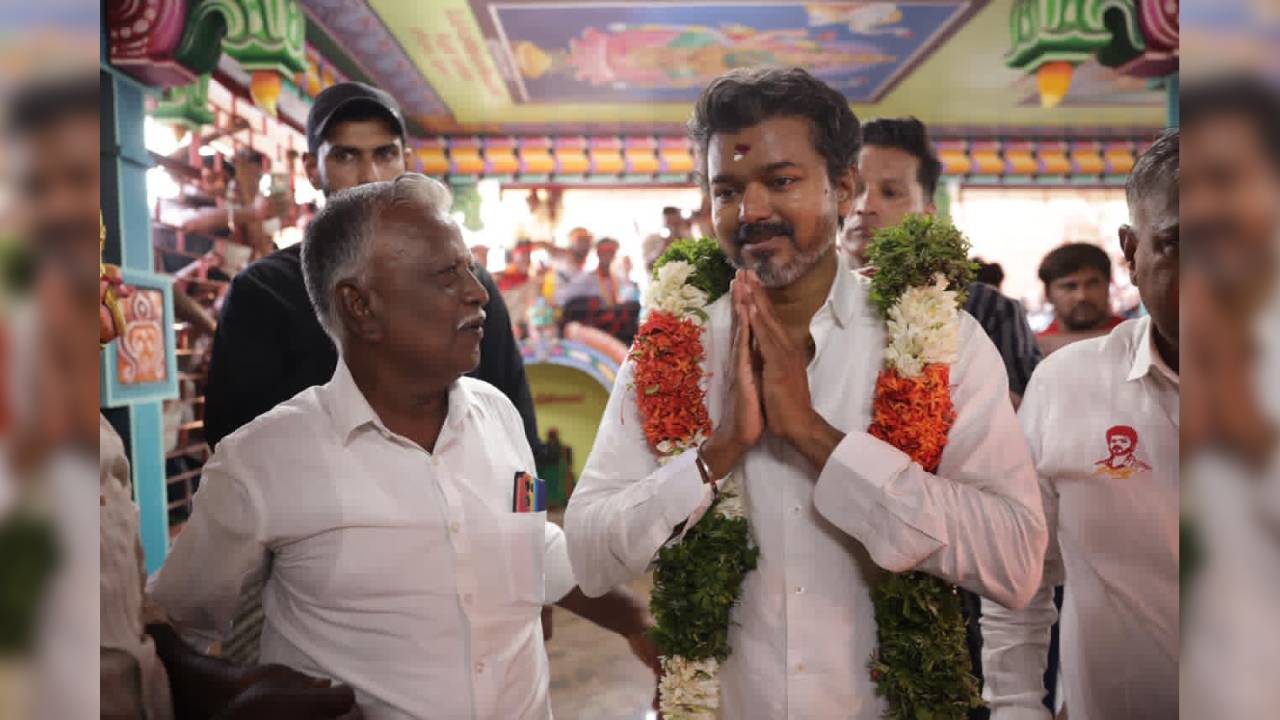
The central question is not whether Vijay's popularity would converted into votes.

Synopsis: Indicators point towards a likely return of the DMK to power. The absence of a strong anti-incumbency wave, combined with organisational strength and welfare consolidation, places the ruling alliance in a favourable position. The AIADMK may improve in certain pockets but lacks the momentum for a statewide resurgence. Vijay’s role, however, remains pivotal.
Tamil Nadu may be heading into one of its most unusual elections in decades: not because of a sweeping anti-incumbency wave or a dramatic political upheaval, but because the very structure of the contest has changed.
What was once a predictable bipolar battle has transformed into a triangular contest, and in such a contest, victory is often decided not by dominance but by division.
At the heart of this shift is Vijay and his party, the Tamilaga Vettri Kazhagam (TVK). His rise has injected a new energy into the political landscape, particularly among younger voters. Across urban Tamil Nadu, from Chennai to Coimbatore, there is visible enthusiasm around his entry into politics.
Related: Popularity contest vs political clarity: TN polls in a nutshell
For many first-time voters, he represents a break from established political patterns and a chance to experiment with an alternative. Yet, the central question is not whether Vijay is popular; it is whether that popularity can be converted into political power.
Tamil Nadu’s electoral history suggests that such transitions are rarely straightforward. The state has long been shaped by the Dravidian political tradition, built by leaders like M Karunanidhi and J Jayalalithaa. Their parties developed deep organisational networks that extend from state leadership down to booth-level mobilisation. Even today, elections are determined as much by these structures as by public sentiment.
This is where the contrast becomes evident. Field assessments and voter interactions by the Peoples Pulse Research Organisation indicate that while Vijay commands attention and enthusiasm, his party lacks the organisational depth required to translate that support into consistent electoral gains. In several regions, particularly rural belts, the absence of a visible ground network remains a key limitation.
At the same time, the ruling DMK, led by Chief Minister MK Stalin, enters the election with a relatively stable position. Unlike previous electoral cycles in Tamil Nadu, there is no overwhelming anti-incumbency sentiment. Instead, there is a mix of mild dissatisfaction and broad acceptance. Governance delivery, infrastructure improvements, and welfare schemes have contributed to a perception of administrative continuity.
Related: Who will Tamil Nadu women vote for?
One of the most decisive factors in this election could once again be the women voters. Tamil Nadu has one of the highest proportions of women voters in the country, and their electoral behaviour has historically influenced outcomes. Welfare measures and direct benefit schemes have strengthened the DMK’s position among this segment. While issues such as safety and cost of living are being debated, they have not yet translated into a consolidated anti-incumbent wave.
The opposition landscape, however, appears far more fragmented. The AIADMK, led by Edappadi K Palaniswami, continues to operate without the unifying charisma that once defined it under Jayalalithaa. Its strength remains concentrated in specific regions, particularly western Tamil Nadu, but its statewide expansion remains constrained.
Internal divisions and leadership transitions have further weakened its ability to present a cohesive challenge. Its alliance with the BJP has added another layer of complexity. In a state where linguistic identity and regional pride are deeply embedded in political consciousness, the BJP’s positioning has not significantly expanded the alliance’s appeal. In fact, there is evidence to suggest that this association may have limited its ability to attract undecided voters.
It is within this fragmented opposition space that Vijay’s emergence becomes politically consequential. Ground-level observations reveal that his support base is not evenly distributed. It is strongest among urban youth, first-time voters, and sections seeking change. Many of these voters express dissatisfaction with existing political choices but are not fully aligned with the AIADMK. This creates a crucial dynamic.
Related: Delta, Tiruchirappalli regions weigh their options
A significant chunk of Vijay’s support appears to come from the anti-incumbency vote pool that would traditionally consolidate behind the opposition. Instead of strengthening the challenge against the ruling party, this vote is now divided. In electoral terms, this fragmentation reduces the margin required for the incumbent to win in closely contested seats.
Estimates based on current trends suggest that TVK could secure a vote share between 19 percent and 24 percent. However, due to its uneven distribution and organisational limitations, this may translate into only eight to 14 seats. The impact of this vote share lies not in the seats won, but in the seats influenced. The broader electoral projections reinforce this pattern.
The DMK-led alliance is expected to secure between 148 and 162 seats, with the DMK itself likely winning around 120 to 130 seats. Its allies, including the Congress, may contribute an additional 25 to 30 seats. The AIADMK-led alliance is projected to remain in the range of 55 to 72 seats.
Vote share estimates further underline the emerging trend. The DMK alliance is likely to secure around 39 percent to 42 percent of the vote, while the AIADMK alliance may remain between 29 percent and 32 percent. Vijay’s party, with its potential 20 percent plus vote share, becomes the critical variable that reshapes outcomes without directly capturing power. Beyond numbers, the election is also being shaped by competing narratives.
The DMK has framed the contest as one of protecting Tamil identity and state autonomy, particularly in the context of centre-state relations. This messaging continues to resonate across sections of the electorate. Vijay, in contrast, represents a narrative of change driven by aspiration rather than ideology. His appeal lies in emotion, symbolism, and generational shift.
However, history suggests that charisma alone is not enough. Successful political transitions in Tamil Nadu have required not just popular appeal, but also sustained organisational effort and ideological clarity. At present, Vijay’s movement appears to be at an early stage, still evolving from a wave of support into a structured political force. This makes the 2026 election less about a change in power and more about a change in dynamics. The traditional bipolar system is giving way to a more complex electoral structure, where new entrants influence outcomes without immediately replacing established players.
All current indicators point towards a likely return of the DMK to power. The absence of a strong anti-incumbency wave, combined with organisational strength and welfare consolidation, places the ruling alliance in a favourable position. The AIADMK may improve in certain pockets but lacks the momentum for a statewide resurgence. Vijay’s role, however, remains pivotal.
By attracting a significant share of the anti-incumbency vote, he alters the competitive balance of the election. His presence ensures that the contest is no longer straightforward but fragmented and unpredictable. In that sense, the 2026 election may not produce a new ruling force. But it will mark the arrival of a new political factor.
Vijay may not win Tamil Nadu. But he may well decide who does.
(Views are personal. Edited by Majnu Babu).



