
Published Oct 30, 2026 | 7:00 AM ⚊ Updated Oct 30, 2026 | 7:00 AM

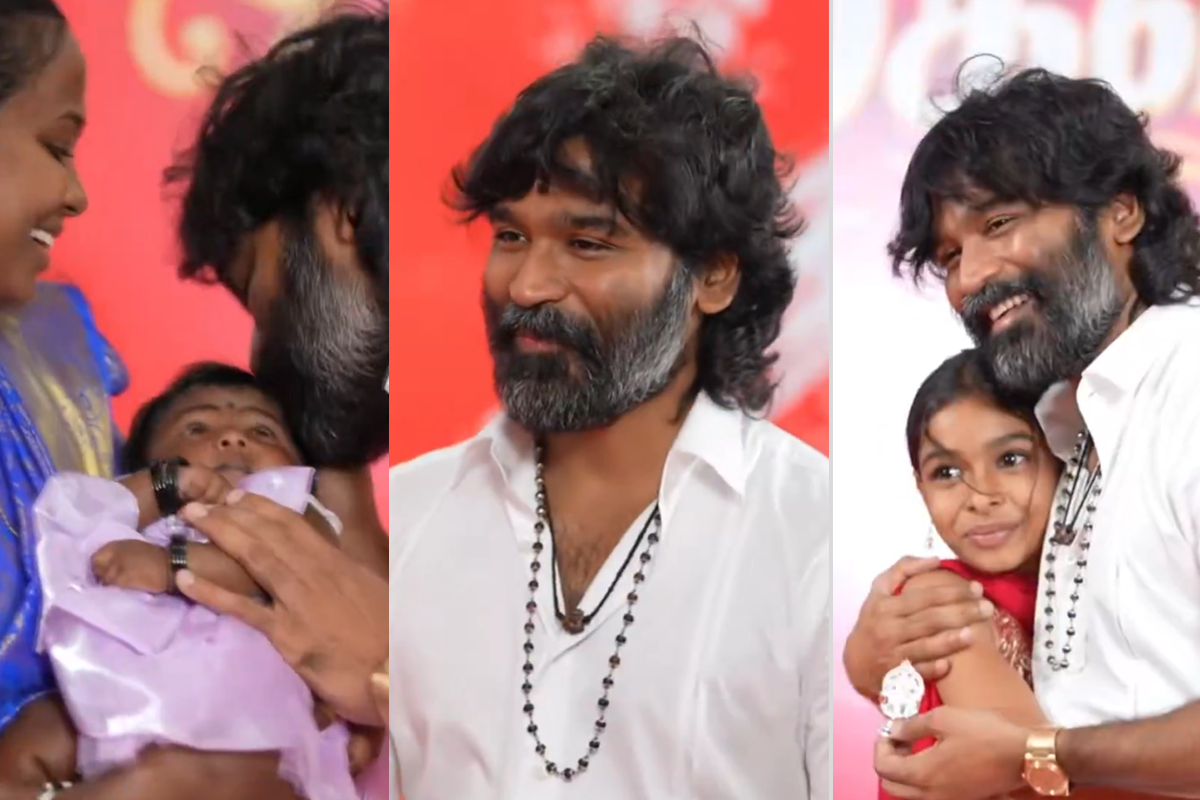
Around 3,000 women attended Dhanush Narpani Iyakkam gathering in Chennai on October 25.

Vijay’s victory in the 2026 Tamil Nadu Assembly election has made the entry of other film stars into politics appear more plausible. Dhanush’s fans association has been reorganised as Dhanush Narpani Iyakkam, and around 3,000 women attended its gathering in Chennai on October 25. Although Dhanush has not announced any plans to enter politics, the development has attracted attention.
The gathering also attracted attention because silver lamps distributed to participants carried a lotus emblem, the BJP’s election symbol. The organisation maintained that it was the manufacturer’s mark rather than a political signal. Reports of Dhanush’s meetings with a senior RSS leader in August and September have added to the speculation. These developments merit scrutiny, but they do not establish his political intentions.
Some leaders of the ruling Tamilaga Vettri Kazhagam (TVK) have responded combatively to the possibility of his entry. Their response has been particularly revealing. On October 20, party spokesperson M. Sathya Kumar welcomed the possibility of Dhanush entering politics, suggesting that TVK could inspire others to join public life. Four days later, ministers Aadhav Arjuna and N. Marie Wilson dismissed the prospect of new entrants challenging Vijay. Arjuna questioned whether political leaders in Delhi were backing newcomers, while Wilson insisted that Vijay had no serious rival. The contrast raises a question about TVK’s understanding of political competition.
A party that has benefited from an actor’s right to enter politics should recognise that the same democratic principle applies to others. Welcoming political participation in general is easier than accepting a competitor who could draw upon similar sources of public appeal.
Also Read: Theni jailbreak: Five prisoners recaptured, 12 remain at large; nine prison staff suspended
This reaction also exposes a strategic challenge for TVK. Vijay’s electoral success has demonstrated that an established film following, combined with political organisation and effective electoral mobilisation, can help a newcomer win power. However, that achievement does not give TVK a permanent advantage over other film personalities. If Dhanush or another actor develops a political following, TVK will have to compete on the strength of its policies, organisation and record in government. Its long-term prospects will depend on whether it develops into an institution capable of sustaining public support beyond Vijay’s personal appeal.
The distinction between popularity and political organisation is central to this question. A film star can attract large crowds, command attention on social media, and mobilise admirers. These advantages provide visibility and an initial network of supporters. However, they do not automatically produce a party with a coherent programme, capable local leadership, or sustained engagement with public problems. Fan associations and welfare activities can help establish community relationships. Their political significance, however, depends on whether they develop into structures that encourage participation, identify local needs, and sustain collective activity independent of the star’s presence.
Vijay entered politics with a fan network that had developed over many years and undertaken welfare activities. TVK gave that network a political framework through which it could participate in an election. Dhanush’s reorganisation of his fan association may be an attempt to build a similar foundation, but the comparison remains premature. A gathering of supporters demonstrates organisational capacity and personal appeal; it does not reveal how those supporters would vote.
The crucial question, therefore, is not whether Dhanush can attract a crowd comparable to Vijay’s. It is whether he can build an organisation that translates personal loyalty into political participation. Such an organisation would need to recruit credible local leaders, articulate positions on public issues, and establish procedures for making decisions and holding its leadership accountable. Without these developments, welfare activities risk remaining dependent on a celebrity’s image rather than becoming the basis of a durable political institution.
Speculation about other actors reinforces the need for this distinction.
Also Read: Former Tamil Nadu Minister Anbil Mahesh remanded in judicial custody till 6 November
Trisha’s appearance at the inauguration of a mobile phone showroom in Coimbatore on October 24 drew a large crowd and was likened to a mini roadshow. Sivakarthikeyan has also figured in discussions about possible political entrants. Neither public attention nor participation in a crowded event establishes political ambition. Vijay’s victory has changed how such appearances are interpreted, making ordinary celebrity visibility appear politically consequential. Yet speculation about an actor’s intentions should not be confused with evidence of a political project.
Tamil Nadu’s history of cinema and politics provides a context for these developments, but it does not justify the assumption that film popularity naturally produces political leadership. The state’s political history has also been shaped by ideological debate, party organisation and social coalitions built around questions of caste, language, social justice, welfare, and state autonomy. Cinema has helped political figures communicate with large audiences and cultivate public identities. Its influence, however, has operated alongside political movements and organisational work.
M.G. Ramachandran’s career illustrates this distinction. He joined the DMK in 1953, entered the Legislative Council in 1962, and was elected to the Assembly in 1967. He founded the AIADMK in 1972 and subsequently became chief minister. His rise involved years of political association and electoral activity. His cinematic popularity was a significant political resource, but it operated within an evolving party system and a political environment shaped by the Dravidian movement. Reducing his career to the transfer of film stardom into public office overlooks the political relationships and organisational developments that made his success possible.
New entrants need not follow MGR’s trajectory. They do, however, have to demonstrate why their public appeal should translate into political authority.
Voters are entitled to elect anyone who meets the constitutional requirements for office. The relevant democratic question is whether candidates can explain their political priorities, build credible organisations and demonstrate their readiness to exercise public responsibility. Familiarity and popularity may influence electoral choices, but neither guarantees administrative competence or accountability.
Also Read: Annamalai’s tacit support to CJP, BJP’s counterattack: What does it mean for his political future?
There is also an ideological question surrounding Dhanush’s possible entry. Reports have suggested that he might adopt a form of spiritual politics resembling the language Rajinikanth used when he announced his political ambitions in 2017. Dhanush’s reported meetings with an RSS leader have added to this speculation, but he has not clearly stated his political position. It would therefore be premature to assign him an ideological identity on this basis.
Nevertheless, the possibility raises a substantive question about the political space available to religious nationalism in Tamil Nadu. The Dravidian movements have emphasised social justice, rationalism, and linguistic identity, although Tamil society is neither uniformly rationalist nor free from religious influence. Religious beliefs and practices remain important in public life, and political parties have approached them in different ways. Any new entrant seeking electoral support would need to explain how religious identity, social equality, caste relations, and minority rights fit into their political philosophy. The issue is not whether a candidate has religious beliefs, but how those beliefs inform public policy and the exercise of state power.
The AIADMK’s reported willingness to accommodate Dhanush adds another dimension to the emerging contest. TVK’s electoral ambitions could extend beyond challenging the DMK to displacing the AIADMK as the principal opposition force. If Dhanush enters politics with the AIADMK’s support, he could complicate that effort by creating another source of celebrity-led mobilisation. An independent political platform would pose a different challenge, depending on its organisation, electoral support, and ideological position. In either case, the outcome would depend less on the initial excitement surrounding his entry than on the constituencies he could attract and the political alliances he could sustain.
Actors have every right to enter politics, and voters have every right to scrutinise their claims and capabilities.
Vijay’s victory has demonstrated that celebrity can provide an effective entry point into electoral politics. It has not established that the same route will work for every actor or that electoral success alone resolves the questions of governance and accountability. So, the real test for aspiring actor-politicians is whether they can move beyond personal popularity to build political organisations with clear programmes, credible leadership, and public accountability.
For TVK, the corresponding test is whether it can establish its identity through its policies and performance rather than assume that Vijay’s stardom will continue to distinguish it from potential rivals. Film fame may create political opportunities, but the legitimacy and durability of political leadership will ultimately depend on how leaders use public power, respond to citizens’ needs, and account for their decisions.
(Edited by Fayisa CA)



