


Published May 21, 2026 | 7:00 AM ⚊ Updated May 21, 2026 | 7:00 AM

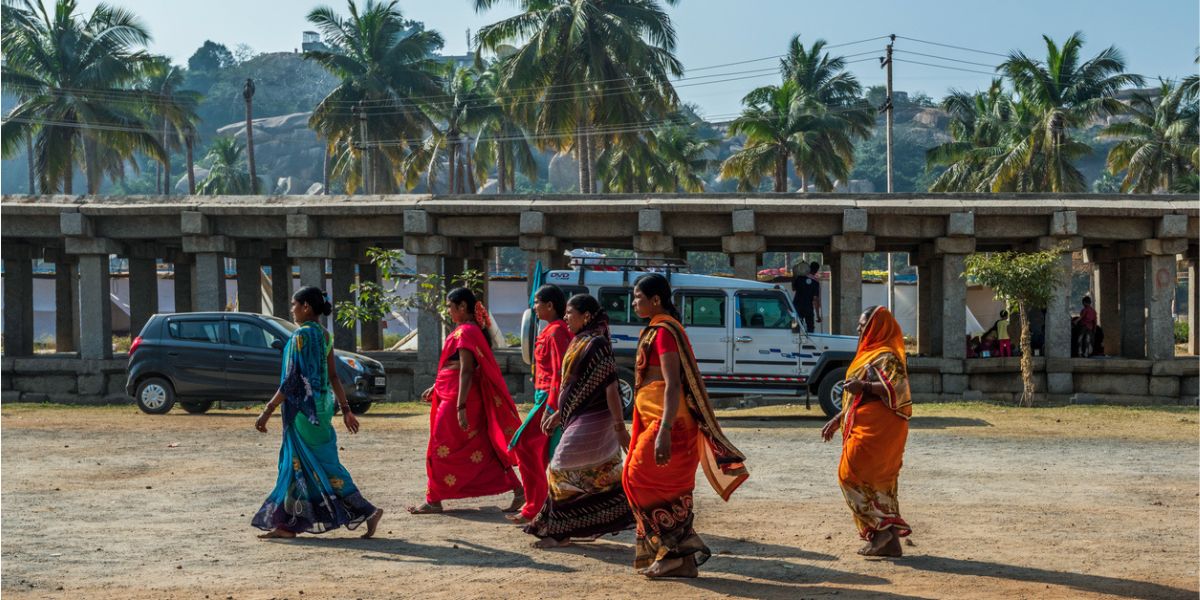
A group of women in Karnataka. (iStock)

Synopsis: To ensure gender justice, it’s significant to revisit the economic structures, social norms and political institutions that influence the lived realities of women in India. It can be met with more sophisticated strategies; strategies which appreciate the multidimensionality of gender justice and the need for long-term, coordinated action at economic, social and political levels.
When the world is celebrating International Women’s Day 2026 under the theme ‘Justice for Women and Girls’, it is worth contemplating what justice means in a world where formal equality coexists with structural inequalities.
The Indian experience of gender justice offers a compelling case study, one characterised by constitutional guarantees, progressive legislation, and tangible improvements in some indicators, but marred by deeply seated challenges that can no longer be addressed with mere policy solutions.
To unravel this paradox, it’s significant to revisit the economic structures, social norms and political institutions that influence the lived realities of women.
Also Read: Mamata transformed into a protagonist of many women leaders in India
The gender situation in India is the study of opposites. According to the World Economic Forum Report 2024, the country ranks 131st in the world on the Gender Gap Index, which is not comfortable to be associated with, as it ranked India the fifth-largest economy in the world.
According to the Periodic Labour Force Survey, 2023, the participation of women in the labour force has been on the increase, as 39.8 percent of women participated in the labour force in 2022-23 compared to 24.5 percent in 2018-19, a phenomenon that the policy circles have been celebrating.
However, this statistical success misleads a more complicated truth that much of this success is a result of distress-related entry into low-quality agricultural and informal sector work instead of a true economic empowerment, as noted by Afridi et al. (2018), and Klasen and Pieters (2015).
Similarly, the gender wage gap decreased to 24 percent in 2025 compared to 38 percent in 1996 (Deshpande and Singh, 2021; Madheswaran and Khasnabis, 2017), indicating that progress has been made towards pay equity.
Nonetheless, studies have shown that about two-thirds of this disparity is due to discrimination and not because the two have a difference in education, experience and productivity (Khanna, 2012).
The result contradicts the notion that the choice or qualification of women causes wage differences. In reality, it is based on structural restrictions within the labour markets themselves.
One of the most significant blind spots in conventional economic analysis concerns unpaid care work — cooking, cleaning, childcare, and eldercare that sustains households and communities. There have always been arguments by feminist economists that mainstream economic structures systemically undervalue this labour since it cannot be transacted in the marketplace (Folbre, 2006; Himmelweit, 2002).
In India, time-use surveys show that women do 82 percent of all unpaid care services, and contribute to 39 percent of the GDP, but this contribution remains invisible in the national accounts (Hirway, 2015).
This invisibility has profound consequences. In situations where the care work is not included, it cannot be sufficiently supported by the means of the public policy. Women who spend hours a day on unpaid domestic labour have less time to spend on education, paid labour, or political activity, known as time poverty by economists (Antonopoulos and Hirway, 2010).
This limitation cuts across all social classes, but with the most severe impacts experienced by poor and marginalised women who do not have access to labour-saving technology or have access to paid domestic labour.
The capability approach developed by Amartya Sen and Martha Nussbaum provides a useful perspective to help understand these dynamics. Rather than focusing solely on income or consumption, this framework asks whether people have the substantive freedom, ie., the capabilities, to live lives they have reason to value.
In this sense, gender justice should not only be formal rights but the actual capacity to exercise them: bodily integrity, practical reason, affiliation with others, and control over the environment (Robeyns, 2003; Nussbaum, 2000).
The recent rise in women’s participation in the labour force calls for a closer examination. Although any increase in economic opportunities should be considered, the quality of the employment opportunities is just as important as their quantity.
Currently, 71.8 percent of all working women are engaged in agriculture, as compared to 54.5 percent of all working men, according to the Periodic Labour Force Survey, 2023 and the International Labour Organisation (ILO) (2018). Moreover, 90 percent of the working women are in the informal sector, lacking social security, regular wages, and safe working conditions.
This trend is what labour economists refer to as occupational segregation, the concentration of women in some sectors and types of jobs, which are generally the lowest-paid, least secure and least promotional (Anker, 1997). This type of segregation is not merely a question of personal preferences but a byproduct of intricate interactions: social norms about what women can do in the workplace, employer discrimination, and limited choice of women due to their caregiving responsibilities (Klasen and Pieters, 2015).
The Mahatma Gandhi National Rural Employment Guarantee Act (MGNREGA), a flagship employment programme in India, shows potential and constraints of policy interventions at the same time. The programme aims to ensure that rural households have at least 100 days of wage employment per annum, with provisions to ensure women’s involvement.
The number of women participating in MGNREGA is around 55 percent, and studies have found that the programme has empowered women to have increased bargaining power at the household level, while reducing migration of distress (Khera and Nayak, 2009; Afridi et al., 2016).
Yet, its transformative possibilities are constrained by the challenges of implementation: delayed wages, lack of sufficient child-care facilities, and even social norms that do not allow women to move freely (Dutta et al., 2012).
Another way to look through the intricacies of gender justice is through political representation. The success of constitutional amendments in India to reserve 33 percent of seats in village panchayats for women has been remarkable. At this level, women have been elected to 46 percent of the elective posts, said the Ministry of Panchayati Raj (2023).
However, according to the Election Commission of India, the percentage of women in the legislature is less than 15 percent at the state and national levels.
This difference brings about significant questions regarding the interrelationship between descriptive representation — the presence of women in political institutions — and substantive representation — the promotion of the interests of women through policy.
A study suggests that political participation by women at the local level has resulted in more investment in public goods prioritising women, such as drinking water, sanitation and roads (Chattopadhyay & Duflo, 2004). However, female representatives usually have considerable constraints, such as a lack of decision-making power, opposition from male peers and relatives, and insufficient training to occupy political positions (Buch, 2009).
The Women’s Reservation Bill, which was initially passed in 2023, known as the Nari Shakti Vandan Adhiniyam (Constitution 106th Amendment Act), will reserve 33 percent of seats in Parliament and state legislatures. Although this is a big step in the right direction, the effects of the move will depend on how it is implemented and whether it addresses deeper causes of women’s lack of political agency.
The experience of other countries shows that quotas should be used. However, it is also necessary to take measures to develop the political capacity of women, break norms of discrimination, and ensure that women representatives have real authority (Htun and Weldon, 2018).
Also Read: Andhra Pradesh announces cash for more children but women pay with their health
What would truly radical gender justice be? The facts indicate that there are several major paths. To begin with, the economic policy needs to acknowledge, decrease, and redistribute the work of unpaid care, the so-called 3Rs (Recognition, Reduction and Redistribution of unpaid care work) framework that was developed by feminist economists (Elson, 2017).
It implies an investment in public care infrastructure — childcare, eldercare, healthcare — and a more equal sharing of care responsibilities between women and men, and making care work valued and supported as opposed to being taken for granted.
Second, employment policies must be based on the principle of quality as well as quantity and creating decent work opportunities, which provide decent wages, social protection and career growth opportunities. This will necessitate occupational segregation, greater enforcement of equal pay and anti-discrimination laws, and a challenge to the norms that limit occupational choices of women.
Third, political empowerment should not be limited to numerical representation. It should give women a real voice and agency in the decision-making process. This implies not merely reserving seats, but also developing the political skills of women, addressing the issues of violence and harassment that scare women away, and building the cultures of their institutions that appreciate different opinions.
But all these efforts must be based on an appreciation of intersectionality-the understanding that gender intersects with caste, class, religion, disability, and all other identities to create specific patterns of privilege and disadvantage (Crenshaw, 1989). Policies that favour urban, educated women may be of little benefit to rural, Dalit, or Muslim women who are marginalised in a multi-layered or overlapping manner.
When we consider the theme of justice for women and girls, experiences in India make us aware that progress is not linear and automatic. Formal equality is not the same as substantive freedom; improvement in statistics may not be followed by a reduction in inequalities, and even well-intentioned policies may fail to achieve their goals without considering the issue of implementation and structural barriers.
But such complexity must not be taken as a sign of despair. It can be met with more sophisticated strategies; strategies which appreciate the multidimensionality of gender justice and the need for long-term, coordinated action at economic, social and political levels.
It is not merely about incorporating women in the prevailing structures, but to change those structures so that they are supportive of the capabilities of all people.
(Views are personal. Edited by Muhammed Fazil.)



