


Eight out of the nine grassland bird species studied in the Nilgiris showed significant population declines. Among the worst affected were the Nilgiri Pipit and the Malabar Lark, which have undergone the steepest declines over time.

Published Jul 27, 2025 | 4:22 PM ⚊ Updated Jul 27, 2025 | 5:15 PM

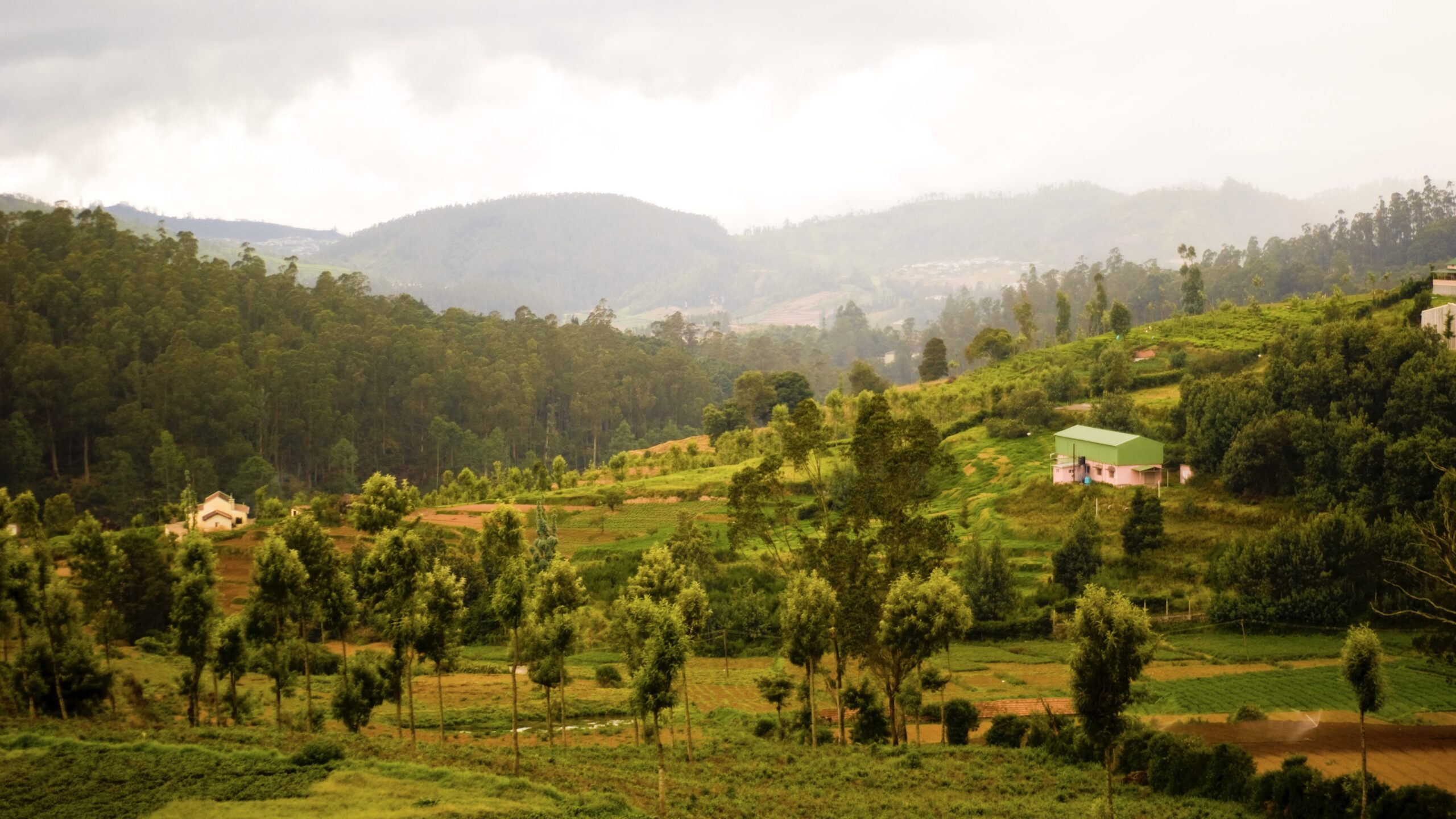
The Nilgiris was preferred by the British for their moderate, ‘English-like’ climate. (Wikimedia Commons)
Synopsis: Colonial-era land-use changes in Tamil Nadu’s Nilgiris have led to the loss of 80 per cent of native grasslands and severe declines in grassland bird populations over the past 170 years, according to new research, which found that eight out of nine grassland bird species, including the Nilgiri Pipit and Malabar Lark, have suffered drastic reductions due to the conversion of grasslands into tea and timber plantations during British rule.
Colonial-era land use changes in Tamil Nadu’s Nilgiris have resulted in the loss of 80 per cent of native grasslands and caused severe declines in grassland bird populations over the past 170 years, according to a comprehensive new study. Some species are now facing near-total collapse.
Published in the journal Global Change Biology, the new research specifically focused on the Nilgiris, one of the most biodiversity-rich regions in the Western Ghats.
An international team of scientists compared historical data, including land cover maps from 1848, with modern satellite imagery and bird observations recorded between 1850 and 2021.
Led by researchers from Columbia University, the K Lisa Yang Center for Conservation Bioacoustics at the Cornell Lab of Ornithology, Indian Institute of Science Education and Research (IISER) Tirupati, and 10 other institutions, the team found that nearly 90 percent of grassland bird species in the Nilgiris have seen major declines in relative abundance since the 1850s.
“We contrasted historical datasets from two centuries ago with present-day data collected from the field,” said Vijay Ramesh, lead author and postdoctoral fellow at the Cornell Lab of Ornithology.
“We show that maps, hunting records, and museum specimens can be leveraged to estimate baseline environmental conditions against which data from modern ecological surveys and satellite imagery can be compared.”
Eight out of the nine grassland bird species studied in the Nilgiris showed significant population declines. Among the worst affected were the Nilgiri Pipit and the Malabar Lark, which have undergone the steepest declines over time.
According to the researchers, the decline coincides with colonial-era land-use policies that favored converting the region’s natural grasslands into tea and timber plantations.
“British settlers viewed grasslands as wastelands, and this notion has resulted in the large-scale plantations of tea, and exotic timber species (such as acacia, eucalyptus, and pine) that we see today in this highly biodiverse region,” said Ramesh.
In contrast, about 53 percent of forest bird species examined in the study have not declined as sharply over the same period.
“Some forest birds in the Nilgiri hills seem to be using timber plantations despite the fact that these monocultures do not offer the complex habitat structure that native forests are able to provide,” said Ramesh.
But the authors stressed that this pattern is unique to the historical context in India and should not be taken to mean that plantations can replace native forest habitats.
While some forest species appear to have adapted to timber plantations, the same cannot be said for grassland birds, which are rapidly losing their already limited habitat in the region.
“We are losing grasslands at a rapid rate today, which has resulted in cascading effects on fauna that depend on these unique habitats,” Ramesh said.
“While forest conservation certainly requires continued attention, we hope that our work urges policymakers to also prioritise grassland protection and restoration equally. The key message we want readers to take away is that open natural ecosystems such as grasslands are undervalued hotspots of biological diversity.”
The authors hope that conservationists and state forest departments in India will use the research to identify areas where grasslands have been lost to plantations, and guide restoration efforts accordingly.
(Edited by Dese Gowda)


