


From politics to health, and from nature to conservation, South First produced numerous evergreen stories in 2025.

Published Dec 31, 2025 | 6:00 PM ⚊ Updated Dec 31, 2025 | 6:00 PM

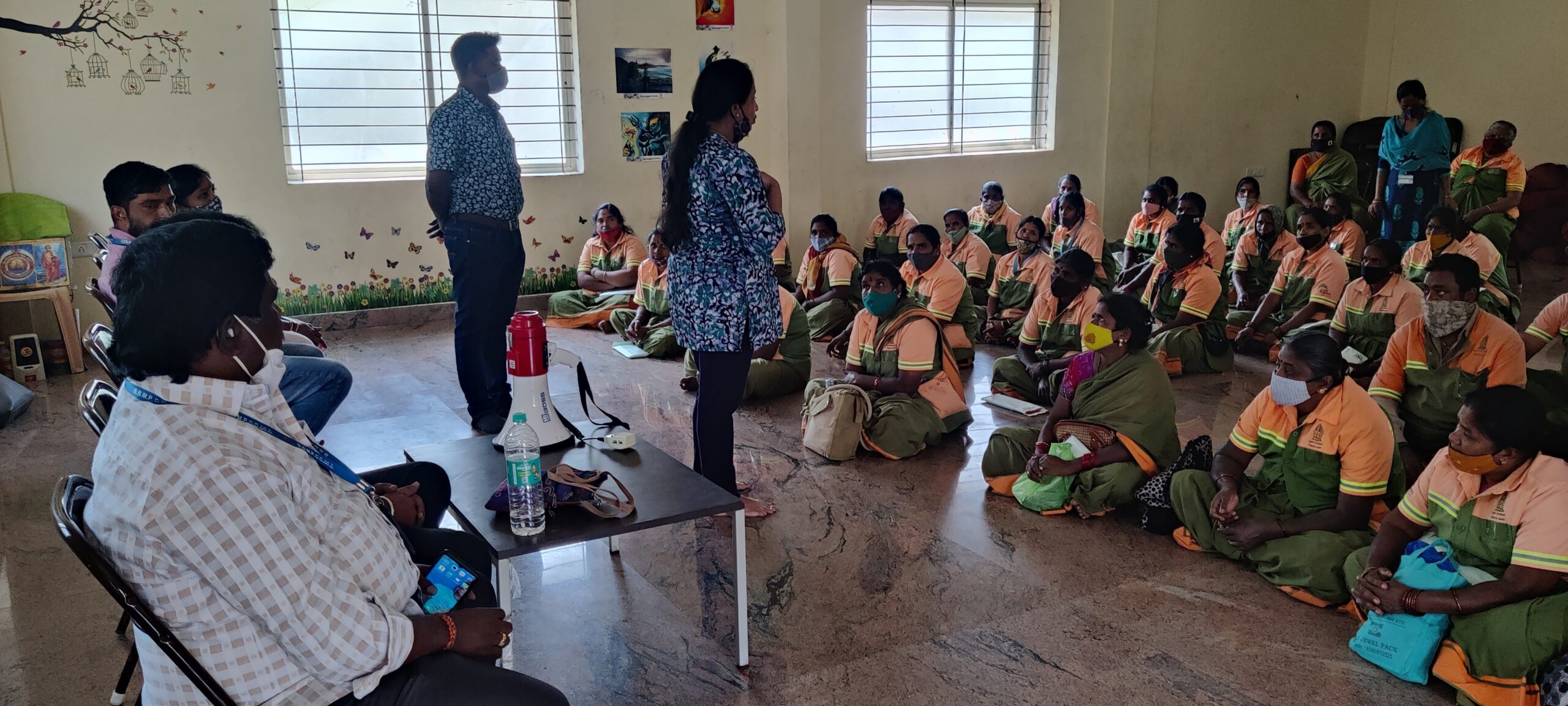
Hasiru Dala empowers waste pickers through advocacy and livelihoods. (Supplied)
In newsrooms, some stories are timeless; their freshness can be felt every time one revisits them. From politics to health, and from nature to conservation, South First produced numerous such stories in 2025.
Here’s a look at the best of them.
Today, there is an attempt to rebrand RSS ideologue KB Hedgewar as a social reformer, positioning him alongside BR Ambedkar, Ayyankali, and Sree Narayana Guru. While the Sangh Parivar portrays him as a freedom fighter and reformer, critics strongly disagree. In Kerala, of late, the Sangh Parivar is aiming to nurture Hindutva values and identity among children. In a state like Kerala, where the Sangh has little historical presence or prominent figures, there appears to be an attempt to reinterpret historical events to align with its narrative.
The debate over Hindu god Murugan’s dietary preferences reignited tensions at Thiruparankundram in Madurai of Tamil Nadu, where disputes over animal sacrifice at the Sikandar Badusha Dargah have led to protests from both Hindu and Islamic groups. Scholars argue that historical evidence from Sangam literature shows Murugan was once offered meat, and that vegetarianism in Shaivism emerged much later. Experts warn that political groups are exploiting the issue, disturbing the long-standing religious harmony in the region. With Ayodhya comparisons emerging, scholars urge the government to act wisely to prevent further divisions.
In August 2025, 72-year-old Kuttimathan Kani lost his battle with cancer. With his passing, a living link to one of Kerala’s most fascinating medicinal legacies slipped into history. Along with his fellow tribesmen, Kuttimathan had introduced the world to Trichopus zeylanicus travancoricus — locally called Arogyapacha —, the so-called “wonder herb” of the Western Ghats that once promised to revolutionise modern medicine. The rise and fall of Arogyapacha is no longer just the story of a medicinal plant — it is the story of how an entire community’s knowledge was mined, celebrated, and then abandoned.
Seventy-six years have passed since former Tamil Nadu chief minister CN Annadurai, the Dravida Munnetra Kazhagam (DMK). Over 76 years, the DMK has a long history, both as the ruling party and as the Opposition. When the DMK started, Anna insisted that social reform following Periyar’s principles was paramount even as they entered electoral politics. DMK leaders noted that Dravidian nationalism does not exclude anyone. They said that the Dravidar Kazhagam may have excluded Brahmins, but the DMK always proposed a nationalism that included them, only without giving them power to dominate. This distinction has been repeatedly emphasised, they noted.
Maruthur Gopalan Ramachandran (MGR), then a popular actor and the DMK’s then Treasurer and most recognisable face, was expelled from the party on 14 October 1972 for allegedly violating party discipline. The very next day, MGR revived a dormant registered party called Anna Dravida Munnetra Kazhagam, originally founded by Anakaputhur Ramalingam. He pitched the move as a symbolic gesture – aligning himself with an “ordinary party worker.” Just three days later, on 17 October, he renamed the outfit the All India Anna Dravida Munnetra Kazhagam. AIADMK was not built on the ideals of Anna or Periyar. It was built on faith – unquestioning, uncritical devotion to the leader. As analysts put it, a faith that was also cultivated with the DMK’s blessing, before MGR used it against the party to great effect after their public split.
India lacks adequate sexual health awareness. While “sex toys” could be used for fun, doctors said they are often needed for treatment. However, society frowns upon them as if they are meant to commit a major sin. Section 292 of the Indian Penal Code has been frequently invoked to restrict the sale, exhibition, advertising, import, or export… on the grounds of obscenity.” Experts said that standardised regulations encourage research, innovation, and responsible marketing in the sexual wellness industry. As India modernises, such measures are crucial for safeguarding public health, ensuring legal clarity, and empowering individuals to make informed choices about their sexual wellbeing.
From its first shakha in Mangaluru in 1940, the RSS has come a long way in Karnataka. It drew strength from the Karnataka Land Reforms Act in 1974 and a ban during the Emergency. Later, wherever the RSS network has been strong, the BJP’s organisational presence followed. Incidentally, the BJP’s vote share went up in those constituencies that had witnessed communal flare-ups. However, the Congress has been failing to stymie the growth of both RSS and BJP. The Congress has lost the keenness to locate the minds that RSS has colonised.
Karnataka is seeing a shift in communal politics. The south coastal region, once the hotbed of communal politics and the so-called moral policing, is reporting fewer incidents, even as interior regions, like Old Mysuru, are gradually emerging as the new fertile ground for the retrograde trend. Incidentally, it is the members of the Backward Classes who often end up in prisons for communal, violent acts.
Hasiru Dala, a pioneering model of inclusive, decentralised waste management, has worked to organise and legitimise the vital role of informal waste pickers in Bengaluru, providing them with official identity cards, access to social services, and opportunities to manage city-backed Dry Waste Collection Centres What started as a small, informal effort soon led to a landmark moment – waste pickers receiving official identity cards from the city, a first-of-its-kind recognition in India. Over a decade since its inception, Hasiru Dala remains at the forefront of sustainable urban waste management. Its impact reaches beyond Bengaluru, inspiring similar initiatives across India.


