

Published Sep 28, 2026 | 7:00 AM ⚊ Updated Sep 28, 2026 | 7:00 AM

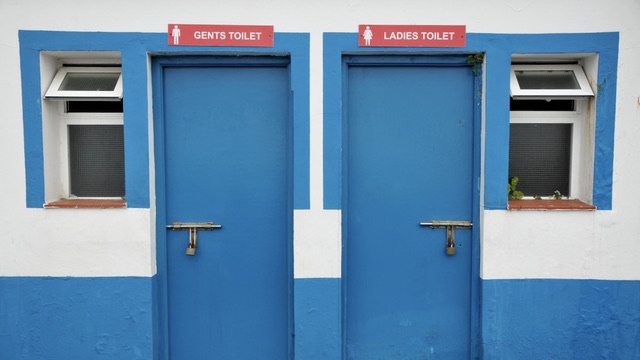
For women, the problem can mean avoiding public toilets altogether or withholding for hours, often leading to health complications.

Synopsis: Almost every household in Keralam has has access to a toilet. but outside, finding a clean, open and usable toilet can still be a struggle for women, workers, elderly people and tourists. Now, nearly 20 months after the Supreme Court underlined sanitation as a matter of dignity and a fundamental right, the state government has approved a Standard Operating Procedure (SOP) to fix it.
Almost every household in Keralam has has access to a toilet. But the same isn’t true when one steps outside.
A woman travelling alone, an elderly passenger waiting at a bus stand, a delivery worker on the road, a tourist exploring a town or a person with a disability may still have to search for a toilet that is open, clean, safe and usable.
In many busy public spaces, locked doors, broken taps, clogged toilets, foul odour, poor lighting and inadequate water are a recurring theme.
For women, the problem can mean avoiding public toilets altogether or withholding for hours, often leading to health complications.
The contrast is particularly striking in a state that has has virtually eliminated open defecation from residential spaces
Now, nearly 20 months after the Supreme Court underlined sanitation as a matter of dignity and a fundamental right, the state government has approved a Standard Operating Procedure (SOP) aimed at bringing uniform standards to the operation, maintenance and cleanliness of public toilets across the state.
Also Read: A space to pause: Keralam opens first GigOn hub for gig workers
The SOP, prepared by the Executive Director of Suchitwa Mission, puts the responsibility for public toilets on Local Self-Government Institutions (LSGIs) and other agencies that operate them.
The Principal Director of the Local Self Government Department will periodically review its implementation, while Suchitwa Mission will provide technical support to local bodies.
The SOP stipulates that public toilets should have a continuous water supply for flushing, hand washing and cleaning. Storage tanks should be adequate to meet at least half a day’s peak water requirement.
Toilet blocks should have uninterrupted electricity, adequate lighting in cubicles, wash areas, entrances and approach paths, and backup lighting where power supply is unreliable. Ventilators, exhaust fans or openable windows should ensure proper ventilation.
Facilities should display signs in the local language as well as Hindi or English, showing the location, user category and accessibility features. Details such as opening hours, user charges, emergency contacts and complaint mechanisms should be displayed at the entrance.
The SOP also calls for mirrors, liquid soap dispensers, toilet rolls or tissue paper and hand-drying facilities. Covered waste bins should be placed inside cubicles, with separate marked bins for sanitary waste in women’s and accessible toilets.
The SOP mandates that every facility should have at least one barrier-free cubicle, with ramp access, grab bars and a doorway at least 900 mm wide. Accessible toilets should have outward-opening doors and enough space for wheelchair movement. Braille signs and tactile indicators should be installed wherever feasible.
Floors should be non-slip, non-absorbent and easy to clean, with proper gradients and drainage to prevent stagnant water. Separate facilities or designated areas should be provided for men, women and persons with disabilities, while privacy should be ensured through full-height partitions and functional door latches.
Also Read: Sabarimala gold row: 55.72-sovereign crown triggers fresh controversy
CCTV cameras may be installed at entrances and circulation areas, subject to privacy and legal requirements.
Cleaning is to be carried out systematically, covering daily, periodic and area-wise cleaning requirements.
The local body will have to ensure water, electricity, waste collection, septic tank desludging and major repairs. It will also enter into agreements with toilet operators, inspect facilities and provide grievance redressal mechanisms.
Operators may include contracted agencies, self-help groups, NGOs or enterprises. They will be responsible for day-to-day upkeep, availability of soap and other consumables, deployment of cleaners and caretakers, and maintaining cleaning and maintenance records.
Caretakers will oversee opening and closing, user management, cleaning schedules, complaints, inventory and minor troubleshooting.
At transport hubs, public toilets should operate round the clock. Elsewhere, the prescribed operating period is 12 to 18 hours, with staff deployment and shifts complying with labour laws and minimum-wage norms.
The SOP also spells out basic responsibilities for users: clean the toilet seat after use, flush properly, return water jets or cups to their designated places and put used tissues in the bins. The government proposes posters, stickers and display panels to promote these practices.
Clean, accessible public toilets are still a weak link in Keralam’s tourism infrastructure.
“At some prime tourist destinations, multiple public toilets have remained locked for months because of water shortages and unresolved sewage discharge issues. Bio-toilets have also failed because of poor maintenance, while visitors often avoid pay-and-use facilities when they are badly maintained,” said the secretary of a District Tourism Promotion Council.
“Foreign tourists, in particular, look for Western-style toilets and are sometimes forced to depend on shops or travel farther. This affects their overall experience of the destination.”
An earlier assessment by the Suchitwa Mission and the WASH Institute had already pointed to serious deficiencies. The assessment covered nearly 1,095 public toilets identified under the Swachh Bharat Mission in urban local bodies, with more than 1,000 facilities surveyed.
Hundreds of the toilets were found to be non-functional. Even among those in operation, only about half remained open during normal working hours. Accessibility was another major concern, with fewer than half having ramps or at-grade entry. In many facilities, lighting was inadequate and caretakers were absent.
About 35% of the toilets lacked caretakers, while formal performance-based maintenance contracts were available only in a small number of cases. Signage for separate male and female facilities was also inconsistent. Although most facilities had septic tanks or sewer connections for wastewater disposal, this did not necessarily translate into clean or usable toilets.
Cleanliness and hygiene accounted for a substantial part of the assessment, with many facilities scoring poorly.
The ‘Take a Break’ network, conceived as modern roadside and transit facilities with toilets, seating and, in some locations, refreshment facilities, has faced a similar gap between intention and performance.
The experience of the ‘She-Toilet’ project offers another warning. Many of the facilities, particularly those installed in Thiruvananthapuram, stopped functioning after their maintenance contracts ended. High maintenance costs were cited as one of the reasons.
Recurrent urinary tract infections, bladder problems, kidney stones and other urinary and gastrointestinal ailments are emerging as an overlooked consequence of the state’s shortage of clean public toilets, with people often left with little choice but to hold their urine for hours.
For women, elderly people and those whose work keeps them outdoors for long stretches, the problem can be particularly difficult. An eight- to 12-hour workday without access to a usable toilet often means restricting water intake or repeatedly suppressing the urge to urinate.
Health officials say the consequences of this routine can go well beyond temporary discomfort.
“Repeated urinary retention, particularly when accompanied by inadequate fluid intake, can contribute to recurrent urinary tract infections and problems involving the bladder and pelvic floor. Dehydration can also increase the risk of kidney stone formation among susceptible people,” said a doctor with a community health centre in Thiruvananthapuram told South First.
“The lack of hygienic toilets creates another layer of risk. Poor sanitation and inadequate facilities can facilitate gastrointestinal infections, while women face additional concerns related to menstrual hygiene and reproductive tract infections.”
Also Read: Sun, salt, stress and sickness: Keralam to launch major study into the health of coastal communities
The Supreme Court has held that access to clean and functional sanitation facilities is part of the right to life and human dignity. But the responsibility for keeping these facilities usable does not end with the government or local bodies.
A January 2025 judgment of the Supreme Court made it clear that states and Union Territories must ensure easy access to clean toilets and drinking water for men, women, persons with disabilities and transgender persons. The Bench of Justices J.B. Pardiwala and R. Mahadevan also stressed that such facilities must be maintained throughout the year.
Justice Mahadevan, who authored the judgment, observed that without such access, states and Union Territories could no longer claim to be welfare states.
The court said access to proper sanitation falls under Article 21 of the Constitution, which guarantees the right to life and personal liberty.
According to an official of the Suchitwa Mission, providing and maintaining public toilets is primarily the responsibility of the government and local self-government institutions, but their upkeep also depends on how people use them.
“Even the best infrastructure will not remain clean unless people use it responsibly,” the official said.
The official stressed the need to introduce toilet etiquette and public hygiene at an early age.
Schoolchildren, the official said, should be taught not only handwashing and personal hygiene but also basic responsibilities while using public toilets – flushing after use, keeping toilet seats clean and dry, putting sanitary waste in designated bins and avoiding practices that can block plumbing.
Such habits, the official believes, can eventually influence behaviour at home and in the wider community.
At the same time, civic responsibility cannot mean allowing deliberate damage to public facilities to go unchecked.
The official said those who intentionally damage fittings, deface walls or render public toilets unusable should face legal action, including under the Prevention of Damage to Public Property Act, 1984.
(Edited by Dese Gowda)



