

Published Nov 23, 2026 | 1:46 PM ⚊ Updated Nov 23, 2026 | 1:46 PM

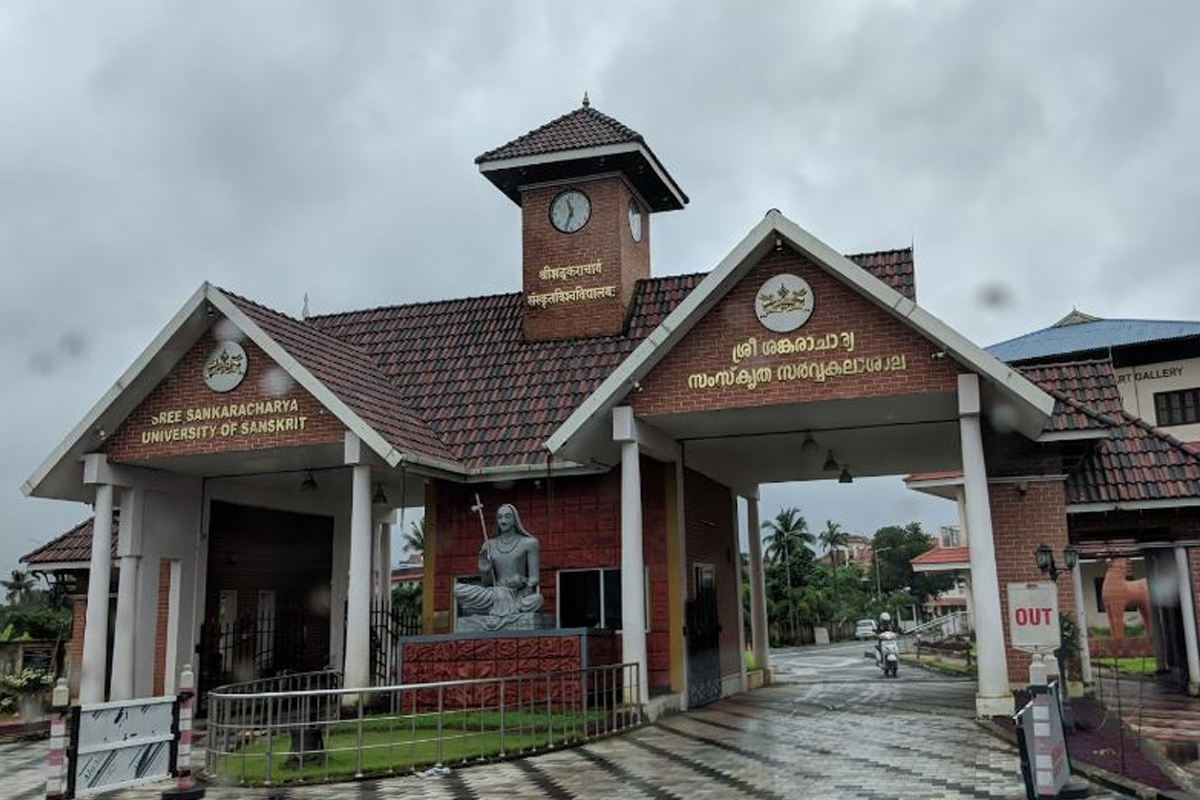
Sree Sankaracharya University of Sanskrit

A French philosopher’s defence of free speech, the interventions of two Prime Ministers and the magnanimity of a former Keralam Chief Minister came together in a Kerala High Court judgment that brought relief to 16 students suspended by the Sree Sankaracharya University of Sanskrit (SSUS), Kalady.
In an unusual conclusion to its judgment, Justice PV Kunhikrishnan invoked the Voltairean principle — “I disapprove of what you say, but I will defend to the death your right to say it” — to underline that disagreement with a protest cannot be a reason to crush the right to dissent.
The High Court on Monday set aside the enquiry report prepared by the university against the 16 students, who had been under suspension since early September. It directed the university to allow them to return to the campus and attend regular classes with immediate effect.
The students, all SFI members, were suspended on September 1 pending an inquiry.
They approached the Kerala HC seeking permission to write their semester examinations.
A single Judge allowed them to appear for the exams from November 4, but a Division Bench later overturned the order, prompting them to move the Supreme Court.
The students, who are pursuing MSW, MFA, MA, FYUGP and PhD courses, had also been barred from entering the campus, except to attend inquiry proceedings.
The court examined three key questions: whether the students could approach the High Court despite the availability of an alternative remedy; whether their suspension and the subsequent enquiry and punishments were legally sustainable; and what relief should follow if the university’s action was found unjustified.
On the first issue, the court held that the existence of an alternative remedy did not prevent it from exercising its powers under Article 226 of the Constitution when there was injustice or a blatant violation of the principles of natural justice. It also pointed out that the absence of clear provisions to challenge an illegal order justified the students’ approach to the High Court.
On the legality of the disciplinary proceedings, the court found serious procedural lapses. No charge memo had been served on the students, the enquiry report contained no findings of fact, and the punishment had been imposed merely based on a report declaring the charges proved.
“No one can be punished based on a unilateral enquiry report which does not follow the basic principles of natural justice,” the court observed.
However, the judge’s strongest observations came while considering the punishment imposed on the students.
Making it clear that violence had no place on a college campus, the court said the university was justified in taking action if violence had occurred. At the same time, it cautioned against allowing disciplinary action to destroy students’ academic futures.
The students had already spent 84 days under suspension, which the court said was itself a punishment.
Even if the university disagreed with the cause behind their agitation, their right to protest should not be crushed through penalties that could jeopardise their education.
To drive home the point, Justice Kunhikrishnan recalled three instances in which political leaders had responded with restraint to student protests, rather than seeking punitive action.
The first was that of former Prime Minister Manmohan Singh, who intervened when students protested during his visit to Jawaharlal Nehru University in New Delhi to unveil a statue of former Prime Minister Jawaharlal Nehru. After the university issued show-cause notices to the protesters, Manmohan Singh reportedly urged the then Vice-Chancellor to be lenient, invoking the importance of free speech and democratic rights.
The second example was drawn from a video shared by Prime Minister Narendra Modi on his official X and Instagram accounts on July 31, 2026, concerning students who had protested at Jantar Mantar in Delhi.
Referring to the protesters as misguided youngsters, Modi had said that showing them the right path was the responsibility of society. Punishing them, making them run around courts or subjecting them to social harassment would not change the situation, he had said, adding that he wanted to forgive them and hoped society would accept that approach.
The third instance was from the political life of former Keralam Chief Minister EMS Namboodiripad. The judge referred to an interview in which Assembly Speaker Thiruvanchoor Radhakrishnan recalled his student days, when he and other students disrupted a function attended by EMS in Kottayam.
The protest was so intense that the authorities had to demolish a compound wall to move the Chief Minister’s car out of the venue. Although the police took the students into custody, EMS reportedly directed them not to register any cases, and the students’ grievance was resolved the following day through the Chief Minister’s intervention.
Drawing on these examples, the court stressed that a democratic institution must distinguish between addressing indiscipline and suppressing dissent. While violence cannot be condoned, students should not be made to pay for exercising their right to express disagreement with consequences that could derail their academic lives.
From our archives:
Fight against drugs or war on freedom, ask Sanskrit university students in Kerala
(Edited by R Rajesh Kumar.)



