

Published Nov 17, 2026 | 5:00 PM ⚊ Updated Nov 17, 2026 | 5:00 PM

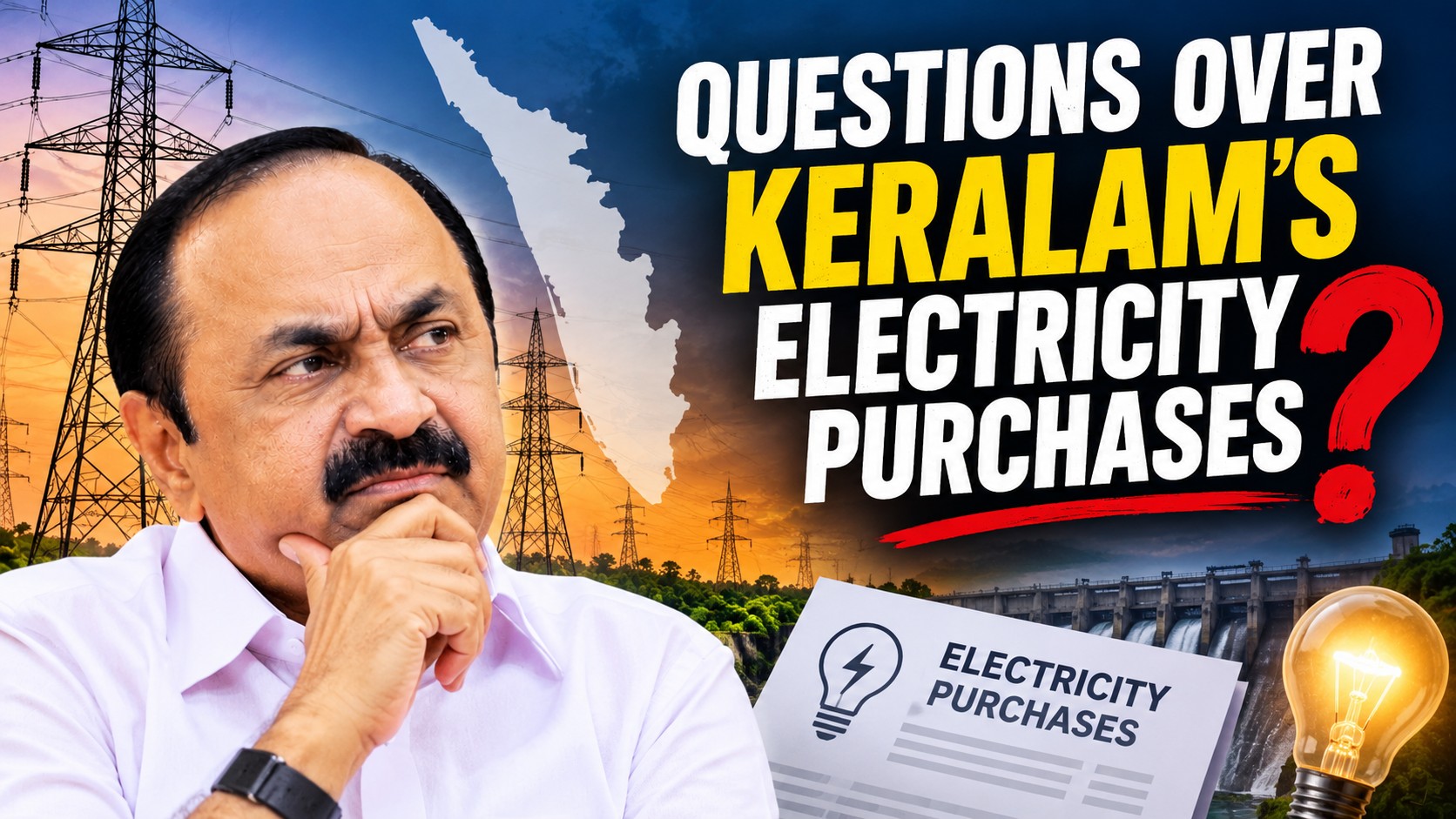
It is alleged that the government agreed to procure wind power at ₹11 per unit, while the prevailing rate was reportedly ₹4 or less.

Synopsis: The UDF government is once again facing opposition criticism over purchases, with the CPI(M) alleging irregularities in electricity purchases. The opposition party also demanded a judicial inquiry into two contracts involving thousands of megawatts of power.
Keralam’s power procurement arrangements have triggered another political controversy, with the Opposition CPI(M) alleging irregularities in electricity purchases made by the UDF government and demanding a judicial inquiry into two contracts involving thousands of megawatts of power.
The latest controversy centres on a deal with VEH Global India Pvt Ltd, under which the Kerala State Electricity Board (KSEB) agreed to procure up to 200 MW of electricity for October at ₹11 per unit.
Raidurg, Telangana-based VEH, operating as Vibrant Energy, is a renewable energy company that develops wind and solar power solutions for commercial and industrial clients.
The agreement, authorised through a government order issued on 22 September, was intended to meet peak-hour demand between 6 pm and midnight.
The procurement was made through a bilateral arrangement without a tender process.
The government directed KSEB to submit the purchase details, along with its justification, to the regulatory body for approval or ratification because the agreed rate exceeded the ₹10-per-unit ceiling prescribed by the Kerala State Electricity Regulatory Commission (KSERC).
The deal is now under the Commission’s scrutiny, and the regulator has raised 15 questions with KSEB.
Among the issues flagged is the decision to agree without inviting tenders or obtaining the Commission’s prior approval.
Also Read: CM, Electricity Minister sing different tunes on proposed GNA deal
The Opposition has questioned the price paid for the electricity, alleging that the government agreed to procure wind power at ₹11 per unit, while the prevailing rate was reportedly ₹4, or less, per unit.
It has also pointed to the difference between the contracted quantity and the actual supply.
Although the agreement provided for the availability of up to 200 MW during peak hours, the state received an average of only 36.02 MW.
The KSEB, it’s learnt, paid ₹7.37 crore for the electricity procured from VEH Global during October.
Electricity Minister Sunny Joseph, however, has rejected allegations of wrongdoing, maintaining that the procurement was undertaken in response to an urgent requirement.
He said the chief minister, the electricity minister, and the chief secretary were aware of the arrangement and that nothing about the decision was suspicious.
Joseph also said the regulatory commission had sought additional information from the KSEB and that the details would be furnished.
He maintained that the procurement was not driven by undue haste, adding that the state did not receive the entire quantity of power envisaged under the agreement.
The deal has also brought renewed attention to the circumstances surrounding Keralam’s power requirements in October.
The state had faced shortages during peak hours in September, prompting the KSEB to explore additional sources of electricity.
Concern that the situation could recur, particularly amid uncertainty over the impact of the El Niño phenomenon, reportedly led to efforts to secure supplies from Himachal Pradesh and other sources.
The VEH Global agreement was signed in September, even as officials explored arrangements to procure power from Himachal Pradesh.
Towards the end of October, a separate controversy emerged over the proposed power purchase from the northern state and GNA Energy’s role.
In a statement, the CPI(M) state secretariat alleged that irregularities had taken place in two major power procurement arrangements — the purchase of 200 MW from VEH Global India and the proposed procurement of 900 MW from Himachal Pradesh.
Demanding a judicial inquiry, the party alleged that the two agreements involved a multi-crore corruption scandal and sought action against those responsible.
The CPI(M) also accused the chief minister of leading the effort to secure electricity at inflated rates through the two arrangements.
It said the government owed the public an explanation and that a comprehensive judicial investigation was necessary to establish the facts.
(Edited by Majnu Babu).



