

Published Nov 14, 2026 | 9:30 AM ⚊ Updated Nov 14, 2026 | 9:30 AM

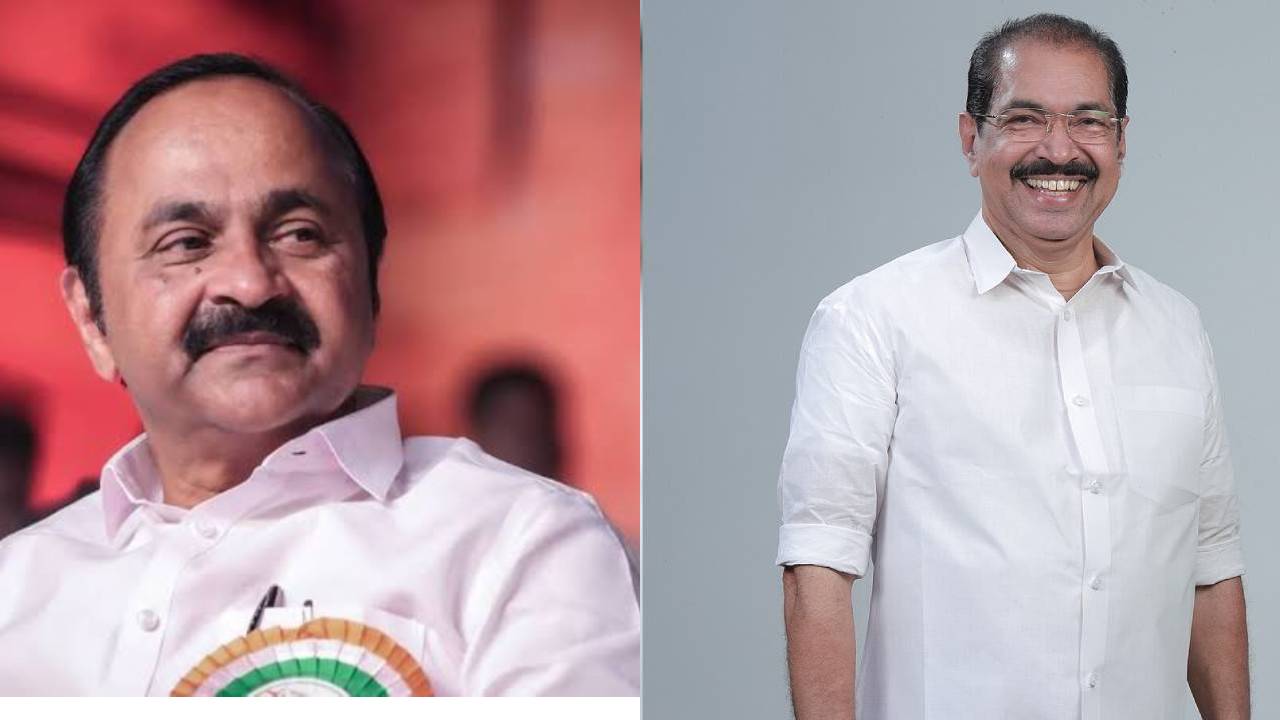
Chief Minister VD Satheesan and Electricity Minister Sunny Joseph.

The power purchase controversy in Keralam has turned into a wider disagreement within the government over the cost, credibility and practical feasibility of securing additional electricity, with Chief Minister VD Satheesan and Electricity Minister Sunny Joseph offering sharply different accounts of the proposed GNA Energy deal.
What began as a debate over the relative costs of power offered through Himachal Pradesh and a private trading platform has now raised questions about KSEB’s assessment of the state’s requirements, warnings of prolonged power cuts, and the government’s reasons for not proceeding with the cheaper GNA offer.
Satheesan maintained that the state cannot afford to choose costlier electricity when cheaper options are available. He first questioned the Himachal Pradesh proposal, which he said involved intermediaries and could impose an additional burden of ₹2,232 crore. He later cited NTPC’s offer to supply power at ₹5.18 per unit as a reason not to pursue GNA’s higher rates.
Joseph, however, challenged the practicality of the GNA arrangement, defended KSEB’s assessment and argued that electricity procured through government-owned entities would offer greater confidence.
His latest remarks on Friday, 13 November, despite a conciliatory meeting with the chief minister a day earlier, suggest the differences stem not merely from competing price calculations but also from conflicting assessments of the state’s power needs and the procurement process.
The apparent overlap between the minister’s reservations and those voiced by Opposition Leader Pinarayi Vijayan has added another political dimension to the dispute.
Also Read: Keralam CM Satheesan alleges pressure to clear GNA power deal
Joseph argued that the rates GNA quoted could not be assessed merely based on their apparent cost advantage. The proposed arrangement required Keralam to purchase electricity at a uniform rate, whether the supply was required during the day or at night. Such a condition, he said, could create operational and financial complications for the state.
The minister said the government could place greater confidence in electricity procured through government-owned entities, referring to the supply offered from Himachal Pradesh. He clarified that the decision not to proceed with the GNA came after the Kerala State Electricity Board (KSEB) submitted detailed inputs to the chief minister about the practical difficulties associated with the arrangement.
Rejecting allegations that the Board had pressured Satheesan into approving the GNA proposal by warning of prolonged power cuts, Joseph said KSEB had merely communicated the state’s actual electricity requirements. Informing the government about a possible shortage and the need for additional supply, he maintained, could not be treated as an attempt to exert pressure.
He also insisted that Keralam needed additional electricity on a sustained, long-term basis and that the Board’s assessment of the state’s requirements was accurate. KSEB had neither submitted misleading reports nor tried to force the government into accepting a particular agreement, he said.
Also Read: Unpacking Keralam’s GNA row: The deal, Himachal offer and the questions in between
The minister’s explanation, however, runs counter to Satheesan’s account made to the Cabinet on 11 November, when he questioned the circumstances in which the power purchase file was placed before him and the subsequent failure to agree with GNA.
The chief minister said the file forwarded by the electricity minister contained two proposals: power from Himachal Pradesh at ₹14.50 per unit and supply through GNA at ₹8.63 or ₹8.90 per unit.
Satheesan said the Himachal Pradesh option had effectively ceased to be available by the time the file reached him. The electricity offered through that route had already been sold to Rajasthan on 18 October at ₹15.50 per unit, and the transaction received regulatory approval on 29 October.
Consequently, he said, GNA was the only remaining option.
A comparison of the two proposals also showed that the private platform offered a considerably cheaper deal. Despite this, he pointed out that no order was issued to GNA and no agreement was signed.
Satheesan also questioned how KSEB presented the possibility of a power shortage to the government.
Referring to a report dated 29 October, he said the Board warned that failure to decide could result in prolonged power cuts.
“What is the report that KSEB submitted on the 29th regarding the power crisis? The Board stated that if the chief minister did not take a decision, there would be prolonged power cuts,” he said.
The chief minister added that a new team (following the transfer of KSEB CMD MG Rajamanickam) had subsequently examined the situation and concluded that prolonged power cuts were not necessary under the prevailing circumstances.
He also said he could not say whether KSEB had been misled, but pointed out that the warning contained in the file had placed considerable responsibility on him.
“If the file says that there will be prolonged power cuts if a decision is not taken, any chief minister would naturally be concerned. If there is a power cut, doesn’t the responsibility fall on the chief minister who holds the file? That does not mean the file should be held. It must be studied properly,” he said.
Also Read: KSEB seeks additional electricity from northern states
Satheesan had offered a more detailed defence of the GNA proposal during his 4 November Cabinet briefing, questioning the government’s decision to consider electricity at ₹14.50 per unit when a substantially cheaper option was available.
He pointed out that the Himachal Pradesh supply was being routed through Power Trading Corporation (PTC) Ltd and was not a direct government-to-government arrangement. The transaction involved a trading margin and intermediaries, he said, challenging the description of the proposal as electricity sourced directly from a government entity.
By comparison, GNA offered power through an open trading platform at ₹8.63 and ₹8.90 per unit. The difference between the two proposals was around ₹5.50 to ₹6 per unit.
Satheesan argued that choosing the more expensive option merely because it was presented as a government-linked supply would place an additional financial burden of ₹2,232 crore on the state exchequer.
“Can we justify purchasing electricity at a higher rate simply because it is said to come from the government? That would impose an additional burden of ₹2,232 crore on the state,” he had said.
He had also rejected the suggestion that KSEB was being pressured to purchase electricity at a higher rate, maintaining that the file was sent to him because the government had to ensure procurement at the lowest possible cost.
The chief minister questioned whether electricity could actually be procured at ₹14.50 per unit even through a direct government-to-government arrangement, given the trading margins and intermediaries involved.
He also clarified that nobody had instructed the authorities to abandon the proposed agreement with GNA.
Also Read: Kerala’s solar power sector boils over
Joseph’s latest remarks indicate that the disagreement is not merely about the comparative rates offered by the two suppliers. It also concerns the reliability of the procurement arrangements, the state’s long-term electricity requirements, and the role KSEB plays in advising the government.
While Satheesan has repeatedly focused on the substantial cost difference and the potential financial implications of choosing the Himachal Pradesh proposal, Joseph has defended the Board’s assessment and questioned whether GNA’s pricing structure would be practical for Keralam’s requirements.
The minister’s insistence that the Board did not mislead the chief minister also directly addresses Satheesan’s remarks about the 29 October report and the warning of prolonged power cuts.
With the chief minister and the electricity minister maintaining sharply different positions, the question of why the GNA agreement did not materialise remains unresolved.
Also Read: Can ‘floating solar’ keep Kerala’s lights on?
At the same time, Satheesan defended the decision not to proceed with the power purchase offer from GNA Energy, saying the state can secure electricity from NTPC at a much lower rate for April and May.
He said NTPC had agreed to supply power at ₹5.18 per unit, making it unnecessary for Keralam to buy electricity from GNA at ₹8.63 or ₹ 8.90 per unit during the same period.
In his cabinet briefing on 11 November, Satheesan said he had held discussions with the NTPC chairman and other officials in Delhi, following which the central power utility agreed to provide electricity from Maharashtra’s Sinnar Thermal Power Plant. The NTPC board of directors had also met in Delhi the previous day, and the state was expected to reach an agreement with the company shortly.
The chief minister said the government would procure electricity from the cheapest available source and was exploring the possibility of increasing NTPC’s supply from the existing 640 MW to 1,000 MW.
Preliminary discussions had already taken place, he added, noting that efforts were underway to secure additional power.
Explaining why the government did not pursue the GNA offer, Satheesan said there was no point in buying electricity at a higher rate when a cheaper source was available. He also said that, when the need for power was assessed, the response was that additional procurement was not immediately necessary.
“If there is no power crisis, is there any need to buy electricity? It will be purchased when a crisis arises,” he said.
The chief minister also said the government would put in place a permanent solution to the state’s power crisis during November through a combination of long-term and short-term power purchase agreements. The state would prioritise the most affordable sources of electricity, with a greater share of renewable energy forming a key part of its strategy.
Meanwhile, it also remains to be seen whether the latest exchange could also hand the CPI(M)-led Opposition fresh ammunition to target the government.
Leader of the Opposition Vijayan had already questioned the move to opt for GNA, and Joseph’s latest reservations appear to echo some of those concerns.
Interestingly, the electricity minister’s objection that GNA is a private entity, and that preference should instead go to power sourced through a government-owned entity such as Himachal Pradesh, is a position Vijayan has also articulated.
The apparent convergence of views between the Congress-led government’s minister and the opposition leader could further complicate the political debate over the power purchase decision.
As expected, Electricity Minister Sunny Joseph’s remarks have given fresh ammunition to the Opposition, with Leader of the Opposition Pinarayi Vijayan demanding an immediate judicial inquiry into the GNA power purchase controversy.
Vijayan said the Minister’s assertion that the KSEB had not pressured the government to buy power and that the GNA arrangement was unfeasible had effectively contradicted the Chief Minister’s claims and vindicated the Opposition’s charge that GNA was merely an intermediary, not a power producer or licensed trader.
He alleged that the government withdrew from the deal only after the Opposition exposed irregularities, and said the Chief Minister’s own admission that he had decided in favour of GNA meant the questionable interventions had either taken place with his knowledge or under his leadership.
Vijayan also accused the Chief Minister of initially shifting the blame to former KSEB chairman Rajamanickam, IAS, and announcing an inquiry into the official’s report, before retreating when the move threatened to plunge the government into a crisis.
Sunny Joseph’s statement, he said, showed that the Minister agreed with Rajamanickam’s position and had demolished the Chief Minister’s attempt to make officials scapegoats.
Describing the public contradiction between two Cabinet members as evidence of deep divisions and a breakdown of collective responsibility, Vijayan demanded that the Chief Minister clarify the revelations instead of evading accountability and announce a judicial probe without delay.
(Edited by Majnu Babu).



