

Published Nov 04, 2026 | 10:27 AM ⚊ Updated Nov 04, 2026 | 10:29 AM

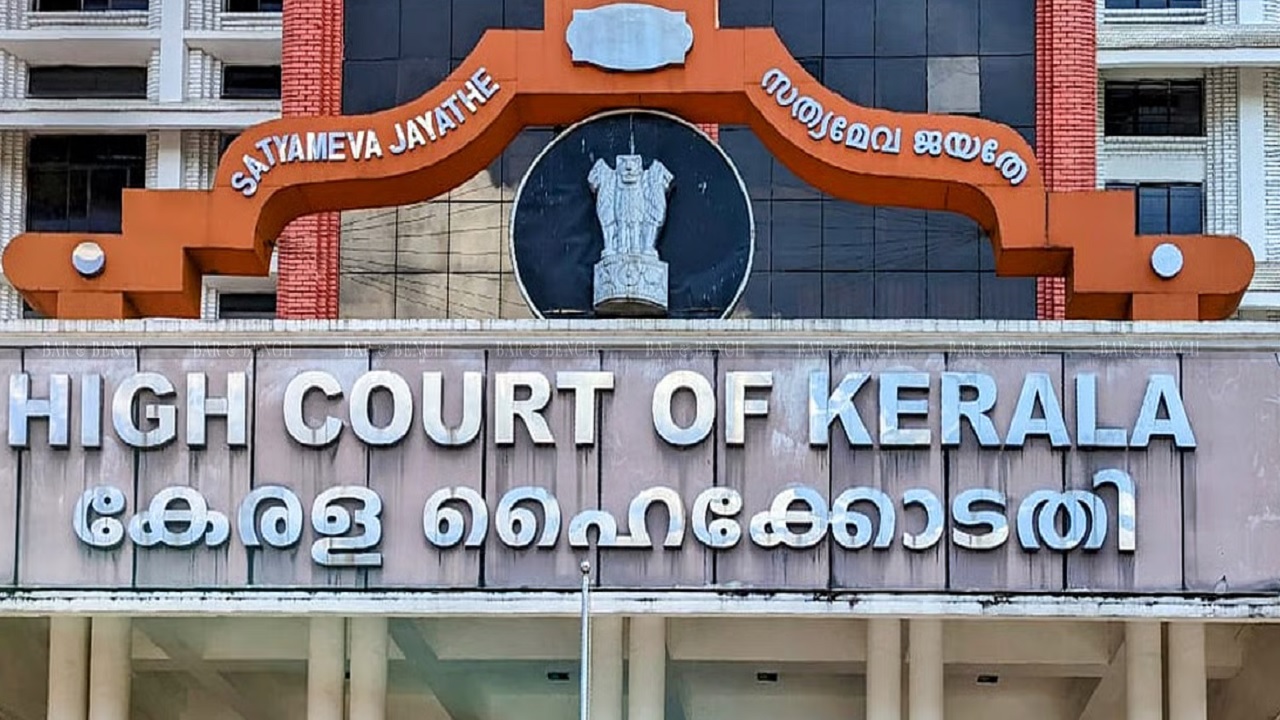
A Single Bench of the Kerala High Court, in an order on October 30, had allowed them to write the examinations.

Upholding that educational institutions are meant for imparting education and not politics, a Division Bench of the Kerala High Court has set aside an interim order allowing 16 suspended students to appear for university examinations beginning November 4.
The students, all members of the Students’ Federation of India (SFI) and pursuing MSW, MFA, MA, FYUGP and PhD programmes at the Sree Sankaracharya University of Sanskrit in Kalady, were suspended on September 1, pending an inquiry into incidents linked to a protest on August 13. They were also barred from entering the campus, except to attend inquiry proceedings.
A Single Bench of the Kerala High Court, in an order on October 30, had allowed them to write the examinations.
The Division Bench comprising Justices Anil K. Narendran and Muralee Krishna S, on November 3, held that the Single Bench had erred in directing the university to accept examination fees from the students and permit them to write the examinations without fulfilling the requirements under the relevant regulations.
In arriving at its decision, the Division Bench extensively relied on an earlier ruling, in Dr Antony Thomas vs V.M. Muhammed Rafique and Others [2017 (5) KHC 215], which strongly criticised political activities in educational institutions.
The 2017 judgment observed that activities such as dharnas, hunger strikes and Satyagraha had no place in a constitutional democracy, much less in academic institutions. It also held that students indulging in such activities could face expulsion or rustication.
“Educational institutions are meant for imparting education and not politics,” the earlier judgment said, warning that political parties could not hold educational institutions to ransom at the cost of students’ right to education.
Significantly, that judgment also invoked Dr B.R. Ambedkar’s speech in the Constituent Assembly on November 25, 1949, while introducing the Constitution for adoption.
Ambedkar had called for adherence to constitutional methods and warned against resorting to civil disobedience, non-cooperation and Satyagraha when constitutional avenues were available.
He had described such methods as the “grammar of anarchy,” saying they should be abandoned at the earliest.
The present Division Bench referred to these observations while examining the legality of the interim relief granted to the students. It found that the Single Bench had permitted the students to appear for the examinations without even submitting applications for condonation of shortage of attendance and without complying with other requirements under the university regulations.
The Bench held that the interim direction effectively compelled the university and its officials to act contrary to the regulations governing the course.
Referring to the Supreme Court judgments in Harish Chandra [(1996) 9 SCC 309] and Bhaskara Rao A.B. [(2011) 10 SCC 259], the court reiterated that judicial authorities cannot direct universities to act in violation of their statutory regulations.
Also Read: Three generations, five decades of protests and endless promises: A Wayanad family’s fight for land
The students have approached the Supreme Court seeking the restoration of the single-judge order permitting them to write the examinations. The petition was filed late on Tuesday night.
Their counsel, advocate K.R. Subhash Chandran, is expected to seek urgent intervention from the top court on Wednesday, November 4, as examinations for 10 of the petitioners are scheduled to begin on the same day.
The students have also sought permission to appear provisionally for the remaining papers and special examinations for any papers missed pending the SC’s decision.
In their petition, the students questioned the claims raised by the university regarding their attendance shortage, internal assessment and examination registration, which were accepted by the High Court Division Bench.
The students argued that the attendance shortage resulted from their suspension and that the university cannot rely on circumstances created by its own decision. They also contended that the attendance and internal assessment objections were raised only during the writ appeal, without giving them an opportunity to respond.
They maintained that permission to write the examinations was only interim relief and not the main relief sought, which was to quash the suspension. They argued that the Division Bench’s decision could cost them an entire academic semester, as the examinations would be over before the original petition is finally heard.
The petition also questioned the cases registered against the students over the August 13 protest. Two cases have been registered in connection with the protest: a suo motu case by the Kalady Police and a second FIR based on a complaint by the Vice-Chancellor, which includes charges of physical assault and conducting a mock cremation.
(Edited by Fayisa CA)



