

Published Nov 04, 2026 | 9:00 AM ⚊ Updated Nov 04, 2026 | 9:00 AM

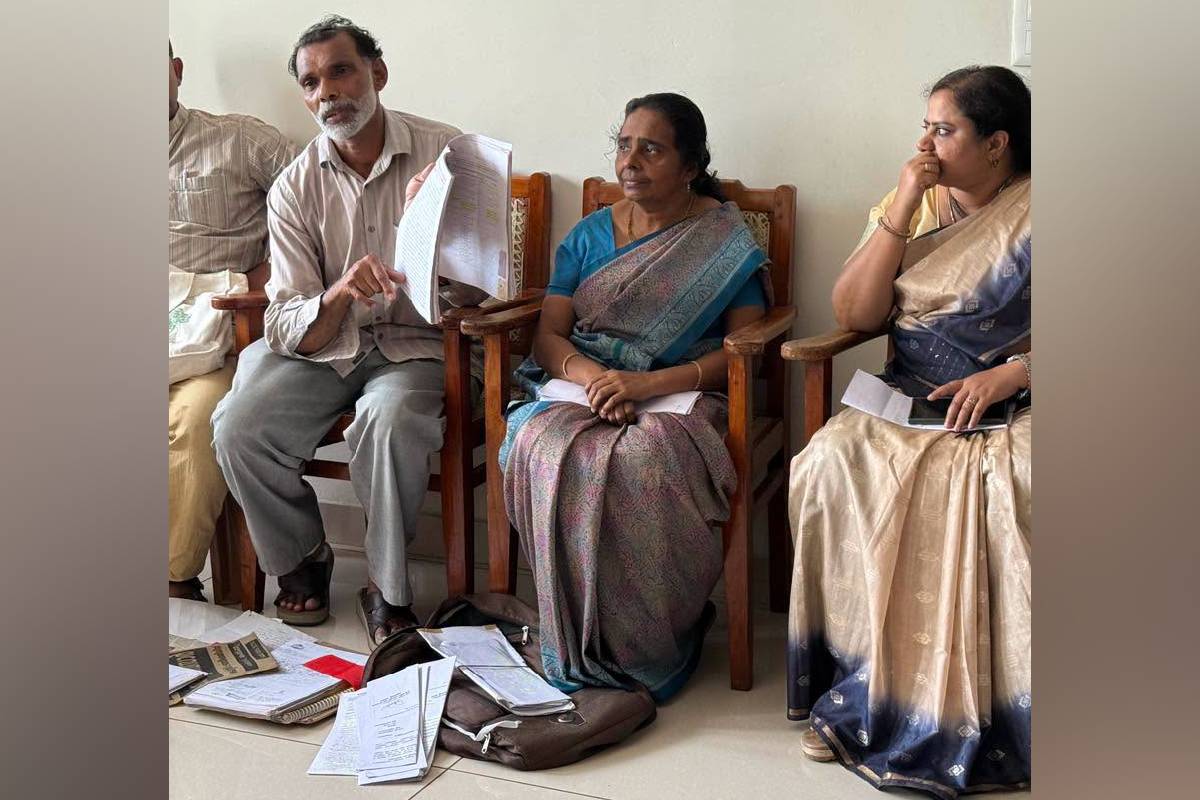
James, who is married to Treesa, took up the fight after his father-in-law's death.

Synopsis: A five-decade battle for land has left the Kanjirathinal family in Wayanad without a home, livelihood or justice. Despite favourable inquiry findings, human rights intervention and repeated government assurances, the family remains locked in a legal fight with the Forest Department. Now, a fresh promise to appoint a retired High Court judge to find a solution has also failed to materialise, leaving the family wondering how much longer they have to wait.
For the Kanjirathinal family, the fight to reclaim their 12 acres of land in Wayanad has outlived generations, governments and countless rounds of litigation.
Nearly five decades after the Forest Department took over the property, the family is still waiting for justice.
And for K K James, who took up the battle after the death of his father-in-law George, even assurances from the government have brought little relief.
It has been more than a month after two ministers promised to appoint a retired Kerala High Court judge to examine his family’s decades-old land dispute, but James is still waiting for the promise to materialise.
James has spent more than 4,000 days protesting against the “injustice” against his family as their property continues to be tied up in a legal battle that has dragged on since 1976.
What began as a land dispute in the late 1970s has turned into a five-decade struggle for the family, leaving them displaced, separated from their property and still waiting for a resolution.
As the protest outside the Wayanad Collectorate continues James is revisiting the history of the dispute, tracing it back to the purchase of the land and a house that once stood there.
When South First contacted James, he was preparing to file a Right to Information (RTI) application with the Thondernad grama panchayat. He wants to retrieve the house number of the building that stood on the disputed property before the family was evicted in 2008.
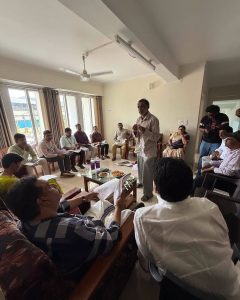
K K James giving a brief of the land dispute during a meeting convened by ministers in September
According to him, the existence of the house finds mention in records from 1976, 1998 and 2008.
Establishing that detail, he believes, could help substantiate the family’s claim that the property was occupied and used as a homestead.
“The house was there. It had a number. I am trying to get those records,” James said.
The story dates back to 1966, when Kanjirathinal George and his brother Jose arrived in Wayanad.
The brothers purchased six acres each from the Kuttanadan Cardamom Company in 1967, paying a substantial price, according to James.
Jose later left Wayanad and handed over his share to George, who continued farming on the combined 12 acres.
The property was classified as Janmam land, a form of hereditary proprietary landholding that existed in Keralam.
The family maintains that the land was purchased through a valid transaction and did not fall within the category of private forest land liable to vest with the government under the Kerala Private Forests (Vesting and Assignment) Act, 1971.
The first major confrontation with the Forest Department happened after officials allegedly attached the property and destroyed its agricultural crops in 1972.
In 1976, the family approached the Kozhikode Forest Tribunal, challenging the department’s claim over the land. The tribunal initially ruled in the family’s favour in 1978, holding that the property was not forest land. The Forest Department subsequently challenged the decision before the High Court.
The matter went through further proceedings, including a fresh examination of the property.
According to the family, the tribunal later restricted the extent of land recognised as being in George’s possession to 75 cents.
James alleges that the subsequent legal proceedings were marred by serious discrepancies and that officials relied on fabricated evidence to secure a favourable verdict for the Forest Department in 1985. The family has consistently disputed that finding.
One of the records they point to is the Forest Tribunal’s local inspection note prepared following an inspection on November 2, 1983. The note reportedly records that the basement of a house was visible between the river and the vested forest. The family also relies on a 1998 document in which the house is said to have been mentioned.
The family’s case has also centred on evidence of cultivation and possession.
In its submissions, it maintained that the applicants had been in separate possession and enjoyment of the properties since their purchase, cultivating pepper, jackfruit, mango, tapioca and turmeric, among other crops, while regularly paying land revenue to the government.
But the dispute eventually cost the family its home.
In 2008, the Forest Department evicted them and demolished the house, according to James.
The land, once cultivated by the family, has since been overtaken by thick vegetation. And the family has remained away from the property for 18 years.
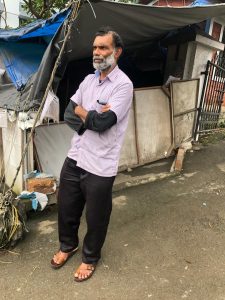
James in front of the makeshift shed, which he calls his house for the past 11 years, in front of Wayanad Collectorate
James says they have been left to live on the streets since the eviction. The personal losses were equally devastating.
George’s wife, Elikkutti, died in 2009, while George passed away in 2012.
James, who is married to their daughter Treesa, took up the fight after his father-in-law’s death.
The protest began on 15 August, 2015, and has continued outside the Wayanad Collectorate.
James, Treesa and their two children have spent years pursuing the family’s claim, including through a prolonged sit-in in a makeshift thatched shelter.
There have been several official interventions over the years, but none has brought the family back to the property.
Following a report by Vigilance and Anti-Corruption Bureau Superintendent of Police T. Sreeshukan, which recommended departmental action against Forest Department officials over alleged fabrication of evidence, the then LDF government headed by V.S. Achuthanandan constituted a high-level committee under the Chief Secretary in 2009.
The VACB report stated that the land notified as vested forest was different from the property purchased by the family.
Another inquiry was initiated in January 2016, under then Wayanad Sub Collector Seeram Sambasiva Rao. The committee submitted its report the same year, recommending urgent measures to restore the property or provide adequate compensation.
Preliminary findings by then Revenue Secretary, Niveditha P. Hariharan, the District Collector and the Vigilance authorities also reportedly supported the family’s contention that the land did not belong to the Forest Department.
The Kerala State Human Rights Commission took up the matter as well.
In an order dated 31 July, 2023, it observed that prolonged delays and lapses on the part of Forest Department officials had caused “inexplicable injustice” to the family. The Commission recommended examining whether the tribunal’s 1985 verdict could be set aside and directed the Chief Secretary to initiate appropriate action.
However, more than three years after the Commission’s intervention, James says there has been no meaningful progress. The matter, he alleges, has remained confined largely to correspondence between the Chief Secretary’s office and the Wayanad District Collectorate.
“Even after the Human Rights Commission issued its directions, nothing has moved. We started this protest because those responsible were being protected. After spending 11 years in a thatched hut outside the Collectorate, we are still waiting for justice,” James told South First.
The family continues to seek the restoration of the 12 acres or adequate compensation.
Also Read: Keralam effects major IAS reshuffle; new faces in Home, Finance, Power, Health
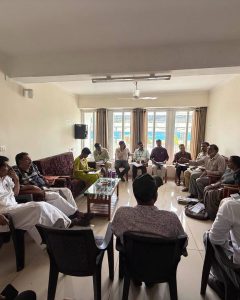
The high-level meeting in September
More than a month after promising to appoint a retired judge to find a legal solution to the long-standing land dispute, the state government is yet to take any steps to implement the decision.
The assurance was given by Forest Minister Shibu Baby John at a high-level meeting held at the Kalpetta Rest House on 18 September, jointly chaired by him and Agriculture Minister T. Siddique.
The meeting was attended by District Collector V. Chelsasini, senior Forest Department officials, including Additional Principal Chief Conservator of Forests J. Justin Mohan, and representatives of the Revenue Department, besides James and Treesa.
However, there has been no indication of progress on the proposed appointment even after the one-month deadline set by the government for submitting a report.
As part of the proposed exercise, a team of Forest and Revenue Department officials, led by the Wayanad District Collector, was to assist the retired judge. The team was expected to examine the available legal options and submit its findings to the government within a month.
The dispute has remained unresolved amid conflicting orders and judgments issued by the Tribunal and different benches of the Kerala High Court, including the Single and Division Benches.
Citing the legal complications, Shibu Baby John had said that a detailed examination of the case was necessary before the government could move towards a lasting settlement. He had also assured that the government stood with the family and would take steps to bring their grievances to the notice of the court.
Agriculture Minister T. Siddique, meanwhile, had described the family’s eviction as unjust and insensitive, pointing out that three sides of the disputed property were used for habitation and cultivation, while a river formed the boundary on the fourth side.
He had assured that the Forest Department would not take steps to take over the land and said the government was committed to securing justice for the family through legal means.
The ministers had also urged Kanjirathinal James, who was staging a protest outside the Wayanad Collectorate, to withdraw his agitation in view of the government’s initiative.
“We have been waiting for justice for years, and now even the government’s latest assurance has come to nothing,” James said.
“How long must a family fight to get back what belongs to it? We are exhausted by the endless promises and the uncertainty. All we want is our land and the right to live with dignity,” he said.
(Edited by Fayisa CA)



