

Published Sep 30, 2026 | 10:04 AM ⚊ Updated Sep 30, 2026 | 10:04 AM

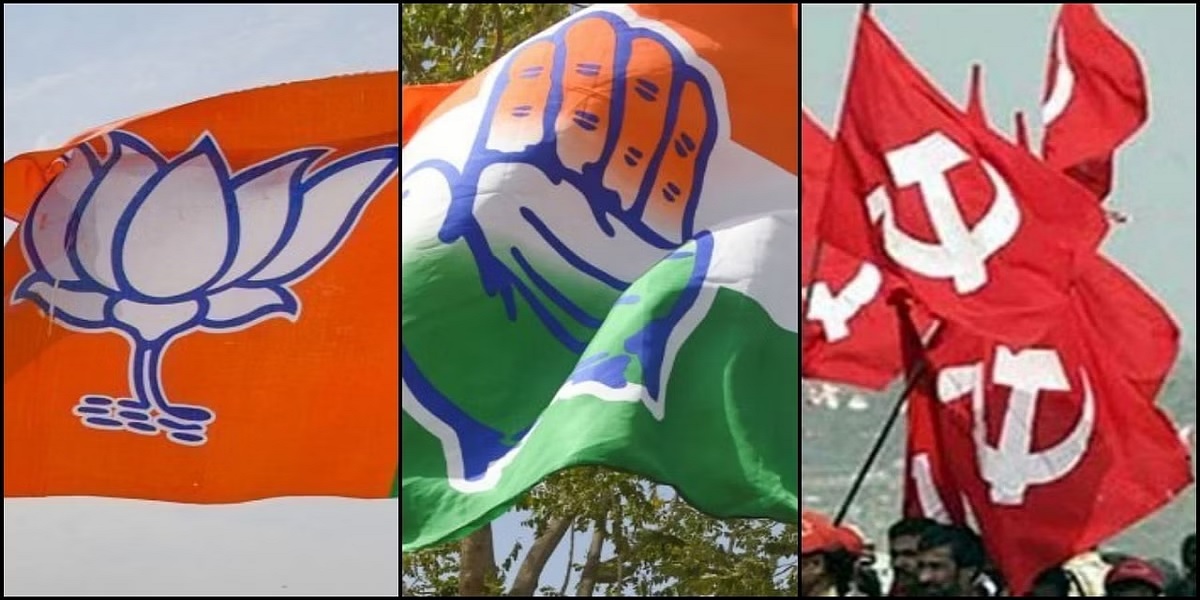
For the LDF, the result provides its first electoral indication of a recovery after its rout in the Assembly elections.

Synopsis: The verdict from Keralam’s local body bypolls, held just months after the Assembly elections, offers a useful sample of the State’s current political mood. The results largely mirror the Assembly polls, with no clear signs of anti-incumbency. They also show that while the LDF may have lost some of its winning edge, its strong grassroots network remains a key factor.
The first local electoral test since the UDF’s return to power in Keralam has produced a result that neither front can claim as a straightforward victory.
On paper, the UDF remains ahead. It went into counting with 22 of the 38 wards that went to the bypolls, while the LDF had 15 and Twenty20 one. The 38 wards were spread across 12 districts and included corporation, municipality, district panchayat, block panchayat and grama panchayat divisions. A total of 126 candidates contested, with a turnout of 58.81 percent.
After the bypolls, the UDF has 19 seats and the LDF 18, with Twenty20 retaining one.
For the LDF, the result provides its first electoral indication of a recovery after its rout in the Assembly elections.
Psephologist G Gopakumar told South First that the results are a repetition of the Assembly election verdict and can be considered a representative sample of Keralam’s political mood.
“There is no anti-incumbency visible in these results. The setback in Chirayinkeezhu is mainly because of Remya Haridas. For the LDF, even though they have lost their winning edge, they still have a strong grassroots presence. There is no alternative to the Left in Keralam yet. The warning sign for the UDF is that it is still not showing enough interest in strengthening its organisation,” he said.
Gopakumar noted that after the Assembly elections, the LDF’s first move was to reconstitute its organisational wings, including the DYFI. The Congress, however, does not appear to be focused on strengthening its organisational structure, he said, and this is clearly reflected in Thiruvananthapuram.
“The UDF has to concentrate on party building. There is no major negative factor for the Congress in these results. Women’s votes also helped the UDF retain its support,” he added.
CPI(M) state secretary M V Govindan was quick to underline the LDF’s gains after the results were announced.
One of the clearest examples was Thrikkodithanam in Kottayam. The UDF had won the division by 748 votes in the previous election. This time, the LDF turned that around with a majority of 2,940 votes.
In the Pallassana District Panchayat division in Palakkad, the LDF retained the seat, although its earlier 7,085-vote margin came down to 1,658. In Kallara, where the UDF retained its seat, its earlier margin of 5,683 votes fell to 3,019.
Govindan also pointed to the BJP’s reduced vote count in Kallara. The BJP’s votes fell from 10,081 to 5,828, while the UDF won by 3,019 votes. He interpreted the shift as evidence of BJP votes moving towards the UDF and argued that the result reflected an understanding between the two parties.
CPI(M) state committee member A Anilkumar told South First that the results showed three trends: a fall in UDF votes, an increase in LDF votes and the continuation of a political contest beyond purely local factors.
“First, UDF votes decreased in every ward; their vote share came down. Second, LDF votes increased, even in wards where we lost. Third, this was a political fight, and we cannot ignore that by saying it was only a reflection of local issues. The political fight was particularly evident in the district panchayats,” he said.
The Left also made gains in other parts of Palakkad, including the Athippotta division of the Alathur Block Panchayat, which it wrested from the UDF, while retaining seats such as Pallassana and Hemambika Nagar.
In Chittur-Thathamangalam municipality, the LDF took the Perukuthikavu ward after the contest ended in a 423-423 tie and the winner was decided by a draw of lots.
Across the seven block panchayat wards, the LDF increased its tally from three to five, Govindan noted.
Also Read: Kerala Assembly ruckus case: Trial set to begin in November, 11 years after the incident
For the UDF, the obvious counterargument is that 38 wards cannot be treated as a statewide referendum on a government that has only recently assumed office.
AICC member Adv Deepthy Mary Varghese, speaking to South First, said the UDF’s performance in Kochi should also be considered before drawing conclusions about the overall result.
“In Kochi, the UDF performed well as we retained our sitting seats. Everyone is saying the LDF won in six UDF seats. But what about the UDF winning in three LDF forts? So, we cannot say that the LDF has an upper hand. It was a mixed response in the local body bypolls,” she said.
Varghese also questioned the attempt to use the results as a progress card for the new government.
“We also cannot call this a progress card of the government. How can we judge a government that assumed office just three months ago? This is only a reflection of local issues, and issues such as the power crisis did not matter in these elections,” she said.
Perhaps nowhere was the local character of the contest more visible than in Chirayinkeezhu.
The UDF lost both wards that went to the polls in the Assembly constituency. In the Anchuthengu Block Panchayat division, LDF candidate Bijimol won by 359 votes, reversing a UDF victory by 599 votes in the previous election.
The LDF also captured the Mundakkal ward in Mangalam Grama Panchayat, with Ramya V Thulasi winning by 139 votes. The result leaves the LDF in a position to govern the panchayat on its own, after previously depending on the support of a Congress rebel.
The defeats came against the backdrop of the dispute involving Congress workers and MLA Remya Haridas.
Adv Deepthy Mary Varghese acknowledged that the dispute may have influenced the result.
Asked about the Chirayinkeezhu setback, she said the dispute involving Remya and local Congress workers may have played a role and would be analysed later.
The LDF, naturally, sees the episode differently.
(Edited by Dese Gowda)



