

Published Oct 21, 2026 | 5:08 PM ⚊ Updated Oct 21, 2026 | 5:14 PM

Among the drugs prescribed to treat it is the world’s most expensive drug, the gene therapy Zolgensma, costing Rs 17 crore in India.

The Keralam government’s decision to replace the branded drug used to treat children with Spinal Muscular Atrophy (SMA) with a cheaper generic alternative is triggering a debate over drug safety, affordability and access to treatment.
Parents are demanding assurances on the new medicine, while the Health Department is defending the switch as a scientifically vetted cost-saving measure.
The controversy has drawn in political leaders, public health experts and hospital authorities, with sharply differing views on whether the change could affect the health of children who have been receiving the existing medication for years.
Former Health Minister KK Shailaja warned: “Just because a new company offers a price reduction doesn’t mean we can purchase everything. Besides price reduction, quality is what matters most. Some companies might lower prices just to push unsold products or for other interests.”
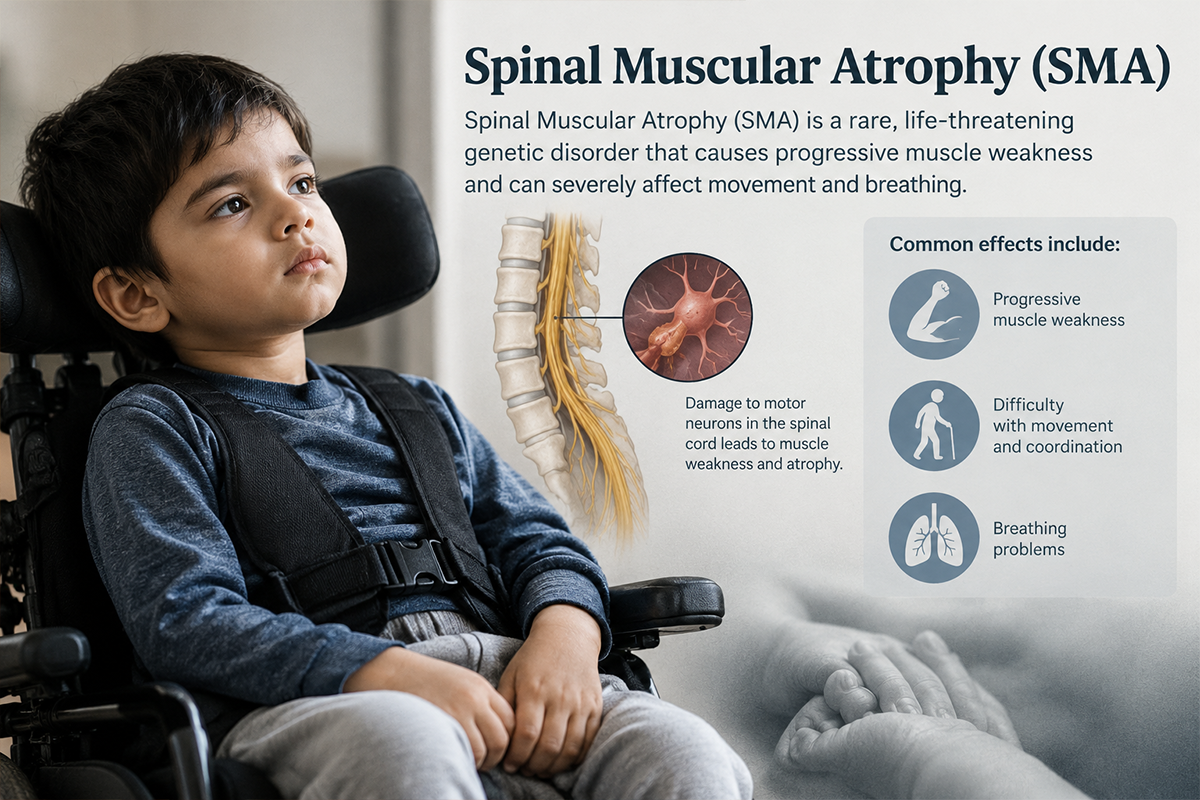
Spinal Muscular Atrophy (SMA) is a rare, life-threatening genetic disorder that causes progressive muscle weakness and can severely affect movement and breathing.
Among the medicines prescribed to treat it is the world’s most expensive drug, the gene therapy Zolgensma, costing Rs 17 crore in India.
Risdiplam, sold by Swiss pharmaceutical company Roche under the brand name Evrysdi, has also been shown to slow the progression of the disease, for which there is no known cure yet.
As Shailaja noted: “Those children who were completely bedridden showed significant improvement. They were able to sit up and move their limbs, though they couldn’t walk very fast.”
But Evrysdi’s high price had long posed a major challenge for families requiring sustained treatment.
The previous Left Democratic Front (LDF) government began procuring the branded medicine through negotiations that brought its price down from around ₹5.4 lakh per bottle in 2021 to approximately ₹1 lakh to ₹1.25 lakh. The medicine was subsequently provided free of cost to eligible children through the public health system.
Evrysdi’s current cost in the open market is ₹6,20,835 per bottle.
In July, the United Democratic Front (UDF) government decided to procure Natco Pharma’s generic version of risdiplam, Natsmart, priced at ₹15,900 a bottle in the open market, to reduce costs.
This came after the Technical Committee on Spinal Muscular Atrophy (SMA) noted that the generic formulation of risdiplam manufactured by NATCO Pharma has been approved by the Central Drugs Standard Control Organisation (CDSCO).
It also noted that since Natsmart is a generic drug, there was no need for safety and efficacy studies, and the Drug Controller General of India approved the molecule to be marketed in India.
The State government claims the drug will make treatment accessible to a larger number of patients.
Public health expert B Ekbal is among those who have backed the decision, describing it as a welcome step towards affordable healthcare.
Ranged against the government and Ekbal are a section of parents of children with SMA and the Cure SMA Foundation of India, an organisation advocating for patients and their families.
They argue, as Shailaja did, that the children currently receiving the Roche drug have shown significant improvements and that the government should not change their medication without providing adequate evidence on the generic alternative’s safety and effectiveness.
In all, around 118 children are currently receiving risdiplam free of cost, according to information provided by the parents.
They maintain that Evrysdi has a well-established record supported by long-term scientific studies and have urged the government to continue supplying it until sufficient evidence on the generic version is made available.
The parents have also questioned whether the switch was adequately explained to families and expressed concern over the absence, in their view, of completed bioequivalence or therapeutic equivalence studies demonstrating that the new formulation performs comparably to the branded drug.
The issue escalated after reports emerged that some bottles distributed by the Sree Avittom Thirunal Hospital in Thiruvananthapuram carried the labels ‘Physician Sample’ and ‘For Clinical Trials Only’.
The reports prompted allegations that children were being given medicines intended for clinical trials without their parents’ consent.
“If it is true that sample bottles were included, including bottles meant for testing, it is extremely dangerous. Clinical drug trials should not be conducted on children under 12 years of age. I do not know if this new company intends to conduct a trial,” Shailaja told the press.
Leader of the Opposition Pinarayi Vijayan, too, has demanded an inquiry, describing the alleged distribution of experimental medicines as a serious lapse.
Hospital authorities, however, clarified that the medicine being distributed had received approval from the Central Drugs Standard Control Organisation (CDSCO).
The government defended its decision to switch to Natsmart.
Health Minister K Muraleedharan said the decision to shift to the Indian-made generic alternative had been mooted by the previous LDF government and was based on the recommendations of an expert committee. The medicine was being introduced because it was considered effective, he said, adding that the government would consider contrary expert opinions if they were presented.
On the controversy over the labels on the bottles, the Minister said an inquiry would be conducted if a written complaint was submitted.
He also maintained that no one had established that the new medicine was inferior in quality, while making it clear that the government intended to proceed with the cheaper alternative rather than continue supplying the earlier drug.
Dr Ekbal’s reply to concerns raised by the parents and opposition leaders is direct and goes to the heart of the debate involving generic medicines. He believes no medicine should be presumed inferior simply because it is cheaper than the branded version.
As a bottle of the generic medicine lasts roughly 12 days, the monthly expenditure with Natsmart would be around ₹40,000, depending on the patient’s age, dosage and quantity required, as opposed to ₹15.5 lakh-plus for Evrysdi.
This price difference, Ekbal argues, can enable the government to extend treatment to more patients without a proportionate increase in public spending. He has also pointed to the Delhi High Court’s October 9, 2025, ruling that allowed Natco to manufacture and market generic risdiplam after Roche initiated legal proceedings to prevent its launch.
According to Dr Ekbal, the ruling represented an important step towards making costly medicines more affordable.
He also addressed concerns over bioavailability and drug quality.
“Bioavailability denotes the rate and extent to which an administered pharmaceutical substance enters systemic circulation through the digestive tract,” Dr Ekbal explained.
“When authorised enterprises such as Natco introduce generic formulations, they must legally and scientifically demonstrate bioequivalence, proving that the drug enters the bloodstream in a manner comparable to the branded original. Under the Drugs and Cosmetics Act, regulatory approval for any generic pharmaceutical is granted only after successful completion of rigorous bioequivalence studies,” he stated in a Facebook post.
The former professor of neurosurgery argued that “the Department of Health must disregard these unfounded media campaigns and steadfastly advance this decisive, patient-centric initiative”.
From our archives:
Rare Disease Day: Families fight alone as children ‘adjust’ themselves to unusual health conditions
(Edited by R Rajesh Kumar.)



