

Published Nov 28, 2026 | 12:10 PM ⚊ Updated Nov 28, 2026 | 12:10 PM

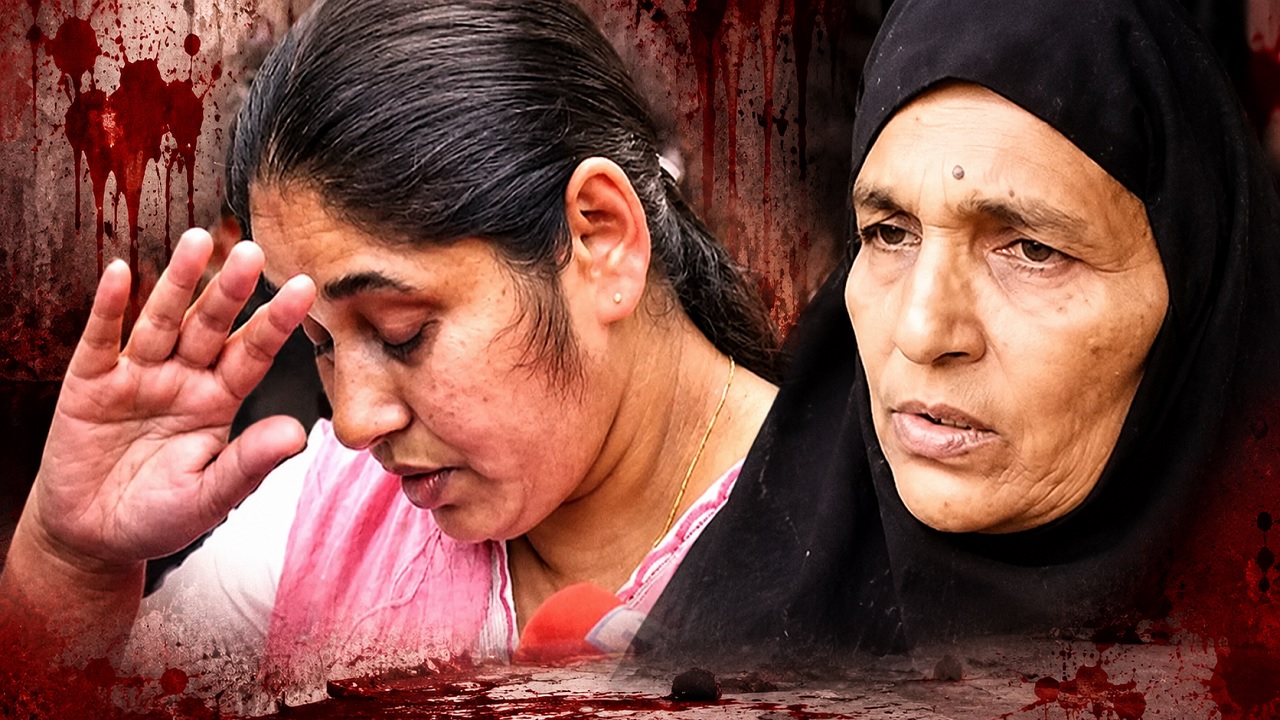
Sajini and Aathikka

Synopsis: The recent court verdicts in the murders of IUML activist Ariyil Shukkoor and CPI(M) worker C.V. Dhanaraj have reopened old wounds in Kannur’s politically charged villages. Beyond the legal outcomes and competing political narratives, women from the victims’ families and local communities speak of grief, fear, lost opportunities and lives shaped by violence. From Shukkoor’s mother to Dhanaraj’s widow, their stories reveal the long-term emotional and social cost of political killings.
The recent verdicts in two high-profile political murder cases in Kannur- the killings of CPI(M) worker C.V. Dhanaraj in 2016 and Muslim Students Federation (MSF) activist Ariyil Shukkoor in 2012 have reopened painful memories in the politically sensitive villages of the district.
But beyond the courtroom proceedings and political reactions, the words of N.V. Sajini, Dhanaraj’s wife, and P.C. Aathikka, Shukkoor’s mother, echo the grief of countless women whose lives have been shattered by political violence.
When South First spoke to women from families affected by these killings, a deeper, unsettling picture emerged.
The violence does not end with the conviction of an accused. It enters homes on both sides, leaving wives, mothers and children to grapple with loss, fear and helplessness.
Even women with no political affiliations find themselves caught in its shadow, struggling to protect the next generation from inheriting the hatred of political rivalries.
Also Read: Keralam seeks Centre’s intervention to secure pure petrol samples from OMCs for ethanol tests

Abdul Shukkoor
In Ariyil, a village in Kannur’s Pattuvam panchayat, the court verdict in the 2012 murder of MSF activist Ariyil Shukkoor has done little to ease the anger and grief that have lingered for more than a decade.
For many women in the village, the verdict came as a reminder of a young life cut short.
”Not a single woman here is happy with the verdict” Anagha Kunnool, a Pattuvam panchayat member from Ariyil, told South First.
“You can see it on the faces of the women in this village. Most of them look gloomy; they have lost a young man whom they considered very dear,” Anagha said, adding that Shukkoor was among the few educated youths in the village and used to conduct night classes for local students.
P.P. Suresan, chairman of the panchayat’s Health and Education Standing Committee, was among the 13 accused convicted in the case. He was sentenced to a maximum of two years of rigorous imprisonment and fined ₹10,000. The court suspended his sentence until December 21, 2026, and granted him immediate bail.
The Ernakulam special CBI court also acquitted CPI(M) State Committee member and the then district secretary P. Jayarajan and then Kalliasseri MLA T. V. Rajesh, who were accused of conspiring to kill Shukoor.
Despite the court’s findings, some villagers continue to believe that the senior CPI(M) leaders had a role in Shukkoor’s murder.
Expressing disappointment with the verdict, an elderly woman from Ariyil said it might have helped the CPI(M) leaders save face, but it could not erase the feelings of the people.
”If Shukkoor had been alive, he might have become another P.K. Kunhalikutty from Ariyil. He was that promising a leader” she told South First.
For Shukkoor’s mother, Aathikka, the verdict has reopened a wound that has never healed.
”My son was killed by people who had grown up playing alongside him in this courtyard. How can I forget all those faces? The verdict is disappointing, and I do not know how long I can continue living with this pain” she told South First.
In memory of Shukkoor, she named her grandchild, the son of her other son, Davood, after him.
”At least now I can call him Shukkoor” she said.
Shukkoor was murdered in 2012, a year after IUML activist C.T. Anwar was killed.
Anagha, who was a school student at the time, remembers how political violence disrupted everyday life in the village.
”Schools remained closed for days and shops were shut. The police would scan and check people before allowing them to enter the village. Things have changed now, but the price paid by an entire generation was enormous,” she said.
Anagha recalled that Ariyil was once considered a CPI(M) stronghold, where political intimidation was part of everyday life.
”I still remember CPI(M) workers threatening people belonging to other political ideologies when they went to polling booths. Even bomb threats were common here before the murders of Shukkoor and Anwar,” she said.
Anagha noted that while the women remain distressed, they are no longer silent about politics.
Many young people from Ariyil now seek employment in the Gulf region and the village has a sizeable NRI population. However, police cases and court-related expenses have continued to cast a shadow over the lives of families affected by the violence.
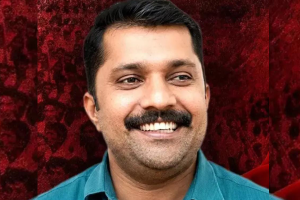
C V Dhanaraj, a former CPI(M) branch secretary at Ezhimala and DYFI leader, was hacked to death on July 11, 2016, at Karanthat in Ramanthali.
In Ramanthali, the village of slain CPI(M) worker C.V. Dhanaraj, the court verdict in his 2016 murder case brought a different response. His wife, N.V. Sajini, told South First that she welcomed the verdict.
Dhanaraj was hacked to death near his house in Ramanthali on the night of July 11, 2016.
The Taliparamba Additional District and Sessions Court on November 23 convicted BJP workers T.P. Biju, M. Vaishakh and M. Vipin in the case.
The court held that the charge of murder against the three accused had been established through witness testimonies presented during the trial.
The remaining 16 accused were acquitted for lack of sufficient evidence. The 12th accused, C. Biju, alias Churakkattu Biju died during the course of the trial.
Sajini was a homemaker when she lost her husband at the age of 34. Their two sons have since depended on her. Following Dhanaraj’s murder, the CPI(M) provided the family with a house and cleared its outstanding bank loans. However, the settlement of the debts took six years and became a subject of controversy at the time.
Sajini remained associated with the party, participating in CPI(M) campaigns and later contesting and winning a panchayat election.
She now works at the Ramanthali Cooperative Bank.
Political observer Saranya M. Charu, who has followed developments in Kannur, said the verdict in the Dhanaraj murder case was not entirely satisfactory and that the CPI(M)’s interest and response to the case had appeared limited.
”After Dhanaraj’s death, I have not seen Sajini smile. It is as though she lost her smile forever. Even after the verdict, she could only say that she welcomed it. Beyond that, she could not say anything. She continues to remain loyal to the CPI(M)” Saranya told South First.
The house the CPI(M) built for Sajini, stands on Dhanaraj’s ancestral property, where his mother lives separately. Saranya said his mother stays at Sajini’s home at night, serving as a protector for the family.
South First also spoke to women in Ramanthali Kunnaru Karanthat, near Payyannur, where Dhanaraj lived. One of them questioned the extent to which political support could determine a widow’s choices and shape her identity.
”The CPI(M) has bought Sajini’s silence by helping her. She cannot speak against the party, even though the verdict is not satisfactory. She is now the wife of a martyr for them. But people forget that when she lost her husband, she was in her early 30s. She was too young,” she said.
She argued that women who lose their husbands to political violence often find themselves unable to imagine a life beyond the identities assigned to them by political parties.
”Now she is in a situation where she cannot even think about another life or fulfilling her emotional and physical needs. This is not just about Sajini. Women from the families of martyrs, victims and even those of the convicted face the same situation. They are trapped in a loop. Political parties may protect them, but they lose their own identities. They become known only as the wife, daughter or mother of a martyr. Not everyone is K.K. Rema, who can rise from the ashes and lead an active political life. Most of these women were homemakers whose worlds revolved around their husbands or sons” she said.
K.K Rama is the MLA from Vadakara and the widow of Revolutionary Marxist Party of India (RMPI) founder T. P. Chandrasekharan, who was allegedly brutally murdered by CPI(M) workers in 2012.
Also Read: Mohanlal lauds RSS’s cultural role at Kesari event; Empuraan controversy resurfaces
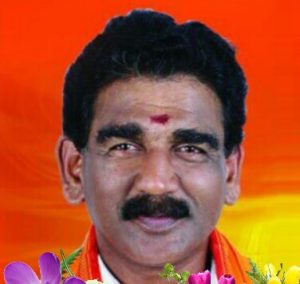
Within two to three hours of CPI(M) worker Dhanaraj’s murder in July 2016, autorickshaw driver and RSS worker C.K. Ramachandran was hacked to death inside his house at Annoor in Payyannur. Police described it as a retaliatory attack.
According to Nandan, a BJP leader from Kannur, Ramachandran’s son works as a driver to support the family. He added that the party had compensated the family from its ‘Balidani Fund’.
Speaking to South First, a Congress insider from Kannur claimed that the police could often identify the perpetrator of a political killing by examining the wounds inflicted on the victim.
According to him, CPI(M)-linked killings typically involved fewer injuries, with perpetrators knowing where to strike, barring a few exceptions.
RSS-linked killings, however, were described as involving more brutal methods. Dhanaraj’s body reportedly had 37 fatal wounds.
A neighbour of Ramachandran alleged that the CPI(M) had a well-organised ground-level network capable of mobilising people and resources for political violence.
”The CPI(M) is always equipped to carry out a murder at any time. They only need a few minutes to retrieve weapons from hidden places; everything else is already in place. The people assigned to carry out the murder and those who are produced before the police are all ready. I do not think any other political party has such a backup or ground-level presence in Kannur” she alleged, speaking to South First.
Meanwhile, Saranya believes the likelihood of Kannur returning to its earlier levels of political sensitivity is relatively low. She pointed to the CPI(M)’s historic setback in the Assembly elections, growing public fatigue with political violence, and the substantial sums parties spend on legal battles arising from such cases.
The emotional consequences of political killings cannot be measured through electoral outcomes or court verdicts.
Dr Sany Varghese, a senior clinical psychologist from Kottayam, said there could be a significant difference between the justice delivered by a court and the perception of justice among women affected by violence.
”A court order may be evidence-based, but the perception of justice is different. Only a few women fight back. The rest may remain in a state of learned helplessness” she told South First.
She explained that learned helplessness could contribute to depression, although its impact would vary from person to person.
”It is highly subjective. We need psychosocial studies to understand the actual impact on women living in such uncertain or politically charged terrains” she said.
For the women of Ariyil, Ramanthali and neighbouring villages, the passage of time has not necessarily meant closure. Some continue to carry the memories of sons and husbands lost to political violence, others struggle with identities shaped by the parties that claim to protect them.
The court may decide who is guilty and who is acquitted.
But in Kannur’s politically charged villages, the emotional cost of those killings continues to be borne by women long after the political slogans have faded.
(Edited by Fayisa CA)



