

Published Oct 08, 2026 | 4:24 PM ⚊ Updated Oct 08, 2026 | 4:24 PM

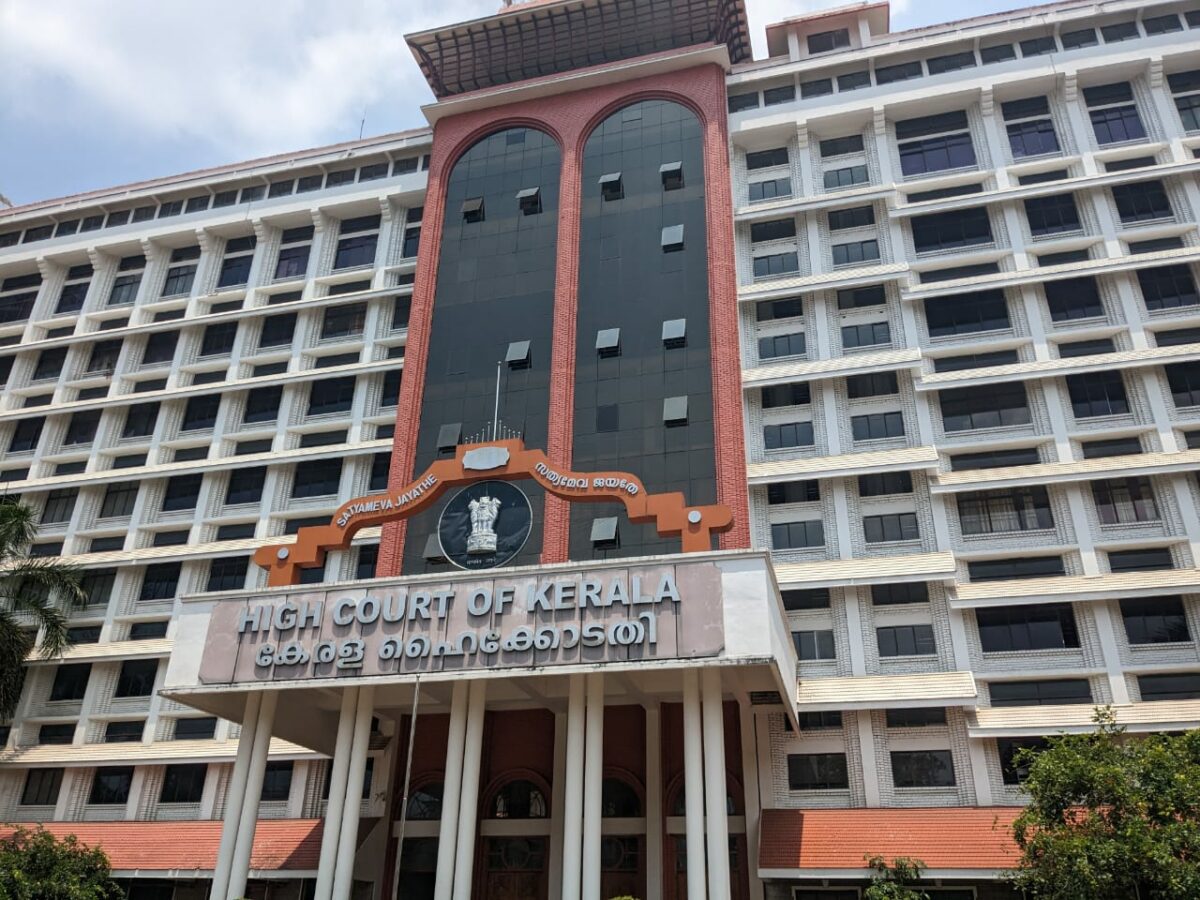
The Kerala High Court. (South First)

Synopsis: The petition arose from an incident in which the headmistress alleged that the school manager had warned her not to wear a churidar to school and had instructed security personnel not to allow her entry if she did so. According to her, on February 4, 2026, she was stopped at the school gate and denied entry because she was wearing a churidar instead of a saree.
What a person wears is ordinarily a matter of personal choice, and neither an individual nor society can dictate a citizen’s attire without the backing of law, the Kerala High Court has observed.
Justice P.V. Kunhikrishnan made the observation in an order delivered on 5 October while considering a writ petition filed by the headmistress of Eeswara Vilasom High School, Kottarakkara.
The petition arose from an incident in which the headmistress alleged that the school manager had warned her not to wear a churidar to school and had instructed security personnel not to allow her entry if she did so.
According to her, on February 4, 2026, she was stopped at the school gate and denied entry because she was wearing a churidar instead of a saree.
Also Read: Twenty-five Central University of Kerala students booked for protesting Vande Mataram seminar
The court said that, at first glance, the dispute appeared to be a simple question of whether a headmistress could attend school wearing a churidar rather than a saree.
However, it said, the issue raised deeper questions concerning dignity, autonomy and the professional standing of an educated woman, as well as the limits of managerial authority over personal choices.
A saree may be considered graceful and respectful by one person, the court observed, but that preference cannot be converted into a compulsory uniform through individual authority.
Similarly, a churidar, when worn decently and appropriately in a professional setting, does not diminish the competence, decorum or authority of a headmistress.
“Clothes may express culture, comfort and individual choice. However, they cannot ordinarily become a measure of a person’s worth or dignity,” the court said.
The court noted that the issue was not a contest between a saree and a churidar, but whether a manager could turn a personal notion about attire into a binding command.
The court declared that a citizen’s attire is his or her choice and that nobody can insist that it conform to societal customs or dictate what would be acceptable to society, particularly when there is no legal backing for such a requirement.
At the same time, the court clarified that a dress requirement can be enforced where it is backed by law in connection with the dress code of an institution or establishment.
The court did not make a finding on the alleged February incidents, as an enquiry into the matter was pending.
However, it held that if such a dictate is made without legal backing, law-enforcement authorities have a duty to take appropriate action in accordance with law.
Also Read: Kalamassery gang rape: Police gather evidence as survivor’s family allegedly offered money
(Edited by Sumavarsha, with inputs from Dileep V Kumar)



