

Published Oct 17, 2026 | 4:25 PM ⚊ Updated Oct 17, 2026 | 8:58 PM

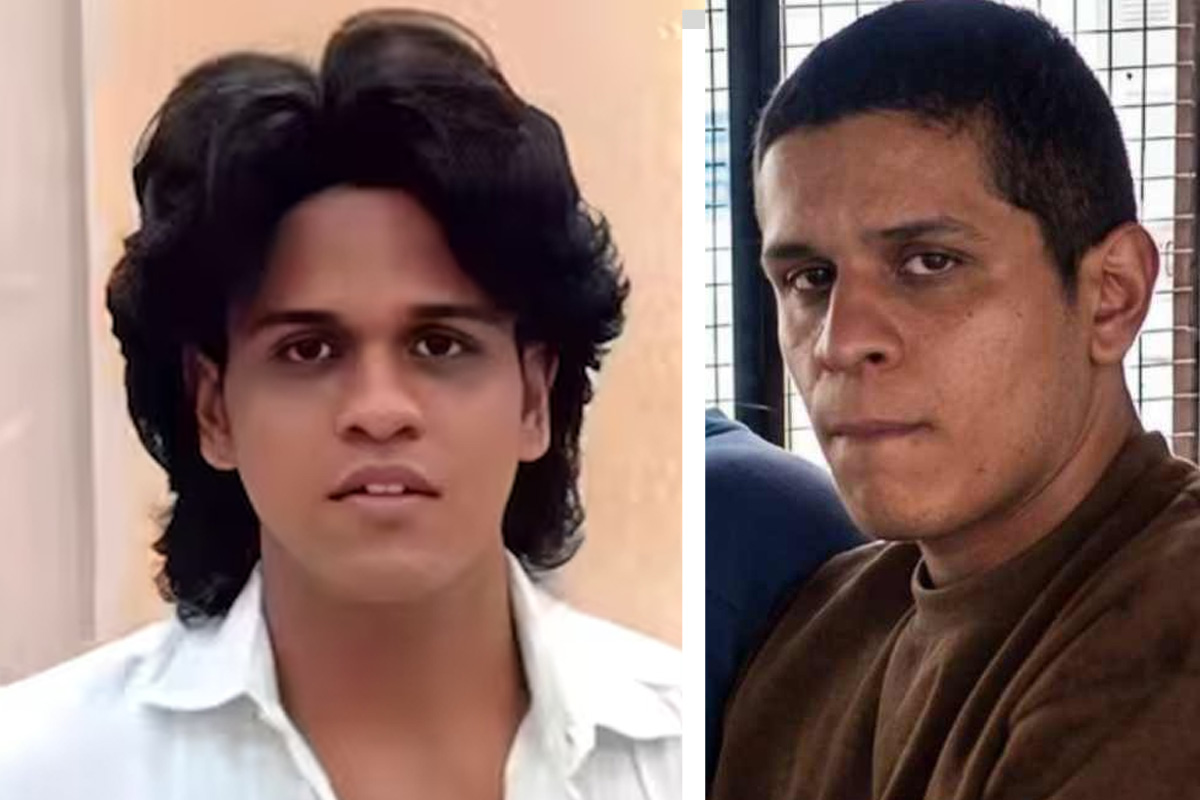
Suhail Sajeev before (left) and after arrest.

The Judicial First Class Magistrate Court-I, Angamaly, has rejected the bail applications of four 19-year-olds accused in the Nedumbassery accident that claimed the lives of three youngsters.
The court reached its decision after arguments from the prosecution and defence over the evidence collected and the course of the investigation.
Earlier, the prosecution opposed the bail pleas, maintaining that there was prima facie evidence against the accused and that the investigation had not reached a stage where their release could be considered.
It submitted that blood and urine tests had confirmed alcohol consumption by the accused and that the vehicle’s event data recorder (EDR), sent for forensic examination, could provide crucial information about the impact of the collision.
The prosecution argued that Suhail Sajeev, despite being 19, was aware of the consequences of his actions. The other three accused — Ninav, Joel and Ameen — allegedly knew that Suhail was intoxicated but did not stop him from driving.
It also contended that two days of police custody were insufficient to complete the investigation.
The investigation has also drawn attention to the extent of Suhail’s intoxication. Test results released recently showed that his blood alcohol level was 5.3 times the permissible limit of 30 milligrams per 100 millilitres of blood.
The defence, meanwhile, alleged that the accused had been implicated as part of a conspiracy and questioned the reliability of Priyad, the key witness whose statement was used when the FIR was registered. It challenged the claim that Priyad had witnessed the accident and sought to know how he came to be involved in the case.
The defence further argued that the police had not adequately investigated the circumstances in which the victims reached the accident spot. It maintained that no eyewitness statement had clearly established how the collision occurred and that several aspects of the incident remained unexplained.
One of the arguments raised by the defence was that three people were travelling on a single scooter and that this amounted to a violation of traffic rules.
However, the court questioned whether this could justify the collision, asking, “Does that mean one is permitted to hit them?” It also pointed out that, with all three scooter riders dead, no further legal action could be taken against them over the alleged violation.
The police have invoked the cognisable, non-bailable Section 105 of the Bharatiya Nyaya Sanhita (BNS), which deals with culpable homicide not amounting to murder, against the accused.
The court rejected the accused’s bail applications, observing that releasing them at this preliminary stage of the investigation could hamper the probe and lead to witness intimidation or destruction of evidence.
The court noted that the first accused, Suhail Sajeev, was allegedly heavily intoxicated when he drove at speeds exceeding 100 kmph on a public road where the permitted speed limit was 60 or 70 kmph.
It described the act as a blatant violation of the law and an instance of utter irresponsibility towards public safety and the lives of other road users.
Citing the Supreme Court’s judgment in the Sanjeev Nanda case, the court observed that a person driving at high speed under the influence of alcohol would be aware of the possibility of causing a major accident.
It held that the charge under Section 105 of the Bharatiya Nyaya Sanhita (BNS) was prima facie sustainable.
The court pointed out that the prosecution had produced preliminary evidence indicating that the first accused had consumed alcohol before driving.
Medical records cited in the prosecution report showed alcohol levels of 161 mg in the blood sample and 230 mg in the urine sample.
The blood alcohol level was significantly above the permissible limit of 30 mg per 100 ml under Section 185 of the Motor Vehicles Act, 1988, the court noted.
The court observed that the evidence of intoxication, coupled with the alleged excessive speed and the resulting loss of three lives, was a crucial consideration while deciding the bail pleas.
It also noted that the investigation was still at a preliminary stage and that there were no direct eyewitnesses to the incident.
The prosecution would therefore have to rely largely on circumstantial and digital evidence, making the preservation of evidence and protection of witnesses particularly important.
The court said the accused, given their financial and social influence, could potentially intimidate witnesses or tamper with evidence if released on bail.
On the role of the second, third and fourth accused, the court said further investigation was necessary to establish the circumstances in which they travelled with the first accused and whether they had encouraged him to drive at excessive speed.
However, it observed that all the accused were aware that the first accused was heavily intoxicated and incapable of making sound decisions about driving.
The court also clarified that an FIR need not contain every detail of an incident, as the specific roles of the accused and other relevant facts generally emerge during the course of the investigation.
Given the gravity of the offence, the preliminary evidence, and the risk of interference with the investigation, the court rejected the bail applications.
The case relates to the accident in the early hours of October 11, when a Mini Cooper allegedly driven at high speed rammed into a scooter carrying three friends near Moozhiyal, close to Suvarnodyanam, in Nedumbassery. The victims — Iyas, a native of Kodagu in Karnataka; Devika, from Wayanad; and Gopika, from Mannarkkad in Palakkad — suffered fatal injuries.
According to the FIR registered by the Nedumbassery Airport police, the collision occurred around 1.45 am when the car hit the scooter from behind, throwing all three riders onto the road. They sustained severe injuries to their heads and bodies.
“My father will take care of everything,” Suhail Sajeev was alleged to have said after the fatal crash.
Suhail, who was allegedly driving the car, was handed over to the police by residents and later taken into custody.
The case had also triggered a political controversy, with the Opposition raising questions in the Assembly over the initial handling of the investigation.
Leader of Opposition Pinarayi Vijayan had questioned why Suhail was not named in the FIR and why stricter legal provisions had not been invoked at the outset. He also sought an explanation for sending the accused to a Borstal school.
The government had assured the Assembly that stringent action would be taken against those responsible.
Home Minister Ramesh Chennithala said the FIR was initially based on a statement by a friend of the victims who did not know the accused’s name. He explained that the decision to lodge Suhail and the other three accused in the Kakkanad Borstal school was in accordance with prison rules applicable to those aged between 18 and 21.
Separately, the Excise Commissioner suspended the licences of three bars in Palarivattom, Vyttila and Nedumbassery over allegations that they served alcohol to the underage accused. Show-cause notices were issued to the establishments, asking why their licences should not be cancelled permanently.
The Kerala High Court later considered petitions filed by two bar owners challenging the action. It directed the Excise Commissioner to examine their responses to the notices and take a final decision within seven days.
Also Read:
The licence to kill: How corruption at Kerala’s RTOs is fuelling a road safety catastrophe
How fast can you spot danger? Keralam’s new licence test faces driving school block
‘Asked for water, given toddy’: Seven arrested for stoning 40-year-old man to death in Palakkad
(Edited by R Rajesh Kumar.)



