

Published Oct 01, 2026 | 11:15 AM ⚊ Updated Oct 01, 2026 | 11:15 AM

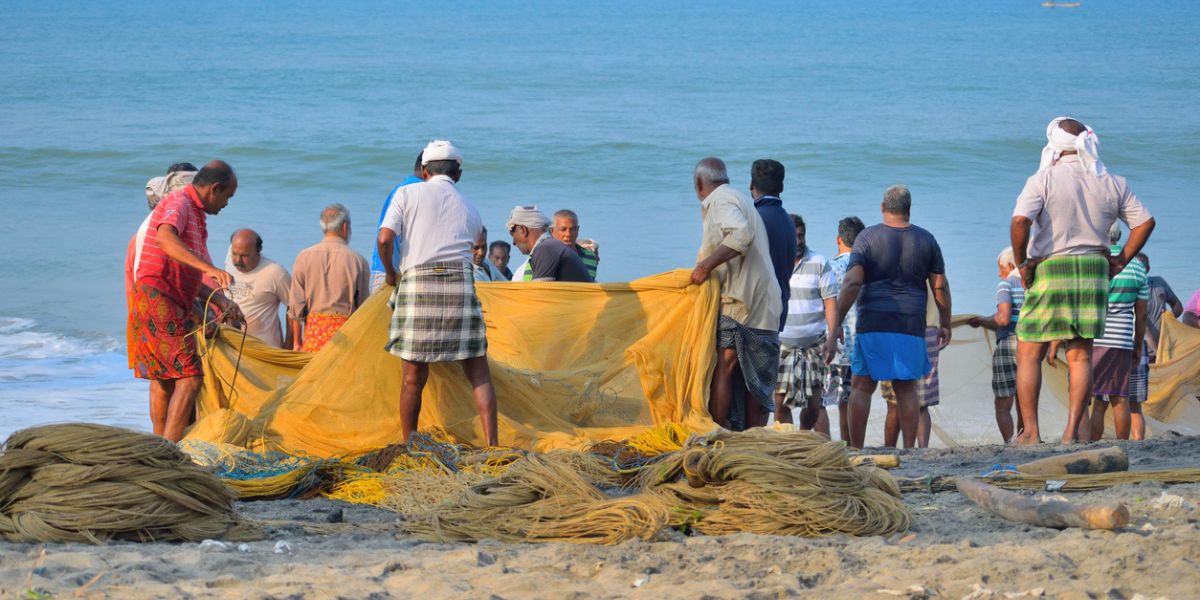
A group of fishermen in Varkala, Kerala. (iStock)

Synopsis: Keralam is planning to move traditional fishing boats away from kerosene by promoting petrol and LPG engines, with the Fisheries Department proposing subsidies for engine conversion. While the government sees the move as a way to cut fuel problems, costs and pollution, fishermen remain wary of the expense, fuel availability and practical difficulties at sea.
Keralam is once again looking at moving traditional fishing boats away from kerosene, this time by promoting petrol and LPG-powered engines. The proposal promises cleaner seas, lower fuel costs and more reliable fishing operations. But fishermen remain sceptical.
For decades, small-scale and traditional fishermen have depended on kerosene-operated outboard motors. With kerosene becoming increasingly difficult to obtain, the state government sees petrol and LPG as alternatives that can keep their boats running.
The proposed scheme seeks to convert existing kerosene-powered outboard motors to petrol engines and LPG systems. It also aims to reduce maintenance costs, improve engine efficiency and cut pollution.
The environmental argument is also strong. Traditional two-stroke engines can release a significant amount of unburnt fuel through their exhaust, adding hydrocarbons to coastal waters. LPG-powered engines are, meanwhile, reported to produce substantially lower carbon-monoxide emissions.
But the bigger question is whether fishermen can afford the transition.
Fisherfolk organisations point to a similar experiment under the previous Left Democratic Front (LDF) government. They say the scheme failed to gain acceptance because the subsidy was inadequate, while the cost and practical difficulties of adopting LPG remained high.
Issues such as the initial conversion cost, availability of LPG, carrying and storing cylinders on small boats, refuelling facilities and maintenance support continue to worry fishermen.
For fishermen, therefore, the question is whether the new system is affordable, accessible and reliable at sea.
Also Read: Malayalam film reviewer Aswanth Kok arrested in Kozhikode after alleged drunk-driving crash
The Director of Fisheries, in a proposal submitted on 14 August, sought administrative sanction for the ‘Conversion of Kerosene Operated Engines to Petrol Engines and LPG in Fishing Crafts (2026-27)’ estimated at Rs 1.95-crore. The project will be funded through the State Budget and implemented by the Fisheries Department.
The proposal envisages ₹99.99 lakh as state share and ₹95.66 lakh as beneficiary contribution.
The department says the shift to petrol and LPG-powered system is aimed at addressing the growing difficulties in obtaining kerosene while ensuring access to alternative fuels that are readily available.
Under the scheme, which will be implemented in a phased manner, 187 kerosene-operated engines will be converted to petrol engines, with a subsidy of ₹50,000 for each engine. The subsidy will be released in two instalments of ₹25,000 each. The component has been pegged at ₹1.87 crore, with the beneficiary contribution also amounting to ₹93.50 lakh.
Another 25 engines will be converted to LPG under the second component of the project.
Each conversion will cost ₹34,666, including ₹27,666 for a 9.9 HP LOT LPG kit, installation, maintenance support and training, and ₹7,000 towards the LPG cylinder and security deposit.
The state will meet 75% of the LPG conversion cost, amounting to ₹6.49 lakh, while fishermen will contribute the remaining 25%, or ₹2.16 lakh.
Apart from easing fuel availability problems, the department expects the conversions to improve engine efficiency and reliability and bring down maintenance and operating expenses. The proposal also cites reduced pollution and greenhouse gas emissions as benefits of moving away from kerosene.
The scheme is intended to encourage traditional fishermen to adopt cleaner and more economical propulsion systems while reducing the recurring burden of fuel and engine maintenance costs.
Also Read: New revelation: MLA had confronted Gyanesh Kumar over inaction on illegal sand mining
The case for a transition remains strong. Conventional two-stroke kerosene outboard motors are inefficient, with a significant portion of the fuel escaping unburnt through the exhaust. Studies have estimated that up to 20% of the fuel can enter the water, adding hydrocarbons to already stressed coastal waters.
For the thousands of small-scale and artisanal fishermen who operate close to the shore, the impact is particularly relevant.
“Fuel discharged from boats can leave a thin film on the water surface and add to pollution in fishing grounds, estuaries and other sensitive coastal ecosystems. Cleaner fuels such as LPG and petrol can substantially reduce such emissions. Tests conducted by the Central Institute of Fisheries Nautical & Engineering Training (CIFNET) have also indicated lower carbon monoxide emissions from LPG outboard engines, with CO levels falling from around 1.2% to 0.32%,” said a senior Fisheries Department official.
An official also stated that the transition could benefit both the environment and fishermen, provided it was backed by a practical support package.
“The change cannot be limited to replacing one engine with another. Fishermen need an economically viable alternative. Subsidies, easy access to fuel, conversion facilities and after-sales support will determine whether the scheme succeeds,” the official added.
For fishermen, the economics will ultimately decide the transition.
Kerosene availability at subsidised rates has traditionally been an important support for the sector, while shifting to petrol or LPG involves the cost of a new engine or conversion, along with concerns over fuel availability and safety.
Proponents of cleaner fuels argue that the higher initial investment can be offset by lower running and maintenance costs.
Cleaner combustion also means less carbon fouling, fewer spark-plug problems and potentially longer engine life. LPG-powered engines, in particular, can bring down fuel expenditure substantially, with estimates putting operational savings at 50–65%, depending on the fuel and operating conditions.
Meanwhile, the proposed push to move small fishing craft away from kerosene is being accompanied by another fleet-modernisation plan aimed at replacing ageing wooden boats with stronger steel-hull vessels.
The scheme envisages replacing small mechanised wooden-hull boats with steel-hull boats, with safety at sea as one of its key objectives. The plan also seeks to ensure access to fresh water during fishing trips, addressing a basic requirement of fishermen undertaking longer voyages.
Under the fleet-modernisation scheme, selected marine fishermen owning small mechanised fishing craft with a wooden hull of less than 40 feet overall length and propulsion capacity below 200 HP will be eligible. The boats should have been in service for more than 12 years and be registered under the Merchant Shipping Act, 1958, and the Kerala Marine Fishing Regulation Act (KMFRA), 1980.
The scheme is aimed at replacing ageing craft that have increasingly become a safety concern for fishermen operating in rough sea conditions.
Also Read: Kerala Assembly ruckus case: Trial set to begin in November, 11 years after the incident
The proposed shift from kerosene to alternative fuels for fishing boats has run into resistance from the fishing community, with fishermen warning that replacing existing engines without adequate financial and logistical support could add substantially to their costs.
“This fuel transition is impractical in its present form,” said Jackson Pollayil, state president of the Kerala Swatantra Matsya Thozhilali Federation. He said most fishing boats now use Japanese engines and replacing them to facilitate a new fuel system would mean an additional financial burden on fishermen.
He said the LPG initiative introduced by the previous LDF government had already demonstrated the difficulties involved, adding that the scheme failed to gain wider acceptance due to its high initial cost, inadequate subsidy and lack of incentives.
“The subsidy now being talked about is not attractive enough. If a new engine or conversion is required, who will bear the cost? More importantly, if the new system malfunctions at sea, who will take responsibility?” Pollayil asked.
He also questioned the practicality of LPG for fishing boats. The additional weight of gas cylinders, the need for assured availability and the question of who would ensure regular supply remain unresolved, he said.
The proposed switch to petrol also raises questions, he added, particularly with fuel prices continuing to rise. A typical fishing boat using kerosene consumes around 150 to 200 litres for a fishing trip, and the community needs clarity on how much petrol would be required under a changed system.
“Before proposing such a transition, the agencies concerned should sit down with fishermen and discuss the practical difficulties. No one seems to be consulting us,” he said.
Instead, the federation wants authorities to explore cleaner alternatives, including solar-powered propulsion systems, for fishing vessels.
At present, even kerosene-powered engines require a small quantity of petrol—usually one or two litres—for starting and related operations, Pollayil said.
The state has around 35,000 outboard motors fishing vessels, of which nearly 20,000 depend on kerosene, making any fuel transition a major exercise for the sector.
He said a workable transition would require more than a subsidy, with fishermen seeking adequate capital support, assured fuel availability, affordable operating costs, conversion or engine-replacement assistance and maintenance support.
(Edited by Fayisa CA)



