

Published Nov 25, 2026 | 9:30 AM ⚊ Updated Nov 25, 2026 | 9:30 AM

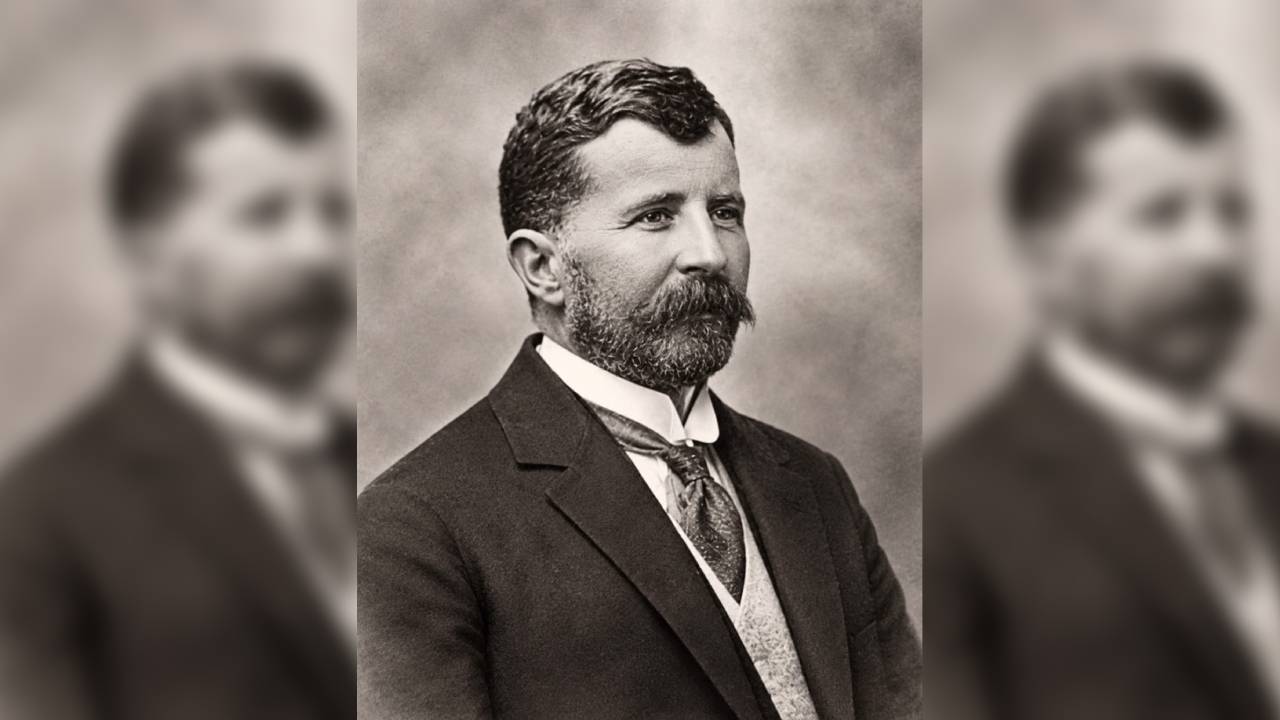
A.Ff. Martin aka Toby Martin

Synopsis: A century after his death, Munnar is preparing to remember Aylmer Ffulke Martin, fondly known as Toby Martin, an early British planter who played a significant role in developing the high range’s plantation industry. The 4 December tribute will revisit his contributions to estate development, labour recruitment, workers’ welfare and transport connectivity, while bringing a largely forgotten chapter of Munnar’s history back into public memory.
The mist-covered hills of Munnar in Idukki are preparing to revisit a chapter of their past that has largely slipped from public memory.
A century after his death, the hill station will commemorate a British planter whose life was closely tied to the early development of its plantation economy and the High Range’s transformation into one of South India’s major tea-growing regions.
Aylmer Ffulke Martin, better known as Toby Martin, arrived in the High Range in 1883, when Munnar was still a difficult-to-reach settlement, and became one of the first private planters to venture into the hills and establish plantations.
His association with estate development, labour recruitment, transport connectivity and the welfare of plantation workers made him a familiar figure in the region’s early history.
Now, the Highrange Literary Foundation has taken the initiative to mark the centenary of his death with a commemorative programme at the CSI Cemetery in Munnar on 4 December, the date on which Martin died in 1926.
For the organisers, the occasion is not merely an observance of the death anniversary of a European planter. It is an attempt to revive the story of a man whose contribution to the making of Munnar extended beyond managing tea estates, and to examine the lives and circumstances of those who helped build the plantation settlements in the High Range.
Also Read: Munnar CSI Church tells a 129-year-old tale of love, dedication and pain
Martin was born in 1864 at Cherrapunji, then in Bengal province, where his father was employed in the Education Service. He studied at Foyle College in Londonderry and Portora Royal School in Enniskillen before returning to India in 1882.
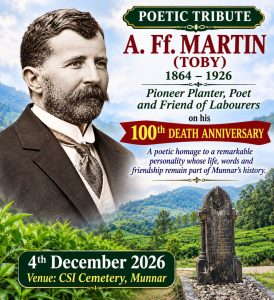
The commemorative programme notice of A.Ff. Martin
He came to the High Range the following year and acquired land to establish the Chittavurrai Estate.
At the time, private plantation activity in the region was still in its infancy. The number of individual European proprietors was small, and much of the land had to be opened up before cultivation could begin.
Martin initially experimented with coffee and cinchona, a plant cultivated for its bark, used to produce quinine. Tea had not yet become the dominant plantation crop that would eventually define Munnar’s economy.
The early years were far from straightforward.
The planters had to contend with difficult terrain, inadequate transport, uncertain agricultural prospects and the challenge of establishing a workforce in a remote mountainous region.
The cinchona trade subsequently lost its commercial appeal, prompting a shift in plantation activity. The arrival of tea companies in the mid-1890s gave the region a fresh impetus. In 1895, Martin sold Chittavurrai Estate to James Finlay & Co. but continued in the company’s service, remaining associated with the plantation industry until his death.
His professional journey coincided with the gradual expansion of the Kanan Devan Hills plantation operations. The work of early planters involved much more than cultivation. They had to organise labour, establish estate facilities, arrange the movement of supplies and produce, and find ways to connect the isolated settlements with the plains.
Martin became one of the figures associated with these efforts.
One lesser-known aspect of Martin’s contribution was his involvement in efforts to improve access to the High Range.
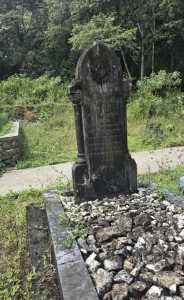
A.Ff. Martin’s grave at CSI Cemetery, Munnar
In the early 1890s, the absence of reliable transport routes was a major obstacle to plantation development. Moving supplies into the hills and carrying produce to markets was difficult. The planters realised that the expansion of estates would depend, to a large extent, on better connectivity with the lower regions.
In 1892, a group of plantation managers, including A. W. Turner, Baron von Rosenberg, E. Fowler, A. H. Sharp and Martin, discussed the possibility of developing a more convenient route.
They turned their attention to Valentine’s Trace, which they considered converting into a pony path or road. Martin was entrusted with examining the proposed route and submitting a report.
In July that year, he undertook the survey towards the plains, accompanied by his wife and a group of labourers. The expedition involved examining routes connected with the Talliar and Marayoor areas. It was not an easy undertaking, given the terrain and the conditions prevailing at the time.
The proposed route also encountered resistance from local villagers who feared that the road could affect their paddy fields and agricultural interests.
The survey formed part of the early attempts to establish better links between the High Range and the lower regions, including routes towards Bodinayakanur and the Coimbatore side. Though the region’s transport network developed over several stages and through the efforts of many people, such early explorations were important to the plantation economy that was taking shape.
Also Read: Two Munnar women ordained as CSI priests
If roads and estate development were central to Munnar’s growth, the availability of labour was equally important.
Plantation expansion required a steady workforce, and recruiting workers from outside the High Range became a major part of the industry’s growth.
Many workers were brought from areas in present-day Tamil Nadu, including Madurai, Srivilliputhur, Tiruchirappalli and neighbouring regions.
Martin was closely associated with labour recruitment and organising workers for the expanding estates.
According to MJ Babu, a journalist and member of the Highrange Literary Foundation, this was among the important but lesser-known aspects of Martin’s life.
“He was one of those who took responsibility for bringing workers to the plantations when the estates began expanding. Workers were recruited mainly from places such as Madurai, Srivilliputhur and Tiruchirappalli. Martin played an important role in organising this process,” he said.
The recruitment and movement of labour were not simple exercises. Workers had to travel long distances to reach the plantations, often along difficult routes. Once they arrived, they had to arrange accommodation, food, and other necessities.
Babu said Martin also took an interest in ensuring workers received food and that welfare measures were introduced for their benefit.
Martin’s association with labour matters extended beyond individual estate responsibilities. In 1914, he took charge as Director of the Labour Department of the United Planters’ Association of Southern India (UPASI), an organisation representing plantation interests.
He had already established himself as a figure with considerable experience in the plantation sector. His appointment put him in a position to address labour-related issues across a wider area rather than being confined to managing a single estate.
He held the position for about five years, with his headquarters at Bangalore, and returned to the service of James Finlay & Co. in 1920.
Also Read: Munnar’s Tamil tea workers struggle for identity and dignity
Martin’s contemporaries remembered him as a man of varied interests, far removed from the image of a planter concerned only with estate accounts and crop production.
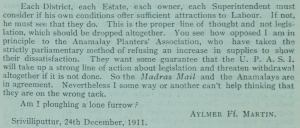
An excerpt from the letter drafted by A.Ff. Martin
A profile published after his death in The Planters’ Chronicle in 1926 described him as someone who combined the qualities of an experienced planter with interests in several other fields. The journal called him a mason, shikari, iconographer, and ethnologist.
He had developed a particular interest in the customs and traditions of the Muduvar community, an indigenous group associated with the Western Ghats. He studied their way of life and social practices, leaving observations that later became part of the region’s historical record.
His interest in wildlife was equally pronounced. He was particularly fascinated by the behaviour of the Indian gaur and reportedly kept a full-grown animal in captivity to observe it closely.
Martin was also among the founders of the Kundale Hounds in 1899. Hunting was then a popular pursuit among sections of the European plantation community, and the hunting group reflected another dimension of early planters’ social life.
His association with Freemasonry was also notable. When Masonic Lodge Heather, under the Scottish Constitution, was established in Munnar in 1902, Martin became its first Worshipful Master. He was subsequently elected to the position on several occasions. He was also associated with other lodges in Ootacamund and Tiruchirappalli.
The 1926 profile in The Planters’ Chronicle suggested that Martin’s interests and activities made him an unusual figure among the plantation community. The account reflected the esteem in which colleagues who had known him for decades held him.
Also Read: Elephants sans passage, people without peace
Perhaps the most revealing account of Martin’s personality appeared in the tribute published by The Planters’ Chronicle following his death on 4 December 1926.
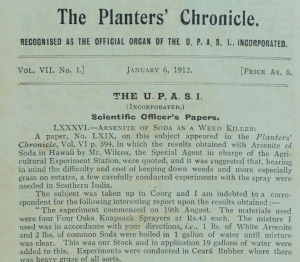
An issue of The Planters’ Chronicle in 1912
The journal remembered him as a man whose defining qualities were courage and kindness, noting that few people possessed them with the consistency that he had displayed throughout his life.
The tribute recalled his enthusiasm for India and the life he had built in the country. Whether managing estates, travelling through the hills or spending time in the low-country settlements, Martin was described as someone who approached life with energy and affection.
The publication observed that while many Europeans had spent their lives in India, few had embraced its people and surroundings with the same enthusiasm.
His funeral was held at Christ Church, Munnar, on 5 December 1926. His wife Violet and their two daughters were present. The large gathering at the funeral reflected the regard in which the plantation community and others in the region held him.
Martin’s historical legacy was also preserved through the writings of his wife, Violet Martin.
In 1931, she compiled An Early Account of the High Range Planting District, North Travancore, a valuable firsthand record of the plantation region’s formative years.
For the Highrange Literary Foundation, the centenary is an opportunity to make such historical material accessible to a wider audience.
Babu said many people who live in Munnar today may be familiar with the names of old estates and the broad history of tea cultivation but know little about the individuals who were involved in establishing the plantation settlements.
Martin is one such figure, he said, pointing to his involvement in estate development, labour recruitment and the introduction of welfare measures.
The 4 December observance will bring together elements of Munnar’s plantation history, the personal story of an early planter and the historical records that have survived from the period.
(Edited by Majnu Babu).



