

Published Aug 10, 2026 | 6:00 PM ⚊ Updated Aug 10, 2026 | 6:00 PM

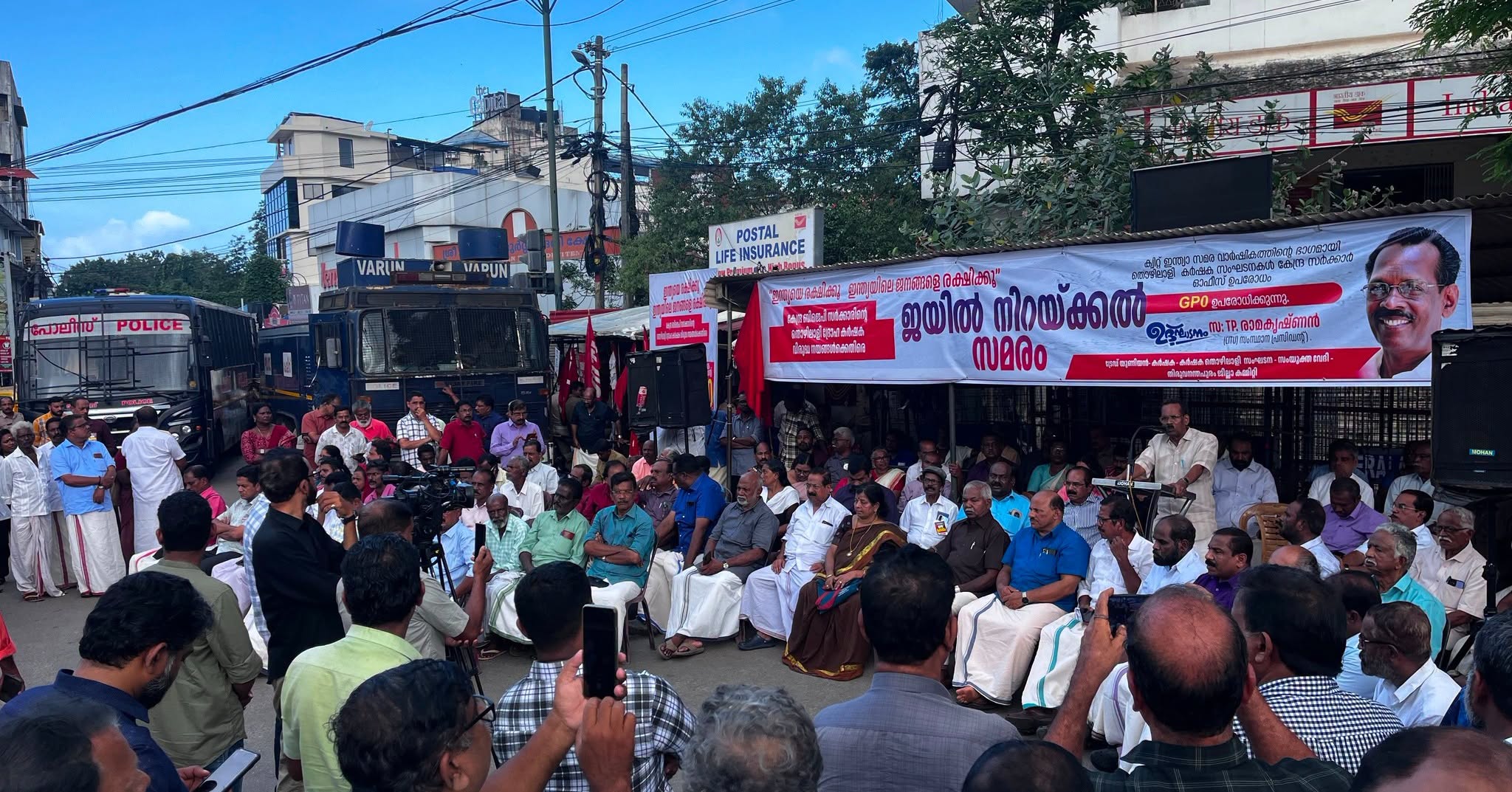
From the Jail Bharo protest convened at Thiruvananthapuram on Monday. (Supplied)

Synopsis : Farmers and workers across the country, including Kerala, joined the ‘Jail Bharo’ agitation on Monday against the Centre’s labour, farm and privatisation policies. The nationwide protest, led by the Samyukta Kisan Morcha and central trade unions, is the first phase of a larger campaign that is set to intensify from November.
Farmers and workers joined a nationwide ‘Jail Bharo’ (jail-filling) agitation on Monday, 10 August, as part of a joint campaign by the Samyukta Kisan Morcha (SKM) and central trade unions against what they described as the Union government’s anti-worker and anti-farmer policies.
Protests were held at district centres across Kerala, with trade union leaders leading demonstrations and blockades in several parts of the state.
In Thiruvananthapuram, Centre of Indian Trade Unions (CITU) state president TP Ramakrishnan inaugurated the agitation in front of the General Post Office.
The protesters raised slogans against the Centre’s labour, agricultural and privatisation policies and demanded measures to protect the interests of workers, farmers and agricultural labourers.
The agitation is being seen by the SKM and the central trade unions as the first phase of a wider campaign planned against the Union Government. The organisations plan to step up the campaign from November and have said that the coming phase will seek to build a mobilisation comparable in intensity to the farmers’ movement that shook the Centre five years ago.
The ‘Jail Bharo’ programme, therefore, is being positioned as the opening salvo in that campaign, bringing farmers, industrial workers, agricultural labourers and employees from different sectors onto a common platform against the Centre’s economic and labour policies.
Also Read: Almost 50-year-old story of a dam Kerala wants to build —TN doesn’t want to hear
A major demand of the protesting unions is the repeal of the four Labour Codes introduced by the National Democratic Alliance government. The unions contend that the codes dilute existing labour protections and weaken the rights of workers.
The protesters also demanded a statutory guarantee for minimum support price (MSP) for agricultural produce based on the recommendations of the M.S. Swaminathan Commission. They sought the withdrawal of the Electricity Amendment Bill, which they said would adversely affect farmers and consumers.
Another prominent demand was an increase in the minimum monthly wage.
The unions called for a wage of ₹42,000, including Dearness Allowance, for workers across sectors, including scheme workers. Earlier, trade unions had also raised a demand for a minimum monthly wage of ₹31,000, reflecting their broader campaign for a higher statutory wage floor.
The organisations demanded effective implementation of the Mahatma Gandhi National Rural Employment Guarantee Scheme and opposed the Viksit Bharat–Guarantee for Rozgar and Ajeevika Mission (Gramin), or VB-GRAM(G), scheme. They called for the withdrawal of the scheme, along with opposition to free trade agreements which, according to the unions, could affect domestic farmers and workers.
The unions also pressed for a comprehensive law covering unorganised sector workers and demanded an end to the privatisation of public sector services. They argued that the Centre’s policies on labour, agriculture and privatisation had placed additional pressure on workers, farmers and agricultural labourers.
Also Read: UDF government ends Kerala’s decade-old doorstep pension delivery
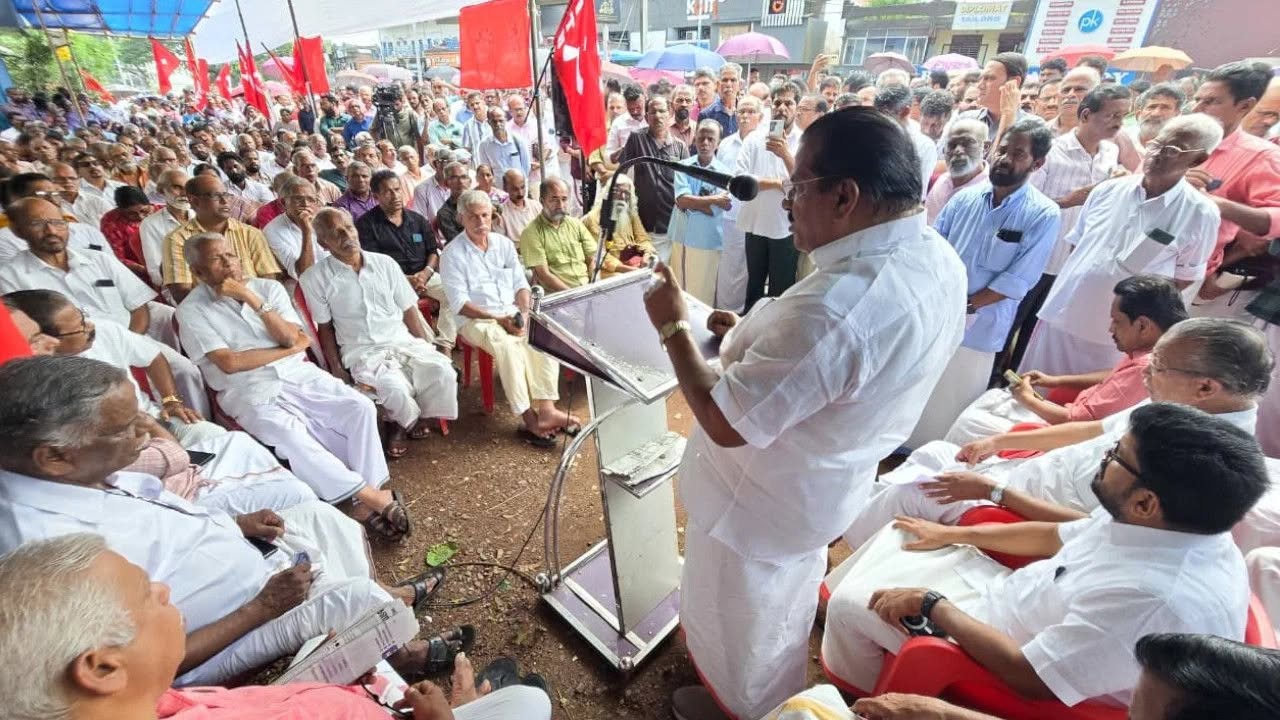
Jail Bharo protest at Kannur
The agitation saw the participation of senior leaders of the Left trade union and farmers’ movements in different parts of the country. In Kerala, CPI(M) central committee member EP Jayarajan inaugurated the protest at Kannur, while CITU general secretary Elamaram Kareem led the programme in Kozhikode.
The Kannur Head Post Office blockade was also inaugurated by EP Jayarajan. In Ernakulam, Hind Mazdoor Sabha leader Thampan Thomas led the protest.
The mobilisation extended beyond Kerala, with All India Kisan Sabha president Ashok Dhawle taking part in the agitation in Maharashtra. CITU national leaders also joined protests in other states, with secretary P. Krishnaprasad participating in Haryana and CITU All India president Sudeep Dutta also taking part in the Haryana programme.
(Edited by Sumavarsha)



