

Published Aug 09, 2026 | 11:00 AM ⚊ Updated Aug 09, 2026 | 11:00 AM

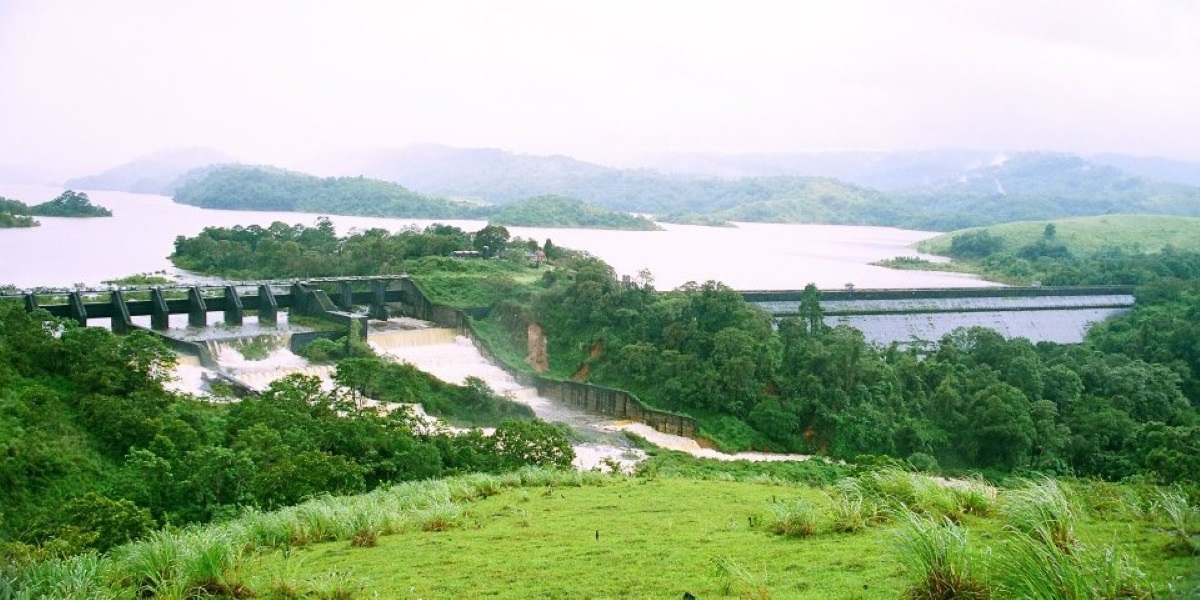
A view of the Mullaperiyar Dam. (Creative Commons)

Synopsis: The latest clash over raising the Mullaperiyar reservoir’s water level has revived Kerala’s long-standing push to replace the 131-year-old dam, which the state says poses serious structural, hydrological and downstream safety concerns. Tamil Nadu, heavily dependent on the reservoir for its southern districts, remains firmly opposed to a new dam and wants the existing structure strengthened and its storage capacity restored.
The fresh row over Tamil Nadu’s move to raise the Mullaperiyar reservoir water level has once again brought the decades-old dispute over the dam to the fore.
Kerala has strongly objected to the proposal and warned that it would not hesitate to approach the Supreme Court, if necessary.
At the heart of the renewed confrontation, however, lies an issue Kerala has repeatedly raised — the need to replace the century-old Mullaperiyar dam with a new structure.
Kerala has maintained that a new dam is the only lasting solution to address downstream safety concerns, while simultaneously protecting Tamil Nadu’s interests.
Water Resources Minister Mons Joseph has reiterated that the construction of a new dam remains the state’s fundamental demand. Tamil Nadu, which depends heavily on Mullaperiyar water for several of its southern districts, has opposed the proposal, fearing that a new structure could affect its water security.
With the dispute over the reservoir level now intensifying, the long-pending demand for a new Mullaperiyar dam is once again emerging as a flashpoint between the two neighbouring states.
Also Read: How 142 feet became the centre of the Mullaperiyar dam dispute
Kerala’s proposal for a new dam downstream of the Mullaperiyar reservoir is rooted in concerns over the safety and structural condition of the 131-year-old structure.
Kerala maintains that the existing structure was constructed when dam engineering was still developing and has now outlived its safe service life.
The state argues that decades of ageing, including the continued leaching of lime used as a binding material, have made the structure increasingly porous and weakened its overall strength.
The dam is a 47.24-metre-high, 366-metre-long composite gravity structure, with uncoursed rubble masonry faces built using lime-surkhi mortar and a hearting that accounts for more than 60% of its volume, made of lime-surkhi concrete.
Surkhi is the powdered form of overburnt bricks or clay balls.
Kerala says several technical and construction practices now considered essential for modern gravity dams were not followed when it was built.
The state has also cited increased seismic activity in the region and the possibility of high-magnitude floods as factors that could raise the risk of a failure.
Such a failure, it says, could trigger a cascading impact on the Idukki reservoir system, including the Idukki, Cheruthoni and Kulamavu dams, threatening densely populated areas in Idukki and Ernakulam and parts of Kottayam, Thrissur, Pathanamthitta and Alappuzha.
Kerala, however, says it does not seek to disrupt Tamil Nadu’s long-standing use of Mullaperiyar water for irrigation and drinking purposes.
The proposed new dam, it maintains, is intended to provide continued water to Tamil Nadu while addressing the safety of people and property downstream in Kerala.
Interestingly, although Kerala has proposed the construction of the new dam, the Mullaperiyar dam and its reservoir are currently owned, operated and maintained by the Tamil Nadu government.
Also Read: SC judge cites comic character to those fearing Mullaperiyar dam collapse
Kerala’s demand for a new dam at Mullaperiyar is not a recent one.
The state has been seeking a replacement structure for more than four decades, with the first specific recommendation for a new dam coming in 1979 from a team of engineers headed by the then Chairman of the Central Water Commission (CWC).
The move towards a replacement dam dates back to the CWC team’s recommendation in 1979.
Following this, a joint team of engineers from Kerala and Tamil Nadu conducted a reconnaissance survey and identified a technically suitable location for a new structure, about 1,300 feet downstream.
The proposed site was considered suitable for constructing a new dam without compromising the safety of the existing structure.
Further investigations were carried out in 1981-82, when 19 boreholes were drilled at the site.
The investigations found good rock conditions for laying the foundation for a new dam.
The replacement proposal, however, was not pursued at the time.
The issue resurfaced with greater urgency over concerns about the safety of people living downstream of Mullaperiyar.
The Kerala government subsequently decided to proceed with investigations for a new dam downstream of the existing structure. Funds were earmarked in the 2007-’08 State Budget for preliminary investigations and studies, followed by administrative sanction for detailed investigations into the project’s feasibility.
The Kerala Legislative Assembly then unanimously passed a resolution on 24 July 2009, calling for the construction of a new dam.
The resolution cited the safety of people in Kerala while also stressing the need to ensure the continued supply of water to Tamil Nadu.
The issue was taken up at an interstate meeting convened by the Secretary, Water Resources, on 31 July 2009.
At the meeting, Kerala asserted that a new dam was the only feasible long-term solution and indicated that it was even prepared to bear the construction cost.
Tamil Nadu, however, rejected the proposal.
In a letter dated 14 September 2009, the state maintained that there was no need for Kerala to construct a new dam, arguing that the existing structure, once strengthened, would serve the purpose of a new dam.
Kerala’s demand for a new dam is rooted primarily in concerns over the hydrological and structural safety of the existing dam.
A hydrological safety assessment entrusted to IIT Delhi, including studies on the Probable Maximum Flood (PMF) and flood routing, concluded that the existing structure was hydrologically unsafe.
Studies carried out by IIT Roorkee, meanwhile, found the dam structurally unsafe to withstand the impact of probable earthquakes that could reasonably be expected in the vicinity.
Also Read: Pennycuick Pongal, forced agreements, politics and lives at stake
The proposed replacement for the ageing Mullaperiyar dam is envisaged as a large concrete gravity dam, to be built about 366 metres downstream of the existing structure. The proposed alignment has been assessed as technically, geologically and hydrologically suitable for constructing the new dam.
Unlike an earth or arch dam, the proposed structure will rely mainly on its own weight to withstand the pressure of the reservoir. The main dam will stretch 370.10 metres across the valley and rise 53.22 metres from its deepest foundation rock.
The project will not consist of the main dam alone. A separate saddle dam will be constructed along the left flank, where the structure meets the adjoining hill. The saddle dam is planned to be 137 metres long and 25 metres high. The main dam and saddle dam will be positioned on either side of the hill portion between them, giving the completed project the appearance of a long concrete barrier following the contours of the valley.
Preliminary geological investigations have formed the basis for the proposed dimensions of the main structure. The dam will be built across the existing reservoir system, with the new alignment located downstream of the present Mullaperiyar dam.
The existing Mullaperiyar dam has a catchment area of about 624 sq. km. The catchment lies in a predominantly hilly and heavily forested region.
The proposed replacement dam would intercept an additional 0.502 sq. km of catchment. This would take the total catchment area of the new dam to approximately 624.5 sq. km.
Importantly, the entire catchment of the proposed dam falls within Kerala’s territory.
The project site itself is located inside the Periyar Wildlife Sanctuary. The area proposed for the dam and its associated works is forest land, with no habitation.
At the proposed full reservoir level (FRL) of 136 ft, the new project is expected to submerge an additional 22.23 hectares of land.
In an estimate made in 2015, the cost of the proposed new dam, including provisions for decommissioning the existing structure, was put at ₹663 crore. The project was envisaged for completion within four years after obtaining all the required statutory clearances.
Construction of the replacement structure would not mean that the existing Mullaperiyar dam could be left standing alongside it. Once the new dam is completed, the old structure would have to be partially or completely decommissioned to allow the reservoir to spread up to the new dam.
The proposal envisages dismantling the old structure gradually, rather than bringing it down in one operation. The dam would be taken down vertically, step by step, with the resulting debris removed from the site. The work would have to be carried out with particular care to minimise disturbance and environmental damage in the forest and wildlife sanctuary.
Tamil Nadu’s opposition to a new Mullaperiyar dam is rooted in its dependence on the existing reservoir, which remains a lifeline for the drought-prone southern districts of Theni, Madurai, Sivaganga and Ramanathapuram.
The dam has historically supported irrigation across nearly 2–3 lakh hectares, besides meeting drinking water needs and sustaining the livelihoods of millions. Tamil Nadu also generates hydropower from the project.
The state maintains that the 152-foot Full Reservoir Level envisaged for the existing dam should ultimately be restored.
Water storage was restricted to 136 feet for years over safety concerns, before the Supreme Court intervened.
In 2014, the court permitted the level to be raised to 142 feet and said it could eventually reach 152 feet after strengthening works.
Tamil Nadu fears that replacing the dam could unsettle the existing lease arrangement and weaken its long-standing operational control and water entitlements. Farmers and officials also worry that construction, decommissioning of the old structure or any fresh agreement could create years of uncertainty over water releases.
Earlier, in June, Tamil Nadu Governor Rajendra Vishwanath Arlekar, while reading out from the policy address, called Mullaperiyar the “lifeline” of the people of the southern districts and stated that the state would firmly oppose Kerala’s proposal, pursue strengthening works and seek higher storage.
Arlekar is also the Governor of Kerala.
(Edited by Majnu Babu).



