

Published Jul 10, 2026 | 7:00 AM ⚊ Updated Jul 10, 2026 | 7:00 AM

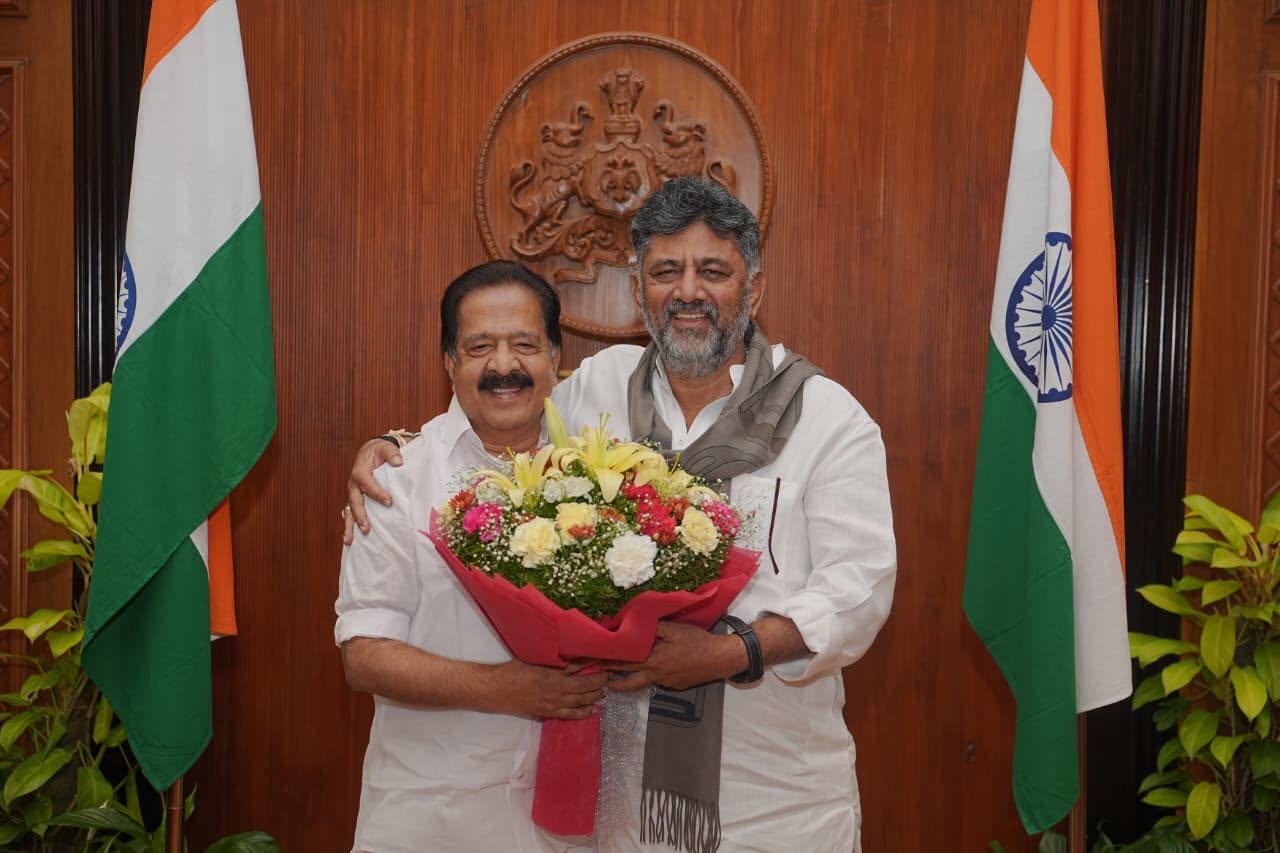
Karnataka promised support to Kerala in the fight against drugs. Pictured is Kerala Home Minister Ramesh Chennithala with Karnataka CM DK Shivakumar.

Synopsis: Kerala is reshaping its war on narcotics by pushing beyond state borders, building a coordinated enforcement network with neighbouring southern states to dismantle the organised syndicates, financial networks and interstate supply chains driving the flow of synthetic drugs. As Operation Toofan and Operation Thunder expand from seizures to intelligence sharing, financial investigations and regional policing, the state is positioning collective action—not isolated crackdowns—as the key to confronting an increasingly sophisticated and transnational drug trade.
The battle against narcotics has reached a point where Kerala can no longer fight it alone.
Most often, major seizures made by enforcement agencies have reinforced the same conclusion: while the drugs are consumed in Kerala, the networks that manufacture, finance and transport them often stretch far beyond its borders.
Snapping those supply chains demands more than isolated action—it calls for a coordinated regional response. That realisation is now shaping Kerala’s anti-drug strategy.
The emphasis is gradually moving beyond state-level enforcement to joint intelligence, coordinated operations and closer cooperation with neighbouring states, acknowledging that organised drug syndicates thrive by exploiting administrative boundaries.
A meeting of police chiefs from the southern states at the Kerala Police Headquarters scheduled for Friday, 10 July, is expected to mark an important step in that direction.
For Kerala, which has intensified its anti-narcotics campaign through Operation Toofan: The Narco Hunt and Operation Thunder, such cooperation could prove to be a game changer.
Investigators have repeatedly maintained that much of the synthetic drugs entering the state originate outside Kerala.
They point out that if intelligence, enforcement and operations march in lockstep across southern India, the campaign against narcotics could enter an entirely new phase—one that aims not just to seize drugs, but to detect, disrupt and destroy the networks behind them, while strengthening rehabilitation efforts alongside enforcement.
Also Read: Operation Toofan seizes drugs worth ₹30 crore in first month
Kerala is widening the scope of its anti-drug campaign by taking the fight beyond its borders, signalling a shift from isolated enforcement to a coordinated regional strategy against organised narcotics syndicates operating across South India.
The latest push comes close on the heels of Karnataka extending its support to Kerala’s anti-drug drive, even as the state government works towards bringing all southern states onto a common platform for intelligence sharing and joint enforcement.
The proposed collaboration is expected to culminate in a meeting of chief ministers of the southern states, though officials said groundwork is being laid first through closer police coordination.
The process began in June when Kerala Chief Minister VD Satheesan wrote to his counterparts in Karnataka, Tamil Nadu, Puducherry, Andhra Pradesh and Telangana, urging them to work together to curb the inter-state movement of narcotics.
In his letters, the chief minister called for a coordinated effort to dismantle drug syndicates that exploit state boundaries to move marijuana and synthetic drugs such as MDMA (also called Molly or Ecstasy) and crystal methamphetamine (crystal meth) across southern India.
Kerala and Tamil Nadu have, independently, raised alarm over the rapid spread of synthetic drugs, particularly MDMA, among young people.
Officials said these substances are increasingly replacing conventional cannabis products, including hashish, as the preferred narcotics.
Kerala has also flagged the rising influx of high-potency hybrid marijuana, genetically modified strains believed to be entering the state from countries such as Thailand, where cannabis has been decriminalised.
The regional effort gathered momentum on 8 July when Kerala Home Minister Ramesh Chennithala met Karnataka Chief Minister DK Shivakumar at the Vidhana Soudha in Bengaluru to strengthen cooperation against inter-state drug trafficking.
During the meeting, Chennithala outlined the progress made under Operation Toofan and emphasised the need for a coordinated response against networks that operate seamlessly across state borders.
Shivakumar praised Kerala’s campaign, describing it as an initiative worthy of replication by other states. He assured Karnataka’s full support, saying stronger coordination was essential to disrupt drug supply chains extending across multiple states.
The Karnataka chief minister also directed officials to intensify inspections against drug trafficking and instructed the state’s chief secretary to initiate follow-up measures for closer operational cooperation.
Karnataka has additionally agreed to share intelligence inputs with Kerala to strengthen surveillance and enforcement.
Officials said the collaboration marks a significant expansion of Operation Toofan, with Kerala now looking beyond conventional policing and building a regional enforcement architecture capable of tracking organised drug syndicates across state lines.
As part of that effort, a meeting of police chiefs of the southern states will be convened in Thiruvananthapuram on 10 July. The gathering is expected to lay the foundation for broader political engagement, with discussions underway on convening a meeting of chief ministers of the southern states to formulate a common strategy against narcotics trafficking.
Explaining the rationale behind the initiative, Chennithala said drug traffickers do not recognise state boundaries and law enforcement agencies can no longer afford to work in isolation.
“If state borders do not apply to drug mafias, then our law enforcement officers who fight them should not have borders either,” he said.
Describing the 10 July meeting as an emergency initiative, Chennithala said the objective was to identify and disrupt the routes through which drugs reach Kerala from neighbouring states.
“The supply chain of drugs and heroin reaching Kerala exists in the metro cities and border villages of neighbouring states. Keeping this reality in mind, the Home Department is prioritising inter-state security coordination at the macro level alongside grassroots police operations. Operation Toofan is now entering a phase where neighbouring states will form a joint defence network along with local enforcement to eliminate drug syndicates,” he said.

Operation Toofan poster
The minister said Kerala is also working towards what he described as “intelligence synchronicity” — a real-time information-sharing mechanism among neighbouring states to detect and intercept drug movements more effectively.
Chennithala said Karnataka has already assured complete cooperation with Operation Toofan.
He said Kerala is now seeking to bring Tamil Nadu, Puducherry, Andhra Pradesh and Telangana into a common intelligence and enforcement network, enabling police agencies to trace the financial sources, money trails and transactions behind the narcotics trade with greater precision.
A senior police officer involved in the coordination effort said the strategy reflects a clear shift in approach.
“Alone, we can do so little; together, we can do so much,” the officer said, quoting Helen Keller. “That is exactly the direction this initiative is taking—from individual state-level raids to coordinated enforcement backed by intelligence sharing across southern India.”
At the same time, an Excise officer, working in the intelligence gathering wing, shared the other side of the coin.
He felt that while intelligence-sharing agreements and high-level meetings may improve coordination, they are useless unless backed by binding operational mechanisms, common databases, joint investigations and sustained political commitment; they risk becoming largely symbolic.
The officer also called for emphasis on reducing demand through long-term de-addiction, mental health interventions and community-based prevention.
“As trafficking syndicates rapidly adapt using encrypted communications, cryptocurrencies, darknet platforms and international logistics networks, there is also a risk that enforcement agencies may continue reacting to new methods rather than staying ahead of them,” he said.
Also Read: ‘Cooks’ make merry as drugs spur youth to crime
An officer with the District Anti-Narcotic Special Action Force said that drug trafficking is no longer confined to street-level peddling or small criminal gangs.
“The trade has transformed into a highly organised, technology-enabled network that stretches across states and international borders, forcing law enforcement agencies to rethink their strategy,” the officer said.
He said drug syndicates have steadily adapted to changing enforcement methods by exploiting containerised sea cargo, darknet marketplaces, cryptocurrency transactions, parcel delivery services and other concealed supply chains.
“The traditional drug trade has evolved into a complex network-based operation, making enforcement far more challenging than before,” he added.
According to a senior official in the Home Department, the Union government has directed all state police chiefs to make financial investigations a mandatory component of major cases registered under the Narcotic Drugs and Psychotropic Substances (NDPS) Act.
The objective is to move beyond the seizure of narcotics and dismantle the financial networks that sustain the trade.

Operation Thunder poster
Officials said the Centre wants enforcement agencies to disrupt the drug economy at its source by targeting production, financing and distribution simultaneously.
The emphasis is on stopping narcotics at the production stage itself rather than relying solely on seizures after the drugs enter the supply chain.
Senior officers also pointed out that the Union Home Ministry now views the narcotics menace through a wider national security lens.
Beyond organised crime, agencies are increasingly examining the links between drug trafficking, terror financing and cross-border extremist networks, describing it as an evolving narco-terror ecosystem that demands coordinated action across multiple agencies.
The strategy being pursued places greater reliance on intelligence gathering, technology-driven investigations and inter-agency coordination.
Officials said isolated enforcement measures are no longer sufficient against criminal groups that operate across jurisdictions using sophisticated communication and financial systems.
Earlier, Satheesan had also stressed the need for closer coordination with central agencies, including the Narcotics Control Bureau (NCB), the Directorate of Revenue Intelligence (DRI), and Customs and Central Excise.
He called for concerted efforts to identify and choke the illicit financial channels used by drug traffickers, including international hawala networks that facilitate the movement of proceeds from the narcotics trade.
Enforcement agencies in Kerala said recent investigations underscored the international reach of drug syndicates operating in the state.
They cited the arrests of Nigerian national Samuel Clefson Okafor and Elcina Sanatan Souza from Delhi and Bengaluru in separate operations linked to drug trafficking.
Investigators alleged that both had been recruited by local criminal networks to manufacture methamphetamine in clandestine laboratories set up in urban neighbourhoods.
Police said the operations were primarily linked to the distribution of MDMA, with cocaine featuring only occasionally, highlighting the increasingly global character of Kerala’s illicit drug trade.
Also Read: Divided by drugs, united by power!
At the same time, the state’s fight against synthetic narcotics is also entering a more challenging phase, with the Excise Department recording a steep rise in drug-related offences over the past five years.
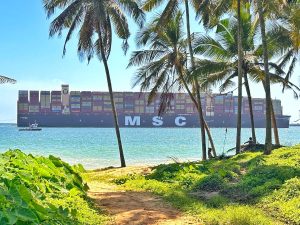
Excise officers specifically stressed the need for tighter monitoring at Vizhinjam International Seaport.
As the state prepares for Vizhinjam’s emergence as a major international seaport, enforcement agencies have also sounded a note of caution over the possibility of global drug trafficking networks exploiting commercial cargo routes.
According to the Excise Department, the use of synthetic and chemical drugs has shown a worrying upward trend across the state.
The number of cases registered under the Narcotic Drugs and Psychotropic Substances (NDPS) Act has increased steadily, from 3,922 in 2021 to 6,116 in 2022 and 8,104 in 2023.
The figure remained high at 8,160 in 2024 before climbing sharply to 12,568 in 2025.
By 16 June this year, 5,846 NDPS cases had already been detected.
Officials felt the changing pattern of drug abuse demanded stronger surveillance and intelligence gathering.
They specifically stressed the need for tighter monitoring at Vizhinjam, which is expected to become Kerala’s gateway for international trade and economic growth.
With the rapid expansion of containerised cargo movement, they have warned that transnational drug syndicates could attempt to misuse commercial shipping channels to move narcotic substances across borders.
To dismantle organised drug networks, the department has intensified digital investigations.
Mobile phone records and other electronic data recovered from those arrested in narcotics cases are being analysed by the Excise Cyber Cell to identify suppliers, financiers and distribution chains operating behind the scenes.
Enforcement measures have also been tightened.
Officials said the provisions of the NDPS Act are being implemented rigorously, while repeat offenders are being proceeded against under the Prevention of Illicit Traffic in Narcotic Drugs and Psychotropic Substances Act, 1988.
The law provides for the preventive detention of individuals involved in multiple drug cases, and such action is being initiated wherever applicable.
The department has also begun proceedings to attach properties linked to narcotics trafficking under Section 68F of the NDPS Act.
The state is attempting to simultaneously fight the narcotics trade on two fronts: by choking local distribution networks while pursuing the organised syndicates that operate far beyond its borders— through Operation Toofan and Operation Thunder.
But at the same time, breaking the drug economy requires more than arrests and record seizures; it demands sustained intelligence sharing, coordinated investigations and a united response from neighbouring states.
For a trade that ignores state boundaries, the state is sending the message that the fight against narcotics cannot stop at the border either. If the networks have evolved into a regional enterprise, the response must become one as well.
(Edited by Majnu Babu).



