

Published Jul 03, 2026 | 9:00 AM ⚊ Updated Jul 03, 2026 | 9:06 AM

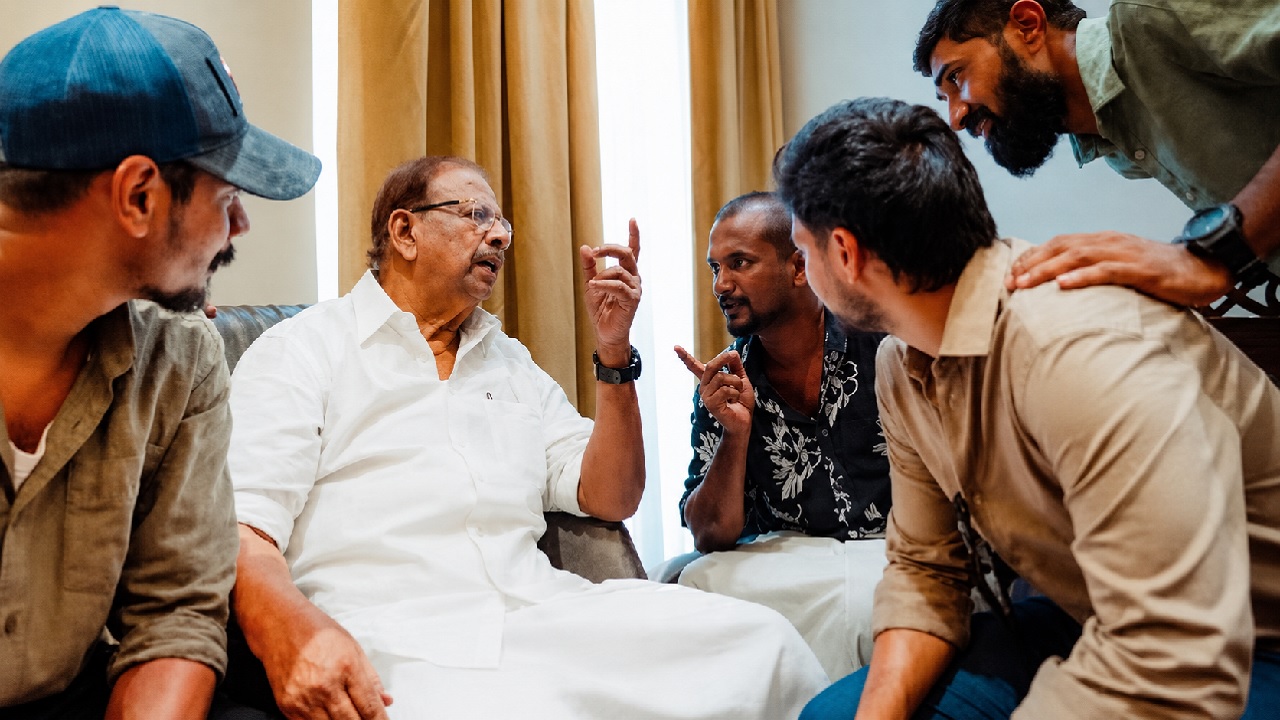
K. Sudhakaran MP interacting with alleged gang members

Synopsis: A group of alleged goondas meeting K Sudhakaran, MP, in Kochi has sparked a controversy. While organisers claimed the gathering was held in support of Operation Toofan, both the Congress and the police have denied any association with it. The meeting comes at a time when Kochi’s goonda landscape has evolved significantly, with groups aligned for and against the narcotics trade.
Kochi’s “mini underworld” has long been familiar to people across Kerala through films, crime lore and stories passed down over decades. Once dominated by the openly visible gang culture of the late 1980s and early 2000s, the city’s criminal networks are now believed to operate far more discreetly, with police linking them to narcotics trafficking, real-estate extortion and “quotation” hit jobs.
Two years ago, when IPS officer S Syamsundar served as Kochi City Police Commissioner, the city police geotagged around 600 known goondas and mapped them using Google Maps. Officers routinely visited the homes of 30 to 35 of them every day to keep them under close surveillance.
Today, the narrative appears to have taken an unexpected turn.
Several of these alleged goondas have publicly come forward to support the UDF government’s anti-drug campaign, Operation Toofan. Days ago, a controversial gathering in Kochi, attended by several known goondas and Congress MP K Sudhakaran, reignited the debate.
Organised by former DCC member Suhail Shajahan, the meeting was accompanied by a claim that police alone cannot successfully execute the anti-drug drive.
Does Kerala Police really need the support of alleged goondas to fight the drug menace? A closer look at the issue reveals a far more complex story.
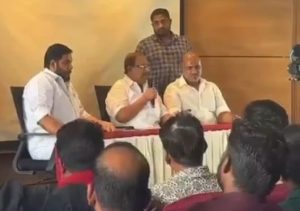
From the meeting
Even as the controversy surrounding the Kochi meeting continues, the Ernakulam District Congress Committee (DCC) has distanced itself from the event, maintaining that it neither organised nor had prior knowledge of the gathering. District Congress leaders said the meeting was conducted without informing the local party leadership.
With the row escalating, Home Minister Ramesh Chennithala denied that any official meeting had been convened in Kochi under the banner of Operation Toofan. Stressing that programmes conducted as part of the state’s anti-narcotics campaign can be organised only by the police, Chennithala said he had no information about the event and was unaware of its organisers or participants.
However, Congress insiders claim the episode has left Chennithala unhappy, as they believe the meeting tarnished the credibility of Operation Toofan—the campaign on organised crime and narcotics.
Kaliraj Mahesh Kumar, the Kochi City Police Commissioner, also clarified that the gathering was unrelated to Operation Toofan and described it as a private meeting. He categorically stated that the police do not require the support of goondas or criminal elements to carry forward the anti-narcotics drive. Despite the controversy, no formal police inquiry has been initiated into the event so far.
Former DCC member Suhail Shajahan, a known loyalist of Congress MP K Sudhakaran, organised the meeting. Responding to the criticism, Suhail claimed that he and a group of around 20 people had merely sought an appointment with Sudhakaran after learning that the latter was in Kochi.
According to him, the unexpectedly large crowd at the private hotel gathered spontaneously, with hundreds of supporters arriving on their own.
Suhail, who was previously named as an accused in the AKG Centre attack case, also defended the presence of alleged criminal elements at the gathering.
“Just because someone was once branded a goonda, they should not be permanently isolated from society,” he said.
When South First reached out to K Sudhakaran for a response, a close associate said he did not wish to comment, fearing it would further fuel the controversy. In a video from the gathering, Sudhakaran can be seen saying, “Your voice should become the voice of the state”, while urging more youngsters to come forward.
Meanwhile, the Kerala Police’s Special Branch has begun an inquiry into the gathering and is expected to submit its report soon.
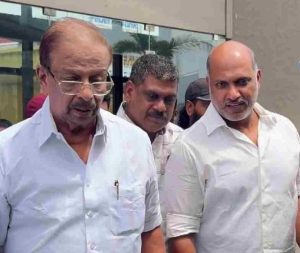
K Sudhakaran MP with Mattancherry Harris (right).
South First reached out to Mattancherry Harris, who was once involved in several criminal activities but now maintains a low profile and is engaged in social activities. Harris, who also attended the controversial meeting, said that not everyone present at the gathering had criminal cases against them.
“Not every person who gathered there has criminal cases in their name. Such a narrative will harm the lives of many innocent people,” he said.
According to Harris, the details of the meeting came to light only after someone uploaded a reel of the gathering on Instagram, following which the media turned it into a controversy.
“The people with me and I have been fighting against drug networks since the 1990s, long before Operation Toofan. We have done our best to save youngsters from drugs, especially synthetic drugs. In 2002, I was attacked for standing up to the drug trade. Over the years, we have helped save many young people and supported their rehabilitation,” he said.
Harris added that when the UDF government announced Operation Toofan, they welcomed the initiative.
“We were happy and excited when Operation Toofan was announced. Our only intention in attending the meeting was to support the campaign. We were also not aware that anyone present at the meeting had links to the drug trade or was involved in drug use,” he said.
Also Read: Drug mule or victim? Kerala model’s arrest with hydro weed puts spotlight on Thai smuggling route
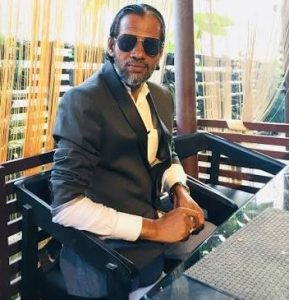
Thammanam Shaji
Kochi’s organised crime landscape has changed significantly over the past four decades. During the 1980s, one of the city’s earliest known gangs was led by Chambakkara Sathish, who headed the “Chambakkara Pathinettara Company”.
Around the same period, figures such as Electric Hamsa, Tathante Hamsaa and Gulati operated across Mattancherry and Fort Kochi.
By the early 1990s, Thammanam Shaji emerged as the city’s most influential gangster.
Police sources have long alleged that he enjoyed political patronage and support from sections of the business community, with his men frequently being hired for loan recovery, settling disputes, intimidation and revenge attacks.
As rival gangs emerged, however, his influence gradually faded and his network fragmented into smaller groups.
Former gang members say Shaji’s rise inspired several local strongmen, including Thammanam Faizal and Vettil Suresh. Shaji later entered politics briefly before largely disappearing from public life, though police continue to monitor his activities.
During the same period, Mattancherry-based “CH” (Chendu) was also considered a major player with alleged links to the Mumbai underworld.
Also Read: Facing organised drug networks, Kerala rebuilds school safety system after 14 years
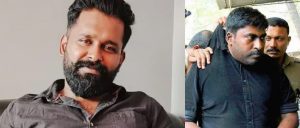
Maradu Aneesh and Bhai Nazeer
The next phase of Kochi’s underworld was dominated by Bhai Nazeer and Maradu Aneesh. Initially associates, the two later split, triggering a series of violent gang rivalries.
Police linked Aneesh’s gang to operations around the marshlands of Maradu and Kumbalam. The murder of businessman Imtiaz Khan in 2012 was widely viewed as part of the fallout from the rivalry.
Although those accused in the case were later acquitted, the conflict marked a turning point in Kochi’s gang landscape.
Police pressure eventually pushed both men to reduce their activities in Kerala.
While Bhai Nazeer has largely stayed out of the spotlight, Maradu Aneesh is believed by police sources and former gang members to be active outside the state, particularly in Karnataka and Andhra Pradesh, where he has been playing a part in real estate dispute mediations.
Unlike earlier gang leaders, many present-day figures maintain an active presence on social media, regularly appearing in interviews that often attract millions of views. Maradu Aneesh himself has publicly projected an image as a campaigner against narcotics despite his criminal background.
Former gang members say Kochi’s underworld underwent another major transformation after synthetic drugs became highly profitable. Several gangs split, with one section allegedly moving into drug trafficking because it offered higher returns and comparatively lower risks, while the others continued to focus on extortion, quotation work, providing political muscle, real estate disputes, and other organised crimes.
According to them, rival groups closely monitor each other’s movements, particularly when it comes to narcotics networks and are generally aware of who is supplying whom.
Speaking to South First on condition of anonymity, a former Fort Kochi gang member said police still rely on information from reformed criminals.
“Police still use many of us as information sources because we know what is happening in the city and often what is likely to happen next. Most of the old gang leaders never supported the drug trade, but some newer groups deal exclusively with it.
“What Suhail (Shajahan) said is correct. We never meant to take law and order into our own hands. The idea is to work with the police by passing on information that can help identify and dismantle drug networks,” he said.
Most of Kochi’s goondas are now working as film set security managers, while some have even entered the field of acting. The rest continue to cling to the political parties they have remained loyal to—the very parties that seeded and watered the rise of many of them.
Also Read | Operation Toofan: Routine scooter inspection leads to Rs 18-crore drug bust in Kerala
(Edited by R Rajesh Kumar.)



