

Published May 18, 2026 | 10:00 AM ⚊ Updated May 18, 2026 | 10:00 AM

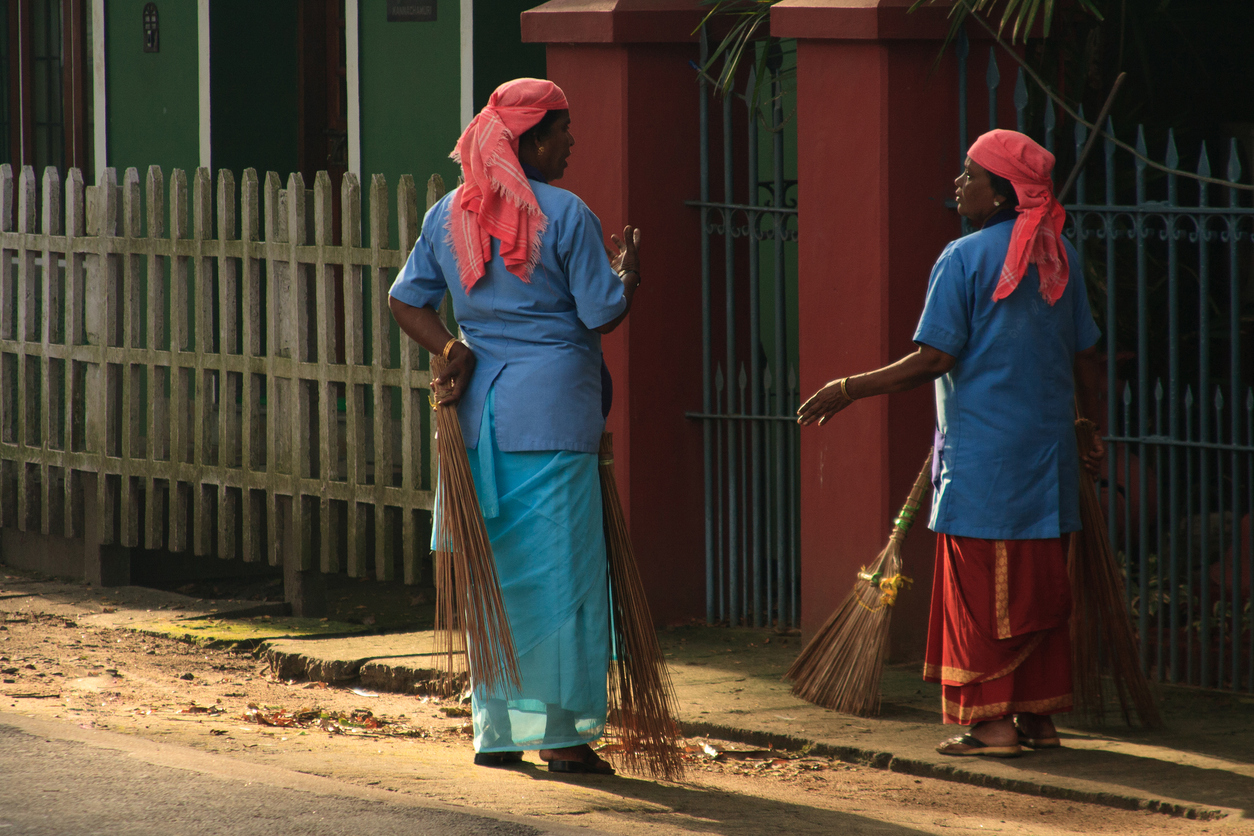
Representational image. Credit: iStock

Synopsis: The newly published “Encyclopaedia of the Environmental History of Kerala” reinterprets Kerala’s past through stories of caste-based sanitation labour, colonial forestry, peasant resistance, migration and ecological change, arguing that environment cannot be separated from power, labour and everyday life. Moving far beyond a conventional record of forests and rivers, the work brings together forgotten histories — from cholera outbreaks and scavenger strikes to the Gadgil debate and the Cheemeni revolt — to show how Kerala’s social and environmental transformations evolved together across centuries.
What connects a cholera outbreak in erstwhile Travancore, a portrait of a scavenger protest leader hanging in Kozhikode Town Hall, a colonial forest officer walking through the forests of Travancore in the 1890s, and the fierce resistance of peasants in Cheemeni over firewood and forest rights?
At first glance, almost nothing.
Yet all these fragments — disease, caste, forests, labour, migration, ecology and protest — now stand together inside one ambitious work that attempts to narrate Kerala’s environmental past in an entirely different way.
“The Encyclopaedia of the Environmental History of Kerala”, published by the State Institute of Encyclopaedia Publications, is being described as the first encyclopaedia on environmental history to be brought out in India.
But the work does not read like a conventional archive of rivers, rainfall charts or wildlife records.
Its pages move through epidemics, caste occupations, sanitation struggles, colonial forestry, peasant agitations, migration and ecological anxieties that continue to shape present-day Kerala.
The work places Kerala’s environmental transformations within the larger histories of colonialism, capitalism, science, labour and everyday life, opening up a strikingly different reading of “environment” itself.
Also Read: Interview: Tamil Nadu SC/ST Commission Chairman Imayam on caste realities
One arresting account in the encyclopedia is recalling a moment when the toilets of Kozhikode overflowed during a sanitation workers’ strike in September 1948.
The city came to a standstill. Streets filled with waste. Authorities scrambled for alternatives. Yet hardly anyone from the so-called “respectable” sections of society was willing to touch the work.
Workers had to be brought from Tamil Nadu to clean the city.
The episode lays bare a difficult truth in Kerala’s environmental history: sanitation was never merely about hygiene or public health. It was inseparable from caste.
For much of the 19th century, public sanitation in Travancore received little administrative attention.
Municipal cleaning was limited to sweepers who cleared streets. Epidemics changed that. Cholera and plague outbreaks pushed the state to intervene more aggressively in urban health.
Encyclopaedia of the Environmental History of Kerala
With the establishment of the Sanitary Commission in 1896, disease control acquired institutional shape. Vaccination drives, sanitation conservancies and waste removal systems became part of governance.
The growth of sanitation infrastructure also produced a labour system built on caste hierarchy.
Workers known as scavengers were appointed to clean public spaces, private compounds and toilets. In places such as Alappuzha and inside the Thiruvananthapuram Fort, systems were introduced to manually remove human excreta.
The work quickly became tied to communities pushed to the margins of society.
The encyclopedia notes that people from oppressed caste backgrounds were drawn into this labour through a combination of poverty, social exclusion and coercion.
When others refused to perform sanitation work, backward communities were compelled to do it. Over time, sweeping and scavenging hardened into hereditary caste occupations.
Kollam Municipality’s experience in the early 20th century reveals how deeply entrenched this arrangement had become.
When sanitation emerged as a pressing concern after the municipality’s formation in 1921, workers from the Chakkiliyars community in regions such as Shenkotta and Nagercoil were recruited as scavengers. These areas were then connected to the Travancore-Cochin region.
Memoirs by ‘Jubba’ Ramakrishna Pillai, a freedom fighter, social reformer and trade unionist, describe another moment of crisis in Thiruvananthapuram.
During protests by members of the Paraya community who had been engaged in sanitation work, city authorities struggled to maintain cleaning operations. Their response was to recruit Chakkiliyars workers from Tamil Nadu. Relatives and acquaintances of these migrants later travelled to Kerala in search of the same work, settling in towns such as Kollam, Kottayam, Kozhikode and Thiruvananthapuram.
Social reform movements gradually enabled sections of the Paraya community to move away from scavenging work. The Chakkiliyars migrants, meanwhile, became identified with sanitation labour in Kerala’s towns and municipalities.
The state depended on them, but society kept them at a distance.
Temporary housing was arranged in isolated spaces — near swamps, railway margins, cemeteries and low-lying slums lacking basic facilities. The stigma attached to handling human waste shaped not only labour but also geography. Sanitation workers were expected to remain invisible even while performing work essential to urban life.
The contradiction was stark. Public health systems relied on their labour to control epidemics and maintain cities. Yet, untouchability prevented them from entering ordinary social spaces. In Kozhikode, scavenger workers were reportedly barred from working near hotels because they were considered “polluting”. A separate establishment known as the “Thozhilali Hotel” (Thozhilali means labourer) emerged as a workaround.
Resistance also formed part of this history.

Mani
The 1948 strike in Kozhikode was not simply a demand for higher wages. It exposed the fragility of an urban sanitation system sustained through caste-based labour. One of the leading figures in the agitation was a woman – Mani, remembered for a fiery speech delivered at a meeting chaired by distinguished freedom fighter and communist A. K. Gopalan. Her warning to the city’s elites reportedly drew widespread attention. A photograph of Mani still hangs in the Kozhikode Town Hall — a reminder of workers whose role in shaping Kerala’s urban life rarely entered official narratives.
The environmental history of Kerala’s cities cannot be separated from these stories. Epidemics may have forced governments to modernise sanitation systems, but those systems were built upon deeply unequal social arrangements. Waste, disease and urban cleanliness became burdens carried disproportionately by communities marked by caste.
Also Read: Bandicoots can only clean manholes, says Bezwada Wilson as Kerala claims to end manual scavenging
The encyclopaedia also turns to forests — not merely as landscapes, but as spaces shaped by colonial power, extraction and scientific intervention.
A major entry examines the 1893 report prepared by forest officer Theodore Francis Bourdilon on the forest administration of Travancore. Known widely as the Bourdilon Report, it is treated as a milestone in Kerala’s environmental governance.
Bourdilon attempted something unusual for his time: a systematic assessment of Travancore’s forest wealth. More importantly, he argued that forests should not be managed for immediate commercial gain alone. The report advocated long-term scientific management principles, laying the foundations for modern forestry practices in Travancore.
The encyclopaedia situates the report within the larger colonial obsession with cataloguing, controlling and monetising natural resources. Forests became administrative subjects, measured and reorganised through scientific language and bureaucratic authority.
The work also places contemporary environmental debates within a much longer historical timeline.
The 2011 report of the Western Ghats Ecology Expert Panel headed by Professor Madhav Gadgil appears not as an isolated controversy, but as part of an older environmental conversation stretching back to the 19th century.
Long before climate change became a public concern, Edward Green Balfour had already noted the relationship between deforestation, rainfall and water security in the Western Ghats in 1849. His observations linked forest destruction with climatic shifts and ecological imbalance.
Seen from this perspective, the Gadgil Report becomes part of a historical continuum of ecological warnings rather than merely a modern policy dispute.
The encyclopaedia repeatedly returns to this central argument: Kerala’s environmental history cannot be separated from questions of land, labour, science, caste and political power.
Another compelling section revisits the Thol-Virak Struggle — also known as the Cheemeni Karshaka Struggle — that erupted in North Malabar in 1946.
The conflict began after forest areas under Thazhekad Mana were acquired by estate owner George Thomas Kottukappally. Villagers who had long depended on the forest for firewood and other resources suddenly found access restricted.
The tipping point came when women and others who entered the forest to collect firewood and hides allegedly had their belongings confiscated and were humiliated by estate authorities.
The encyclopaedia presents the agitation not merely as a local protest, but as a larger confrontation over customary rights, capitalist control and access to natural resources.
For the people living around Cheemeni, the forest was not an abstract ecological zone. It was tied to survival itself.
The protests eventually compelled authorities to intervene and address the peasants’ demands. The struggle later came to be remembered as one of North Malabar’s significant agrarian resistance movements.
Far more than a conventional reference work, the encyclopaedia reconstructs the state’s past through forests, rivers, railways, plantations and even smell.
One of its most compelling strands traces the story of Malabar teak beyond the Western Ghats into the circuits of empire, where timber from Kerala’s forests strengthened European naval fleets and fed the machinery of maritime commerce.
The encyclopaedia reads teak not as a regional resource alone, but as evidence of ecological extraction tied to the making of global capitalism.
Colonial transport systems such as the Cochin Forest Tramway, the Munnar Light Railway and the Nilambur Railway are revisited as instruments that opened fragile landscapes to commercial exploitation, carrying timber, plantation produce and labour deep across the hills and forests of Kerala.
The work also turns its attention to figures like John Joseph Murphy and John Daniel Munro, examining how planter ambitions reshaped land use, labour systems and ecological life in the high ranges.
Plantation history here acquires texture and atmosphere; tea and rubber estates altered not only landscapes but also sensory experience itself, introducing what the encyclopaedia describes as “the new odour of plantations” into colonial Kerala — the mingled scent of latex, wet tea leaves, timber depots and chemical processing.
Another striking section approaches Malayalam cinema as an environmental archive, observing how coconut groves, paddy fields, rivers and boats that once dominated the screen have slowly receded, reflecting profound ecological and urban shifts within Kerala society.
“We wanted to document Kerala not merely as a political or cultural space, but as a living ecological experience shaped by extraction, memory, labour and visual culture,” said Pratyush Chandran M, the co-editor of the encyclopaedia.
Also Read: Manual scavenging deaths of Dalits, a serious problem in ‘progressive’ TN
What makes the encyclopaedia stand apart is its refusal to isolate “nature” from human experience.
In these pages, forests are linked to power. Sanitation is tied to caste. Epidemics reshape governance. Migration follows labour stigma. Environmental debates emerge through struggles over land and survival.
The work ultimately asks readers to reconsider Kerala’s past through unfamiliar lenses.
Not just who ruled.
Not just what was built.
But who cleaned the cities during epidemics. Who lost access to forests. Who migrated to perform society’s most stigmatized labour. Who warned about ecological collapse long before climate became a global vocabulary.
Those histories, often scattered and forgotten, now find a place together in one encyclopaedia.
(Edited by Amit Vasudev)



