

Published Apr 13, 2026 | 4:05 PM ⚊ Updated Apr 13, 2026 | 5:26 PM

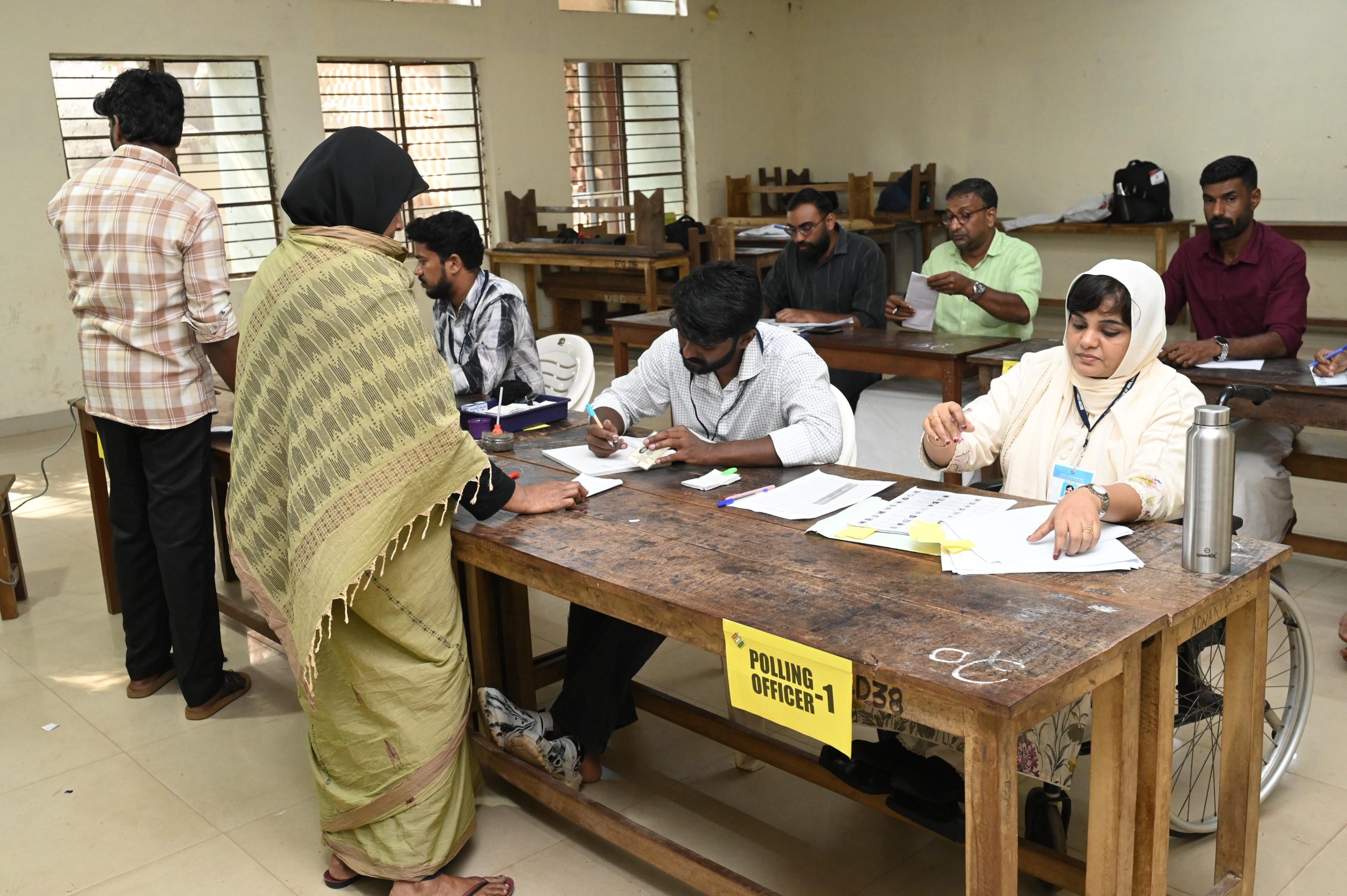
Kerala went to the polls on 9 April.
Synopsis: The Election Commission is yet to publish the final voter turnout, even four days after the polling. This has left political parties worried.
The ballots have been cast, the queues have long disappeared, and the state has moved on from polling day.
But four days after Kerala voted on 9 April, the numbers that define the exercise remain unsettled.
In what was widely described as a high-stakes Assembly election, a basic question continues to linger: where are the final numbers?
The absence of an officially authenticated voter turnout and detailed poll statistics from the Election Commission of India (ECI) has sparked an unusual controversy in a state known for both high electoral participation and intense political scrutiny.
What would ordinarily be dismissed as routine procedural lag has, this time, snowballed into a debate over transparency, consistency and institutional credibility.
On polling day, 9 April, the ECI released a provisional turnout figure of 78.03%.
A day later, the office of the Chief Electoral Officer (CEO), Kerala, nudged that number slightly upward to 78.27%, while clearly stating that the figure was provisional. On Monday, 13 April, the CEO further revised the figure to 79.63%, but added that it was not the final figure.
Since then, however, the number has remained frozen.
Even as days passed, the same 78.27% continued to be displayed on ECINET—the ECI’s centralized digital platform—without any formal confirmation as the final tally.
Authorities have maintained that the figure is still subject to reconciliation.
The CEO’s office reiterated that the data currently available reflects inputs from Presiding Officers at polling stations and does not include Service Voters and Postal Ballots, both of which are essential to arrive at the final, legally valid turnout. It further stated that the final figures will be released later.
Addressing a press meet on Monday, CEO Rathan U Kelkar said the voter turnout has increased from the initially reported 78.27% to 79.63%, following the inclusion of postal ballots.
“A total of 3,68,193 postal votes have been polled across all 140 Assembly constituencies. This accounts for an additional 1.36% over the EVM votes,” he explained, underscoring that the updated figure reflects a more comprehensive picture of voter participation.
He dismissed concerns over the time taken to release the updated figures, stating that a three-day window for compiling such data is normal, particularly given the meticulous validation process involved in counting postal ballots.
Kelkar emphasised that the delay was primarily due to the careful compilation and cross-verification of postal votes by Returning Officers (ROs) and District Electoral Officers (DEOs).
“The validation happened at multiple levels to ensure accuracy. There has been no inordinate delay,” he said, adding that the entire exercise was conducted transparently.
However, the CEO clarified that 79.63% is not the final turnout figure.
Votes from service voters—who cast their ballots remotely—are yet to be fully accounted for.
“There are 53,984 eligible service voters. The exact number of votes polled by them will only be available on the day of counting,” he noted, indicating that the overall turnout could see a further increase.
Kelkar added that a comprehensive and final statistical report will be published through the Election Commission’s Index Card, expected within 48 hours after the counting day, scheduled for 4 May.
Reiterating confidence in the process, he said election authorities remained “steadfast in ensuring accuracy at every stage,” while maintaining full transparency throughout.
The official explanation has been consistent: data collation is ongoing.
According to the CEO’s office, Returning Officers (ROs) and District Election Officers (DEOs) are engaged in consolidating figures from across constituencies, and the final numbers will be published through the ECI’s Index Card system once the process is complete.
But that explanation has not convinced political stakeholders.
Leader of the Opposition VD Satheesan escalated the issue by writing directly to Chief Election Commissioner Gyanesh Kumar on 12 April.
In his letter, Satheesan flagged the delay as a matter of concern, pointing out that even three days after polling, constituency-wise data, vote percentages, and postal ballot statistics remained unavailable in an authenticated format.
He stressed that timely publication of such data is critical not just for political parties, but for public trust and independent scrutiny.
From the ruling front, the tone has been equally sharp.
V Sivankutty, a senior leader of the Communist Party of India (Marxist) and a candidate from Nemom, termed the delay “completely unnatural.”
He questioned why, in an era of advanced digital systems, the Commission was unable to publish consolidated figures even days after voting. Sivankutty demanded immediate disclosure of the total tally across EVM votes, postal ballots, service votes and home voting, and asked the Commission to clarify what exactly was holding up the process.
Adding to the confusion is a paradox that has weakened the CEO’s position.
While the state-level office insists that final data is still under collation, several districts have already published detailed figures.
Kannur’s District Information Office released comprehensive statistics, including postal ballots and home voting data, as early as 11 April.
Thiruvananthapuram followed even earlier, putting out a near-complete dataset on 10 April.
This district-level clarity stands in contrast to the state-level ambiguity.
If districts have been able to reconcile and publish their numbers, critics argue, what explains the delay at the top?
On 13 April, amid mounting criticism, the CEO-Kerala office released a detailed “close of poll” voter turnout sheet for the state. But even this came with a familiar disclaimer: the figures are only indicative and not final.
The note accompanying the data made it clear that the numbers represent “approximate voting trends” and are meant solely for informational purposes.
It reiterated that Service Voters and Postal Ballots are not included, and that the final figures will emerge only after the ECI Index Card is submitted by Returning Officers.
A separate dataset on postal ballots—covering senior citizens (85+), persons with disabilities, essential service voters, and voters on election duty—put the total at 32,172. Yet again, the label read “provisional.”
Importantly, even this number excludes certain categories.
Voters on election duty who cast their votes using Election Duty Certificates (EDC) are recorded separately in Form 17C at polling stations and will be added later. Officials also noted that all figures remain subject to reconciliation with statutory records.
The current delay stands out even more when placed against the recent past.
In the 2021 Kerala Assembly elections, polling was held on 6 April. The same evening, the ECI announced a provisional turnout of 74.02%.
Within four days—by April 10—the final turnout was officially confirmed at 74.06%, after incorporating all adjustments, including postal ballots.
The difference between provisional and final figures was marginal, but the timeline was clear and predictable.
Detailed constituency-wise reports were formally printed later, on 4 June, but the statewide final number had already entered the public domain within days of polling.
That precedent has now become the benchmark against which the current delay is being judged—and found wanting.
However, election officials insist that reconciliation of votes—especially those involving multiple categories like service voters, postal ballots, and EDC votes—requires meticulous cross-verification. Any premature release, they argue, risks inaccuracies in official records.
Until the final figures are released—and the gap between provisional estimates and authenticated data is bridged—the debate is unlikely to fade.
(Edited by Majnu Babu).


