

Published Aug 21, 2026 | 10:00 AM ⚊ Updated Aug 21, 2026 | 10:00 AM

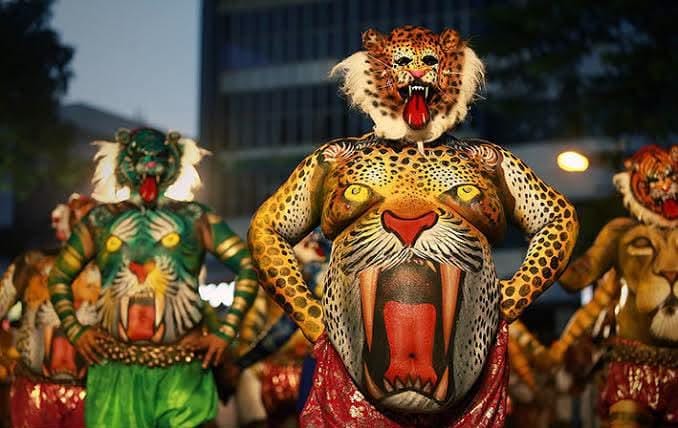
The history of Pulikali is linked to Maharaja Rama Varma Sakthan Thampuran, the ruler of Cochin.

Synopsis: Thrissur’s centuries-old Pulikali tradition has come under controversy after writer-actor VK Sreeraman criticised the performers’ exaggerated body shapes, later deleting his post and apologising. The row has renewed attention on the demanding preparations, cultural significance and enduring popularity of Pulikali, with artists, politicians and medical experts offering sharply different views.
A folk art form more than 200 years old has found itself at the centre of an unexpected controversy as Kerala prepares to celebrate Onam.
Pulikali, the colourful tiger dance that draws thousands to the streets of Thrissur every year, has come under scrutiny after writer and actor V K Sreeraman described the art form as an “artistic distortion” that evokes a sense of nausea.
In a social media post on Wednesday, 19 August, Sreeraman questioned the aesthetic of men painting their bodies to resemble tigers, particularly referring to the protruding stomachs and chests of some performers.
He described such physical distortion in the name of art as vulgar and said there was no comparable artistic distortion anywhere in the world. The remarks triggered sharp reactions from Pulikali performers and those associated with the traditional art form.
However, Sreeraman deleted the post a day later and apologised, admitting his opinion was immature and his expressions were inappropriate. He said he regretted causing mental distress to Pulikali artists and others associated with the tradition.
But the controversy refused to fade, putting the spotlight once again on an art form that has been part of Kerala’s Onam celebrations for generations.
Also Read: Pulikkali artistes feel the aftershocks of Wayanad landslides
For more than two centuries, the streets of Thrissur have come alive with a spectacle that turns men into tigers and Onam into a riot of colour, sound and movement. Of late, women, too, participate in the event.
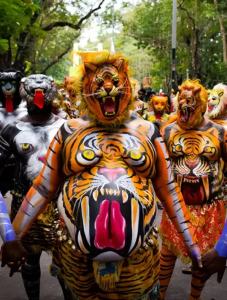
A Pulikali performer. (Courtesy – Kerala Tourism)
Pulikali, literally the ‘play of the tigers’, is among Kerala’s most distinctive folk traditions, with its roots traced to the days of the erstwhile Kingdom of Cochin.
The history of Pulikali is linked to Maharaja Rama Varma Sakthan Thampuran, the ruler of Cochin, who is believed to have introduced the performance as part of Onam celebrations.
The idea was to bring into the festivities a dance that carried the raw energy and physicality associated with the wild.
The tradition acquired a distinctive character in Thrissur over the years.
Muslim soldiers of the British Army stationed around the cantonment area, particularly along what is now known as Pattalam Road, are said to have played an important role in popularising the performance.
They dressed as tigers and performed movements based on the animal’s mannerisms, while enacting scenes involving a hunter and his prey.
The performance, then known as ‘Pulikkettikali’, soon caught the imagination of local people.
What began as part of festive celebrations gradually became closely identified with Thrissur’s Onam festivities. The city continues to celebrate Pulikali as a reminder of that long association.
The tradition is also known as Kaduvaakali, or tiger dance.
Though the art form has appeared in other parts of Kerala and is performed on occasions beyond Onam, Thrissur remains its principal stage.
On the fourth day of the Onam celebrations, the ‘Nalaam Onam‘, Pulikali troupes from different parts of the district converge to present their performances, with Swaraj Round traditionally becoming the centre of the spectacle.
The stories enacted are equally rooted in the art form’s folk character. Hunters stalking tigers, tigers pursuing goats and scenes of the animal being hunted are woven into the performance. There is little separation between performer and character once the procession begins; the painted bodies, masks, movements and percussion together create the illusion of a pack of tigers moving through the streets.
Also Read: The Bleeding Gods of Kerala
But beneath the colour and excitement lies a demanding artistic process, says a member of the Pulikkalithe Co-ordination Committee.
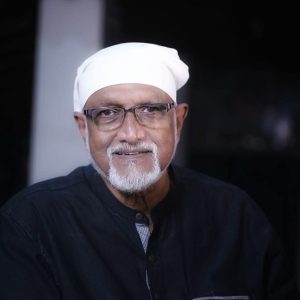
VK Sreeraman.
A Pulikali performer does not simply put on a costume and walk into the streets. The transformation begins hours before the performance.
The body is painted bright yellow, with bold black-and-red patterns to create the appearance of a tiger’s coat.
A mask or carefully painted face completes the transformation. The preparation itself is an endurance test.
Artists spend long hours getting their bodies painted, often starting the night before. The paint is applied over shaved skin, and the chemicals used can cause considerable irritation and a burning sensation.
“Yet performers endure the discomfort to preserve a tradition that has been handed down through generations,” said the member.
Once the troupes take to the streets, the painstaking preparation gives way to movement. Performers imitate the gait and movements of a tiger, pouncing, prowling and dancing to the rhythm of traditional percussion instruments. Udukku and thakil provide much of the beat, performing its distinctive energy.
Also Read: Art and craft meet faith at Kerala’s Onam festivities
With barely a week left for Onam and Pulikali troupes busy with final preparations, Sreeraman’s Facebook post, which aimed at the traditional art form, drew sharp protests from Pulikali artists and organising committees. Sreeraman later deleted the post and apologised.
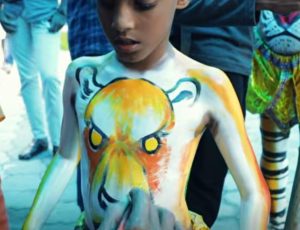
A young Pulikali performer.
In his original post, Sreeraman described the physical appearance adopted by Pulikali performers as a “deformity”, questioning the practice of painting and displaying their enlarged bellies and shaking them during performances.
He also described the spectacle as vulgar and said watching performers paint pictures on their stomachs and shake them made him feel disgusted.
The post did not go down well with Pulikali artists and organisers.
Strong criticism followed both in the comment section and elsewhere, with the groups accusing Sreeraman of insulting artists who spend weeks preparing for the Onam spectacle.
Pulikali performers pointed out that the art form demands considerable physical effort.
Artists begin body painting as early as 5 am and remain on the streets for hours, carrying an ‘aramani’ weighing around five kilograms around their waists while taking part in the festivities.
The representatives of the Pulikali groups demanded that Sreeraman withdraw his remarks and apologise publicly.
They said all nine organising committees taking part in the Thrissur Pulikali had rejected his comments.
The controversy also comes at a time when the Thrissur Corporation is making efforts to put the city’s Pulikali on the Guinness World Records map.
Initially, Sreeraman refused to back down.
Responding to the criticism, he said he understood the objections raised against his post but was not prepared to withdraw it.
By evening, however, he changed course.
Sreeraman deleted the controversial post and published another one, this time acknowledging that his words had caused hurt among Pulikali artists and others associated with the event.
Sreeraman admitted that his earlier opinion was not mature. He also expressed the hope that artists and organisers would continue working to make the dance form more beautiful.
Most significantly, he conceded that his “comments and inappropriate language” caused emotional distress to Pulikali artists and others connected with the event, and expressed regret.
Also Read: Kerala HC rules nudity and obscenity are not synonymous
Union Minister of State for Tourism and Thrissur MP Suresh Gopi criticised Sreeraman for questioning aspects of Pulikali, saying he could not believe that the actor would raise objections against the traditional folk art.
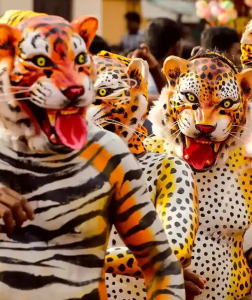
Pulikali artists. (Courtesy – Kerala Tourism)
“If Sreeraman has indeed raised such objections, it is sad,” Gopi said, asking whether anyone could claim that thousands flock to Thrissur Pooram and Pulikali because the art form has been distorted.
Gopi also highlighted the Centre’s support for Pulikali.
He said ₹24 lakh was recently distributed among Pulikali groups, adding that he had worked for financial assistance to the teams even when he was a Rajya Sabha member.
He recalled persuading the Prime Minister to recognise Pulikali as a people’s festival and securing ₹1 lakh each for the groups through the South Zone Cultural Centre.
He later provided ₹50,000 to each team and said greater assistance became possible after he became a Union minister.
Baiju Thazhakat, president of the Poorapremi Sangham, also came out against Sreeraman’s post, describing Pulikali as an emotion closely associated with Thrissur and urging him to withdraw his remarks.
However, neurosurgeon Dr Manoj Vellanad offered a different view, saying Sreeraman had only questioned the need for the exaggerated body shape of the performers. He pointed out that the large bellies seen among Pulikali performers may be visually striking but warned that visceral fat and central obesity carry serious health risks.
Dr Vellanad said advising someone to lose excess weight should not be dismissed as body shaming, but understood as a medical warning about obesity and its associated health consequences.
(Edited by Majnu Babu).



