
Published May 21, 2026 | 12:13 PM ⚊ Updated May 21, 2026 | 12:13 PM

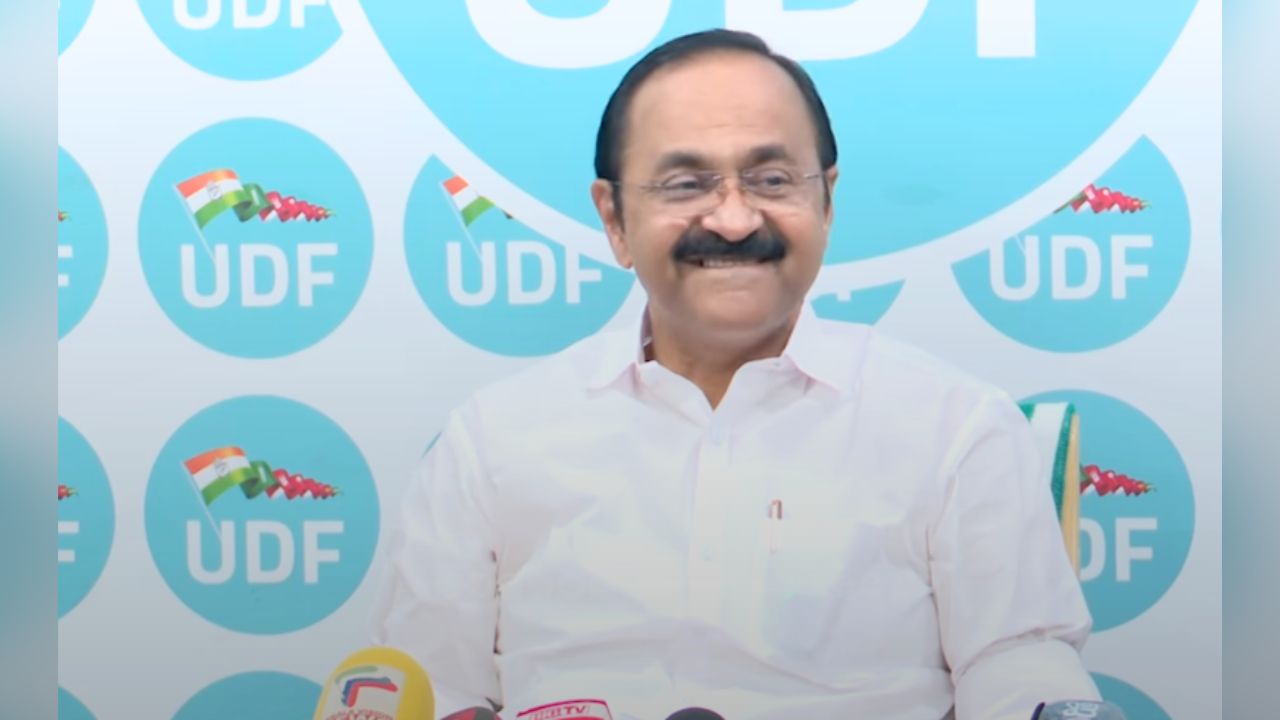
Kerala Chief Minister VD Satheesan.

Synopsis: For the past decade, Kerala’s governance was marked by an ironclad, unyielding discipline. The style personified by the former chief minister was intensely serious. However, with the 2026 Assembly elections, a seismic shift became visible on Kerala’s political horizon. It emerged through a completely spontaneous facial expression from the newly sworn-in Chief Minister VD Satheesan.
The way a crow
Shook down on me
The dust of snow
From a hemlock tree
Has given my heart
A change of mood
And saved some part
Of a day I had rued.
When the celebrated American poet Robert Frost penned these lines in his famous poem Dust of Snow, he put forward a deeply profound message about human nature — that the heaviest and most melancholic atmosphere can be instantly transformed by the lightest, most unexpected of gestures.
For the past decade, the political landscape of Kerala sat under the shadow of an unchanging, rigid administrative style. The state’s governance was marked by an ironclad, unyielding discipline. The style personified by the former chief minister was intensely serious.
It was an era reminiscent of the dark shadow cast by the ominous hemlock tree in Frost’s poem — resolute, grave, and entirely devoid of smiles.
However, with the 2026 Assembly elections, a seismic shift became visible on Kerala’s political horizon. This sudden change in mood did not arrive in the form of grand ideological theories or election manifestos; rather, it emerged through a completely spontaneous facial expression from the newly sworn-in Chief Minister VD Satheesan.
While replying to a query of a young reporter — who spoke as a representative of young voters regarding vehicle modifications — the chief minister set aside the traditional, stern mask of executive authority to display a deeply affectionate and natural expression.
Within minutes, the footage went viral across social media, and Gen Z enthusiastically embraced him as Kerala’s first “Pookie CM”.
This wave is not something that can be dismissed as a mere internet meme. It signals a massive transformation in how public figures communicate with the populace. It marks a transition from a political culture rooted in fear and distance to one characterised by approachable warmth.
To comprehend the depth of this transition, one must look to the insights of the brilliant British essayist AG Gardiner. Writing under the pen name ‘Alpha of the Plough,’ his classic essay On Smiles serves as the finest benchmark to analyse how Satheesan’s new persona has effectively reshaped the state’s political climate.
Also Read: A minister for AI in Satheesan’s Cabinet
In his essay On Smiles, Gardiner meticulously dissects the social value of human expressions. He draws a sharp distinction between mechanical gestures and genuine smiles. Gardiner warns against the artificial grins — the “calculated masks” — that individuals put on to achieve specific motives.
He writes: “There is the smile of the courtier, which is a specialised piece of professional equipment, as devoid of heat as an iceberg, and as mechanical as a barrel-organ.”
For the past several years, political communication in Kerala seemed to distance itself even from this mechanical courtier’s smile. Instead, leaders carefully maintained a stern, expressionless countenance. Under the previous administration, this unsmiling face was intentionally developed into a political brand.
It was utilised as a symbol of an administrator’s strength and to reinforce an unbending identity. It constantly reminded the public that governance was a rigorous and grave process where lightheartedness or geniality had no place.
However, as Gardiner points out in his essay, a governance style anchored solely in harshness eventually induces a profound mental fatigue and exhaustion among the masses.
When every interaction begins to feel like an official reprimand, citizens naturally desire to distance themselves from that environment. When Satheesan inadvertently triggered the “Pookie CM” wave, he did not offer the pre-planned, artificial smile of a conventional politician.
As he later clarified, that expression was born of a completely natural, paternal affection toward a young friend. He noted that his face simply reflected an assurance that the government would look after the aspirations and hopes of the new generation.
It was the exact same spontaneity a father exhibits while speaking to his own daughter. This is precisely the true and spontaneous smile that Gardiner describes in his essay: “The genuine smile… is an outbreak of the inner sunshine. It cannot be simulated; it cannot be manufactured. It is the spontaneous declaration of a good understanding with the world and a goodwill to the individual.”
Gardiner introduces two prominent historical figures as examples to demonstrate how significantly this “inner sunshine” can influence the public sphere.
The first is the former American President, Theodore Roosevelt. Roosevelt was famous for his expansive, toothy, and immensely energetic smile. It was never a calculated mask worn for political gain, but rather a direct reflection of the natural vitality within him. Gardiner observes that this heartfelt smile immediately brought a sense of comfort and closeness to the public and those around him.
It helped him dissolve the scepticism of the populace and quickly establish a democratic bond with ordinary citizens.
Similarly, Gardiner highlights another example in the brilliant British jurist Rufus Isaacs (Lord Reading). In courtrooms filled with intense pressure and arguments, Isaacs never resorted to aggressive outbursts or artificial gravity. Instead, he consistently maintained a serene, pleasant, and self-assured smile. This natural demeanour helped him effortlessly win over the members of the jury.
That smile succeeded in neutralising opposition in a completely peaceful manner, without any hint of manipulation.
By setting aside the shield of official gravity in front of the media, Satheesan integrates himself into this democratic tradition of communication. For a generation that had grown accustomed to viewing rulers as distant figures to be looked upon with anxiety, this expression was akin to the dust of snow in Frost’s poem.
It thawed the frozen atmosphere of older politics, replacing unnecessary fear with a fresh environment of mutual trust.
Also Read: Kerala’s search for an elder-care model from Japan runs into fiscal and social realities
The contrast between the old “stern captain” archetype and the new “Pookie” persona points directly to what the public currently desires from its leaders. The previous administration’s style was entirely that of a distant captain. He might successfully steer the ship through turbulent storms, but he always maintained a rigid distance from his fellow passengers.
While this approach may command respect during times of crisis, it alienates the public during ordinary periods. It establishes a strict hierarchy that acts as a barrier to listening to public feedback.
Conversely, the accessible persona put forward by Satheesan completely challenges these older methods. This approach proves that a leader can manage highly critical portfolios like Finance and Law while fully preserving their inner humanity.
It demonstrates that true authority does not require a perpetual scowl. It sends a powerful message that the government is fully prepared to step down to the people and listen to their daily grievances with genuine empathy.
Had this campaign been engineered and executed by a major PR agency or political consultants, the public would have promptly dismissed it as artificial. Instead, it succeeded because it was a genuinely human moment that occurred entirely unexpectedly — much like Theodore Roosevelt’s spontaneous laughter or Rufus Isaacs’ serene self-confidence.
Gardiner beautifully captures this exact dimension toward the conclusion of his essay: “The value of a smile belongs to its spontaneity. It is a coin that cannot be counterfeited successfully… It must come from the treasury of the heart, or it is naught.”
By allowing a brief, pleasant moment to break through the rigid, official boundaries of a standard press conference, Satheesan has presented Kerala with a brand-new style of leadership.
Just as the minor movement of the crow on the tree branch in Frost’s poem beautifully salvaged a day that was otherwise deemed wasted, this simple expression thawed the cold, frozen gravity of Kerala’s politics.
This transformation proves that to lead a state, one does not always need to wield a sword; sometimes, facing the people with an authentic smile is the greatest strength of all.
(Faisal CK is Deputy Law Secretary to the Government of Kerala. Views are personal.)



