

Published May 05, 2026 | 10:15 AM ⚊ Updated May 05, 2026 | 10:15 AM

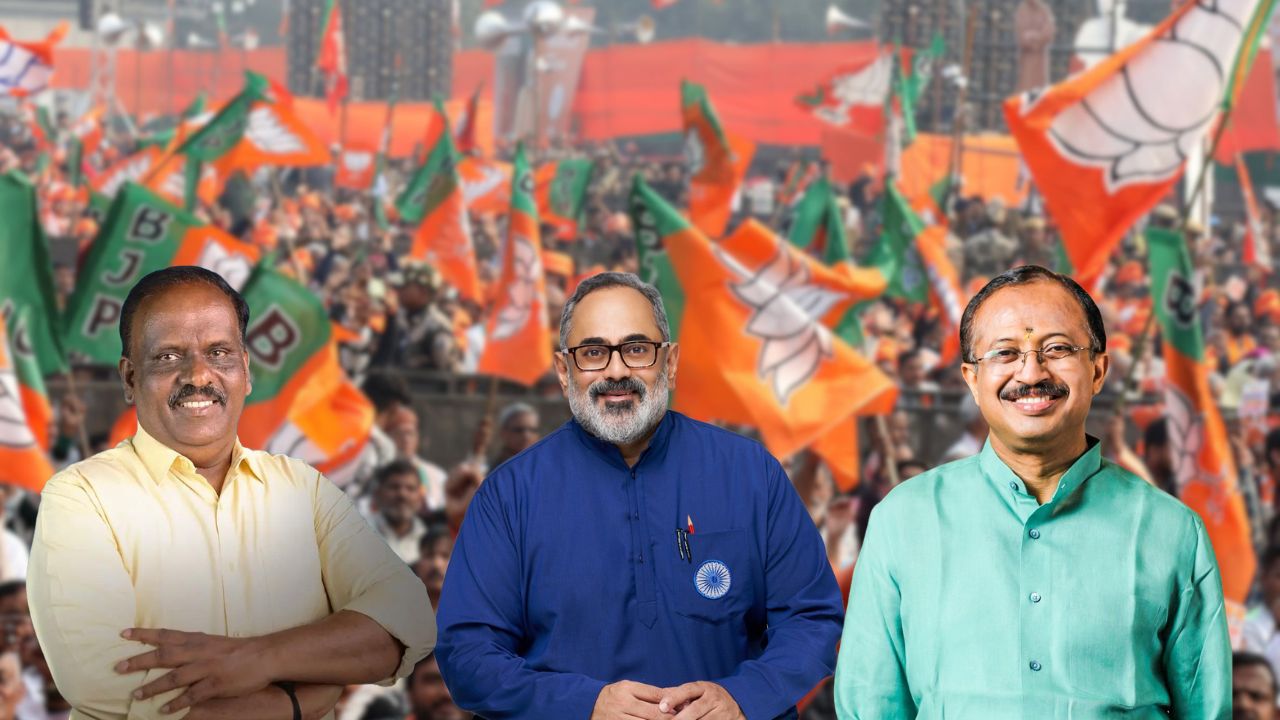
BB Gopakumar, Rajeev Chandrasekhar and V Muraleedharan.

Synopsis: A decade after its first breakthrough in Kerala, the BJP has returned to the Assembly with a firmer footing, flipping Nemom, Kazhakootam, and Chathannoor through a mix of persistence, local shifts, and tightly fought contests. The gains are modest in number but signal something deeper — an incremental widening of space in a state where electoral patterns rarely move, and never all at once.
A decade after it first cracked Kerala’s electoral wall, the BJP has returned to familiar ground — and then pushed a little further. What began in 2016 as a solitary win in Nemom, when O Rajagopal edged past V Sivankutty, had seemed fleeting after the seat slipped away in 2021 to the Left.
However, this time, the party hasn’t just reclaimed Nemom; it has widened its footprint, pulling off wins in Kazhakootam and Chathanoor as well — each one wrested from the Left, adding a sharper political edge to the gains.
With two of those gains coming from the capital district, the outcome is an edge that goes beyond numbers. The party had already tightened its grip on the city’s civic body, and these constituencies were seen internally as ripe for conversion. That calculation has held, even if the final tally stopped short of the half-dozen seats some in the party had quietly pencilled in.
There’s a sense of accumulation to this moment. A breakthrough Lok Sabha win in Thrissur in 2024, a steadier showing in local body polls, and now a small but clear presence in the Assembly — none of it overwhelming on its own, but together hinting at a shift the party believes is still unfolding.
Also Read: Decoding the UDF tsunami! The forces behind the wave
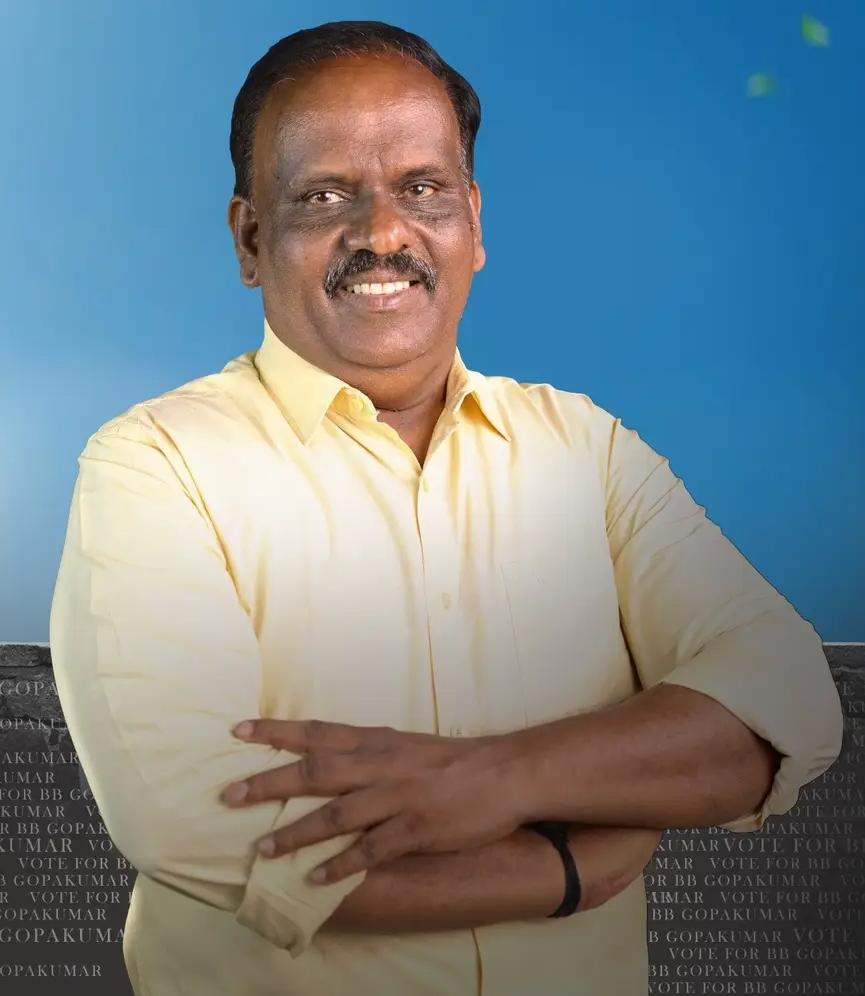
BB Gopakumar.
Chathannoor set the tone early — emerging as the first of the three constituencies where the BJP opened its winning account in the state.
The constituency, which long carried a reputation — predictable, mostly red, resistant to political drift — delivered a result few were willing to firmly call in advance. In short, this time, it didn’t follow the script.
NDA candidate BB Gopakumar won by 4,012 votes, pushing aside LDF’s R Rajendran and UDF’s Suraj Ravi.
The victory stands out not just for the margin, but for what it interrupts — a decade-long hold of the seat by CPI through GS Jayalal.
For the BJP, it is more than a single-seat gain. It is a breach in terrain where it had consistently fallen short despite steady vote growth.
The result did not emerge overnight. Kollam district leaders said that Chathannoor had been sending signals.
In 2016, the BJP surged to second place, pushing Congress to third. Gopakumar lost heavily then — by over 34,000 votes — but the shift was noted.
In 2021, he held on to second again, narrowing the gap significantly as Jayalal’s margin dropped to around 17,000.
That steady climb mattered. By the time this election arrived, the constituency had already moved away from its earlier binary.
The absence of Jayalal, due to CPI’s internal term norms, altered the equation. The BJP sensed an opening and stayed with its familiar face. That decision now looks central to the outcome.
Gopakumar’s profile is not that of a sudden entrant riding a wave.
A native of Meenadu in Chathannoor, he has spent years in local organisational work. A postgraduate, former head teacher at SN Trust HSS, and later principal, his identity as an educator runs deep across the constituency.
His tenure as BJP Kollam district president and current role as Thiruvananthapuram regional president gave him visibility within the party. Locally, it translated into recognition.
There was also a perception that he had “earned” another chance. Twice a runner-up, he became a familiar second choice — until voters decided to make him the first.
After the win, Gopakumar described it as a change that came after a decade. He pointed to undercurrents, hinted at what he called a tacit understanding between LDF and UDF, and framed the verdict as a conscious break by voters.
Meanwhile, party sources said that several factors appear to have converged to the victory. First and foremost, being the anti-incumbency and local issues.
There were murmurs about stagnation in development. Not dramatic failures, but enough dissatisfaction to create drift.
Further, initial assessments suggest that sections of traditional working-class voters, especially among cashew workers, tilted toward the BJP. Even a partial shift here would have been decisive in a close contest.
Despite strategic calculations, the UDF’s presence did not significantly cut into the BJP’s rise. There were expectations that candidate adjustments might consolidate anti-BJP votes, but that did not fully materialise.
Also, Gopakumar’s repeated presence in the fray reduced uncertainty. Voters knew what they were choosing.
Interestingly, Chathannoor barely featured as a firm BJP gain in most exit polls. That absence had unsettled party ranks. Internally, however, there was confidence.
Gopakumar himself had indicated to close associates that the seat would fall within the BJP’s projected tally of one to three seats in some assessments. On counting day, he maintained a steady lead over Rajendran through multiple rounds, gradually converting expectation into result.
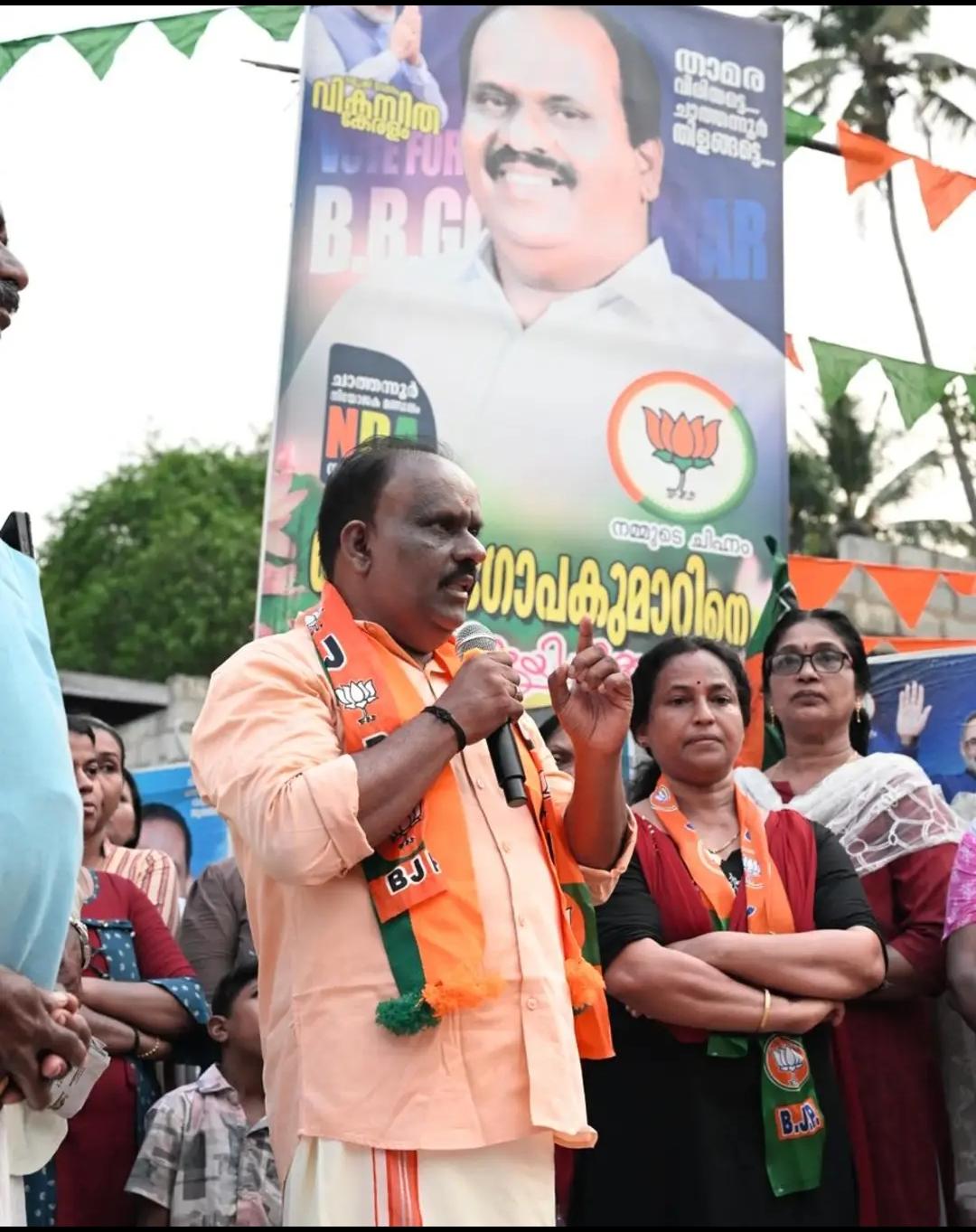
BB Gopakumar during the campaigning.
For the BJP, the win carries symbolic weight beyond Chathannoor.
Kollam has not been an easy terrain. With Thiruvananthapuram already seen as a stronger base, this result adds a second point of consolidation in the southern belt.
Party leaders are already reading it as a starting point for broader expansion across the district’s eleven constituencies.
Areas like Adichanalloor and Pooyapalli, where both LDF and UDF remain strong, are being seen as the next testing grounds.
“There is another layer to the verdict”, said a district leader of the BJP.
According to him, beyond party lines, there was a sentiment that a local figure should represent the constituency. That idea — combined with the perception that a candidate who had twice come second deserved a chance — appears to have resonated.
Gopakumar’s own framing of the result reflects that reading. He credited the people for backing change and said the mandate was for bringing central development initiatives into Chathannoor.
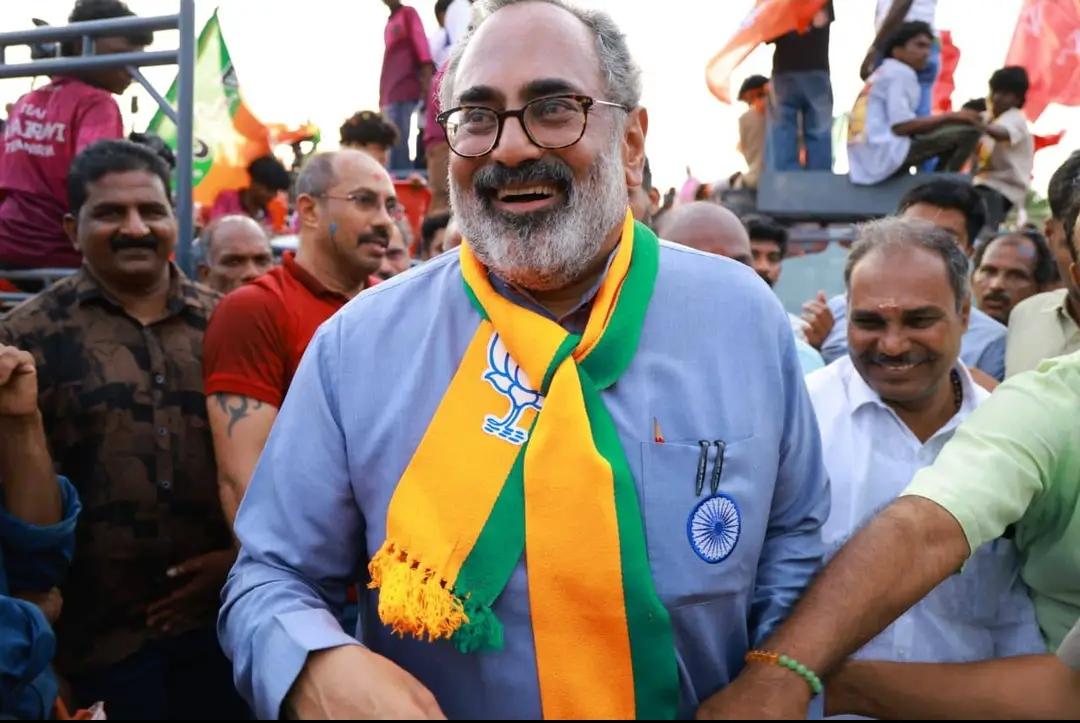
Rajeev Chandrasekhar during the campaigning.
Nemom has a habit of unsettling Kerala’s political certainties. This time, it has done so again — handing the BJP a hard-fought victory and reaffirming the constituency’s status as the party’s most reliable gateway into the state Assembly.
Rajeev Chandrasekhar, the BJP’s state president, defeated sitting MLA and Minister V Sivankutty by 4,978 votes in a tightly contested three-cornered fight. Congress candidate K Sabarinadhan finished third.
The result marks only the second time the BJP has captured the seat, its first breakthrough coming in 2016 through O Rajagopal.
The margin wasn’t overwhelming, but it didn’t need to be. What mattered was the pattern underneath.
Nemom has gradually detached itself from Kerala’s usual bipolar rhythm.
For over a decade, the BJP has been building there — quietly at first, then with growing confidence.
Back in 2011, Rajagopal pushed the party’s vote share to nearly 38 percent, losing narrowly to Sivankutty. That election shifted the baseline. By 2016, the BJP had turned that surge into a win, helped by a collapse in the Congress vote that fell below 10 percent.
The reversal in 2021 told a different story. The Congress fielded a heavyweight, in the form of K Muraleedharan, pulling its vote share back up and splitting anti-LDF votes. Sivankutty returned to the Assembly even as his own vote share dipped. Nemom, once again, refused to settle into a predictable pattern.
The 2026 result suggests that the BJP has learned from that interruption.
Party leaders stated that the party’s edge this time was not built overnight. Its performance in local body elections offered a preview. In 2025, the BJP controlled 15 of the 23 wards within the constituency — an incremental but telling rise from 13 in 2020.
“Local bodies are where elections are actually won,” said a BJP functionary involved in booth-level coordination. “What you see in Assembly results is just the final layer.”
Even in parliamentary contests, Nemom has stood apart. Despite Shashi Tharoor securing large leads in Thiruvananthapuram in 2014 and 2024, the BJP maintained an advantage in this segment. That consistency points to a vote base that doesn’t easily dissolve across election types.
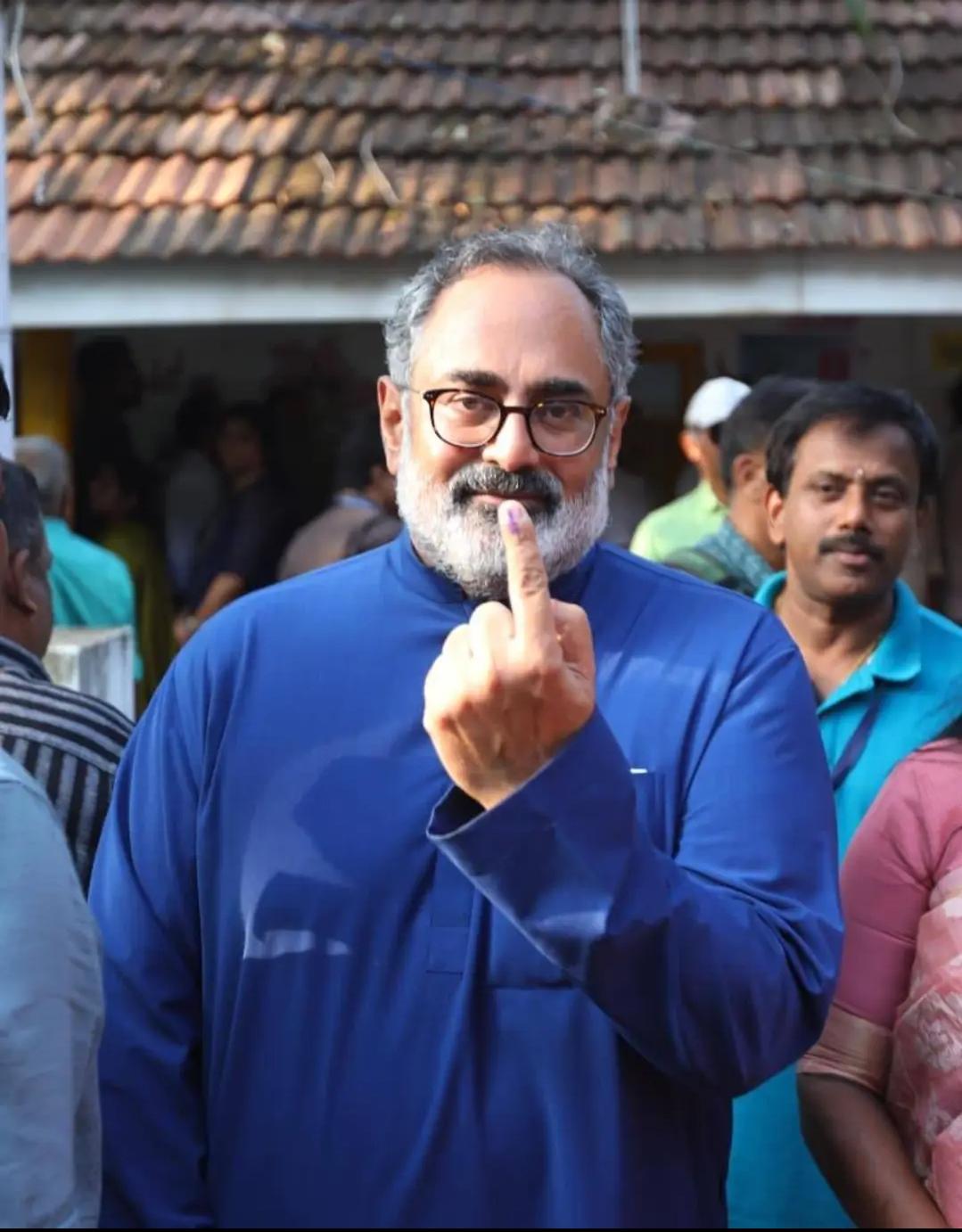
Rajeev Chandrasekhar.
The triangular contest played out familiarly, but with a different outcome. The Congress regained some ground compared to its 2016 collapse, yet not enough to seriously challenge for the lead. The split in anti-LDF votes — so decisive in 2021 — did not tilt the scales this time.
A local Congress worker put it bluntly: “We improved, but not where it mattered. The BJP’s base didn’t shrink.”
For the Left, the setback is sharper. Sivankutty, a seasoned campaigner, retained a solid core vote. It simply wasn’t sufficient in a constituency where margins have historically been shaped by shifts at the edges.
For Rajeev Chandrasekhar, this election carried more weight than most. Appointed BJP state president in March 2025, replacing K Surendran, he was tasked with expanding the party’s reach ahead of a crucial electoral cycle.
His candidature in Nemom was announced early. It was a calculated move — high risk, but potentially high reward.
Chandrasekhar’s trajectory into Kerala politics has been anything but conventional.
An entrepreneur who helped build BPL Mobile in the 1990s, he later founded Jupiter Capital and acquired a controlling stake in Asianet News, a leading vernacular news channel. His political career largely unfolded outside Kerala, representing Karnataka in the Rajya Sabha for three terms before shifting his focus southward.
His close contest against Tharoor in the 2024 Lok Sabha election had already signalled intent. This victory settles a different question.
“A leader must win where it matters,” said a senior BJP leader after the results. “Now he has.”
Nemom’s significance lies less in numbers and more in symbolism. It was here that the NDA first breached Kerala’s Assembly in 2016. Losing it in 2021 had raised doubts about whether that breakthrough could be sustained.
Reclaiming it in 2026 answers part of that question.
The BJP’s strategy — strengthening booth networks, targeting younger voters, and building a durable local presence — appears to be yielding results in pockets where it has invested consistently.
Still, Nemom remains an exception, not the rule.
“Kerala won’t change overnight,” a BJP state committee leader noted. “But places like Nemom show how it might change — slowly, unevenly, and in very specific constituencies.”
Also Read: MK Stalin concedes defeat, says DMK will serve as ‘exemplary opposition’
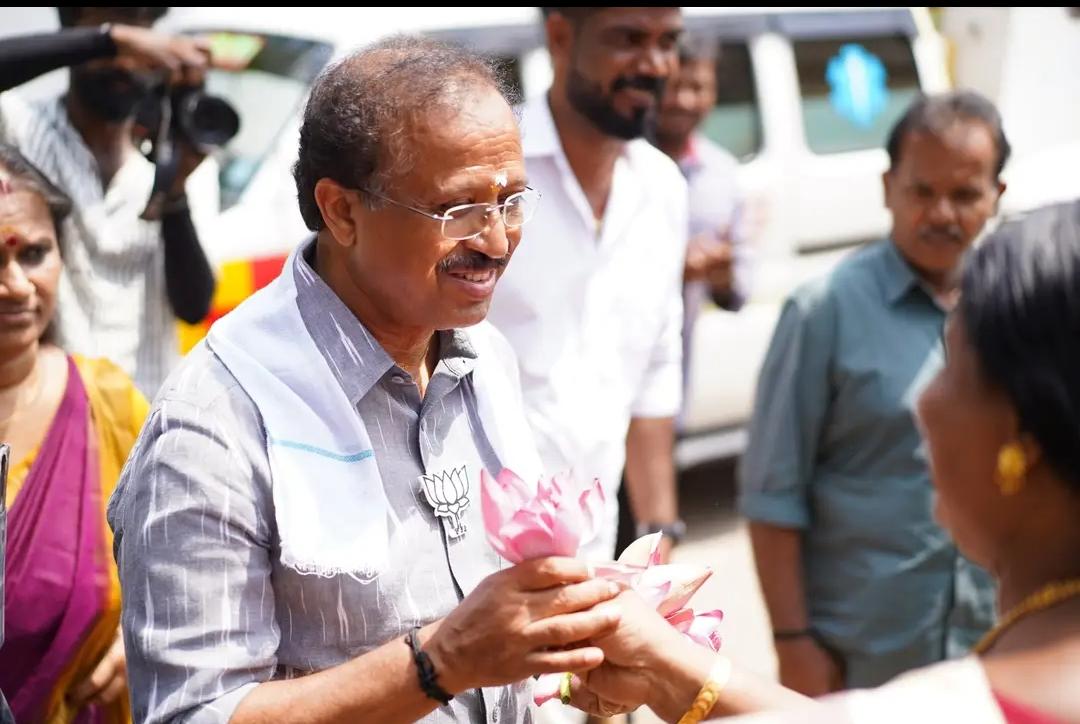
V Muraleedharan.
It came down to the final rounds, and for a while, even seasoned politicians on the ground hesitated to call it.
In a constituency that has long resisted easy predictions, V Muraleedharan pulled off a narrow win over sitting MLA Kadakampally Surendran, sealing victory by just 428 votes.
The margin tells its own story. This was no sweeping mandate. It was a contest shaped by shifting loyalties, targeted campaigning, and a constituency in transition.
Kazhakoottam has not stayed politically still. Once a Congress stronghold, it later tilted towards the Left. In recent years, however, the BJP has steadily built a base here. The signs were visible well before the Assembly polls 2026.
In local body elections 2025, the BJP captured a significant number of wards, even if the LDF retained an edge in total votes.
In the Lok Sabha polls 2024, the BJP surged ahead in this segment. Those trends didn’t guarantee a win, but they changed the arithmetic.
Add to that the constituency’s changing social profile. With Technopark and the steady expansion of the IT corridor, Kazhakoottam has evolved into a satellite urban hub. A large migrant professional population now coexists with traditional voters. Political preferences have become less predictable.
A local party worker with the Congress summed it up bluntly when South First visited during the campaign days, “This is not the Kazhakoottam of 10 years ago. You can’t rely on old vote banks anymore.”
The reality is that the campaign rarely drifted far from Sabarimala. The issue resurfaced in speeches, campaign vehicles, and door-to-door conversations.
For the BJP, it became a central emotional plank. For the Left, it was a reminder of a turbulent past they believed they had already weathered in 2021.
Surendran, who was Devaswom Minister (in the first Pinarayi Vijayan government in 2016) during the height of the controversy, had previously survived the backlash.
This time, however, the issue resurfaced in a different form — mixed with allegations, counter-allegations, and an aggressive narrative push.
There were also sharper claims. After the results, Surendran did not hold back: “We faced a flood of money power and fabricated propaganda. Even fake videos were circulated. This crossed all limits of decency.”
The BJP dismissed such accusations. Its local leadership argued that voter sentiment, not strategy, made the difference.
The LDF campaign leaned heavily on development — road projects, job opportunities linked to Technopark and others.
However, beneath those claims, local frustrations lingered. Drinking water shortages, incomplete projects like the Sreekaryam flyover, and the perception that growth had not reached all sections became talking points. And it reflected in the outcome also.
The UDF, represented by Congress leader Sarath Chandra Prasad, remained in the contest but never quite broke into the top tier. The fight largely narrowed into a direct LDF–BJP contest as counting progressed.
Still, the presence of a third force mattered. Vote splits in crucial pockets ensured that even small swings became decisive.
Local leaders of the BJP point out that Muraleedharan’s campaign was not built overnight.
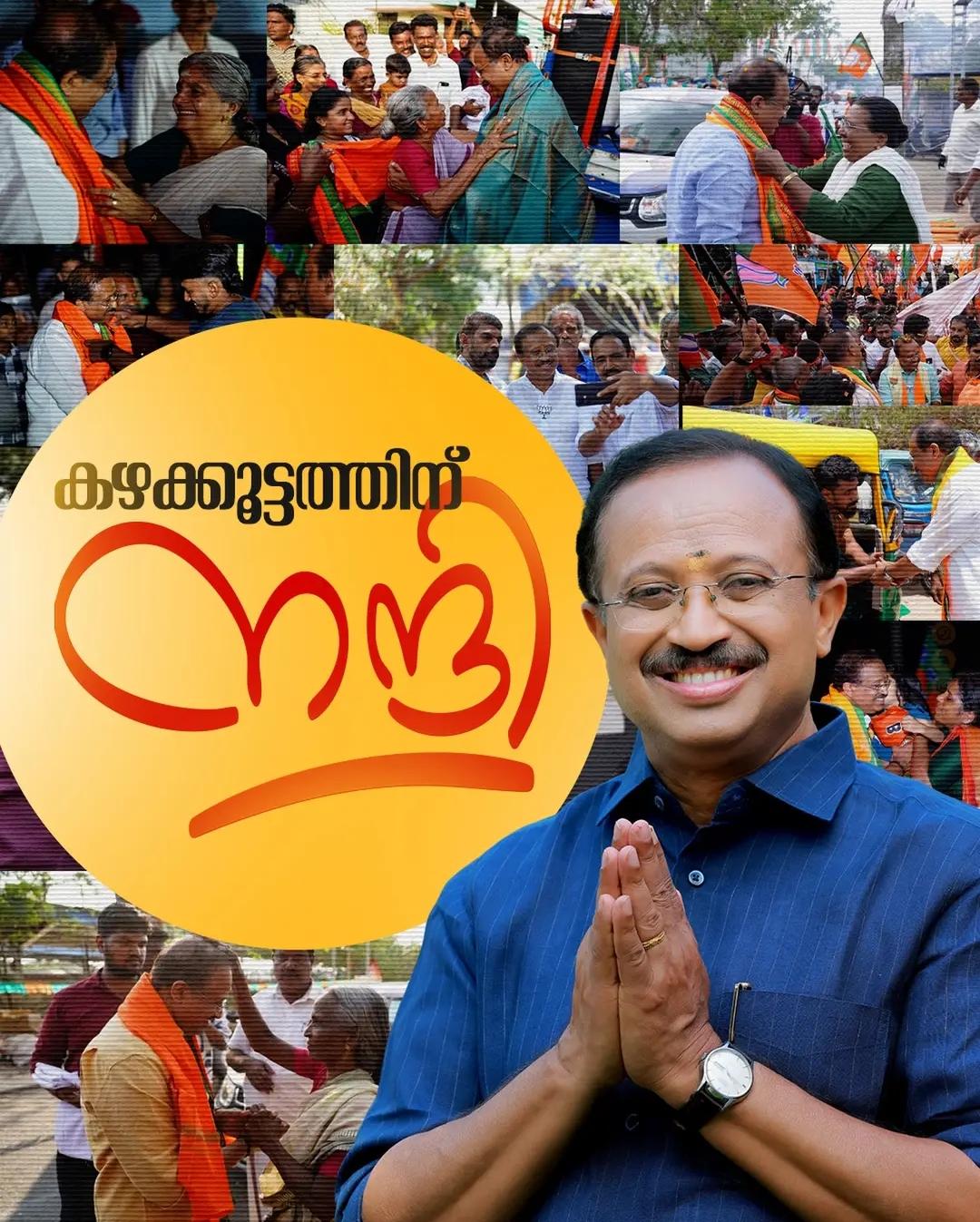
V Muraleedharan thanking voters of Kazhakootam Assembly Constituency after victory.
A former state president of the BJP, he has held multiple organisational roles, including a stint as All India General Secretary of the ABVP in the mid-1990s.
His elevation to the Rajya Sabha in 2018 and tenure as Minister of State for External Affairs and Parliamentary Affairs gave him national visibility. In Kazhakoottam, however, the campaign leaned more on accessibility and organisation than on profile.
Party workers credit his persistence.
“He has been working this constituency for years. This result didn’t happen suddenly,” said a BJP district functionary.
His earlier performance — finishing second in successive elections — had already laid the groundwork. This time, the final push proved enough.
The leader further added, “There was no single wave behind the result. It was a convergence — the BJP’s gradual climb in local and parliamentary contests, a voter base reshaped by rapid urbanisation, the renewed emotional charge around Sabarimala, a tightly run campaign backed by organisational muscle, lingering dissatisfaction over civic issues, and a three-cornered fight where even the smallest shifts proved decisive.”
In the end, the margin remained razor-thin.
(Edited by Muhammed Fazil.)



