

Published Dec 13, 2025 | 5:53 PM ⚊ Updated Dec 14, 2025 | 9:49 AM

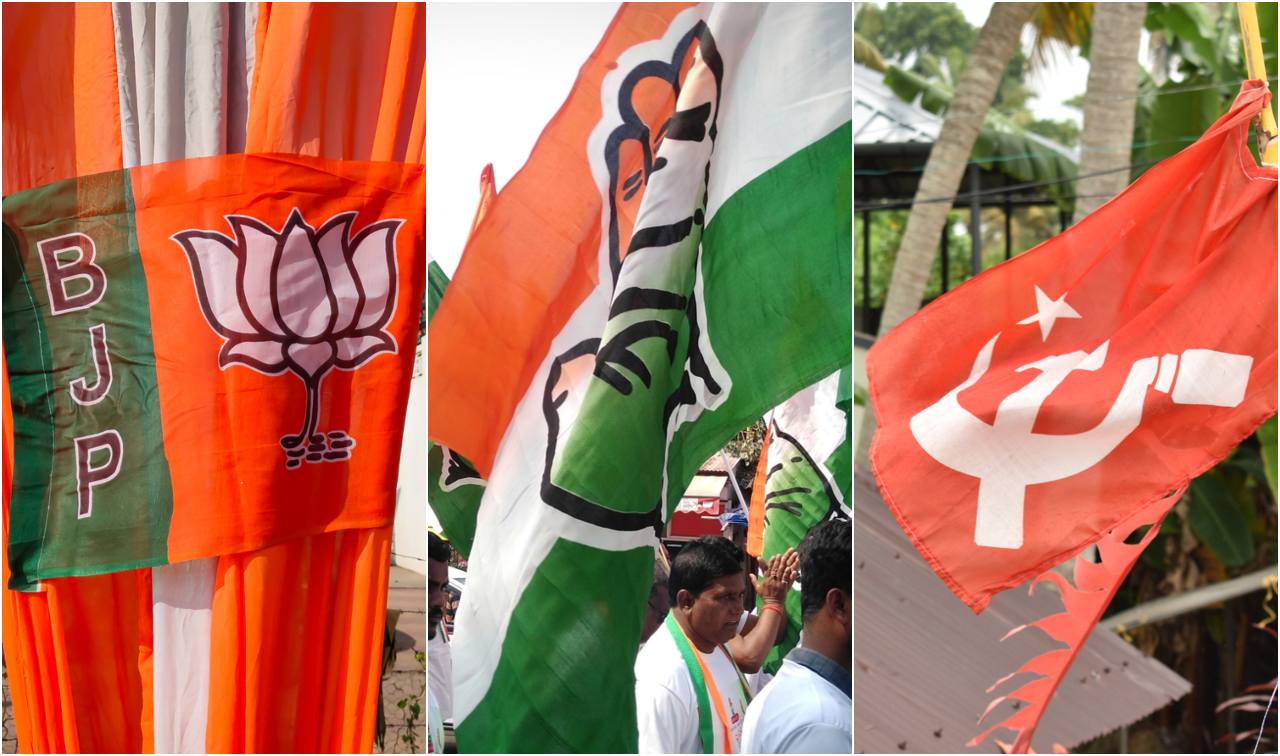
Beyond the competing rhetoric, the election may well become a referendum on the nature of Kerala’s politics going forward.
Synopsis: Kerala’s local body elections signal strong anti-incumbency against ruling LDF, with UDF securing major gains across panchayats, municipalities and corporations. Meanwhile, it also saw BJP achieving a historic breakthrough by capturing Thiruvananthapuram Corporation. As 2026 Assembly polls approach, welfare measures failed to counter voter fatigue, boosting UDF’s momentum and marking BJP’s rising influence.
As Kerala inches towards the high-stakes Assembly elections in 2026, the political undercurrents are becoming impossible to ignore.
The recently concluded local body elections have sent out a clear warning signal to the ruling Left Democratic Front (LDF), with a palpable anti-incumbency mood sweeping across the state.
The United Democratic Front (UDF) emerged with a decisive edge across district and block panchayats, municipalities, corporations and grama panchayats, while the Bharatiya Janata Party (BJP)-led NDA scripted a headline-grabbing breakthrough in Thiruvananthapuram Corporation.
BJP’s march towards capturing the civic body of the Capital — stripping the LDF down to just 29 seats from the 43 it held in 2020 — has rattled the Left, not merely for the numbers but for the symbolism.
Control over Thiruvananthapuram Corporation has long been seen as a barometer of political dominance in Kerala, and its possible loss underscores a shifting electoral landscape.
With UDF resurgent, BJP making visible inroads, and LDF staring at a formidable road ahead, the Left’s ambition of a historic third consecutive term is now facing its toughest test yet.
In the run-up to Kerala’s local body elections, LDF went all out to foreground its decade-long record in governance, leaning heavily on welfare politics as its central campaign plank.
But the verdict that followed exposed a stark political reality: welfare measures alone were not enough to blunt anti-incumbency, nor to arrest the erosion of the Left’s local dominance.
On 29 October, Chief Minister Pinarayi Vijayan announced a slew of welfare initiatives, including an increase in social security and welfare fund board pensions from ₹1,600 to ₹2,000 a month, and the launch of a new ‘Sthree Suraksha’ pension of ₹1,000 for women.
The timing was unmistakable.
With the 2025 local body polls and the 2026 Assembly elections on the horizon, the government sought to reinforce its image as a welfare-oriented administration that prioritises the vulnerable.
Yet, the strategy failed to translate into electoral dividends at the grassroots.
The disappointment within the Left camp was laid bare by senior CPI(M) leader and MLA MM Mani, whose candid remark on Saturday— that “people, after receiving benefits, dumped us” — captured the mood of shock and introspection.
His words also triggered a larger political question: whose money is the government really spending, and does welfare delivery automatically guarantee voter loyalty?
While LDF has repeatedly highlighted what it calls its achievements over the last 10 years, the leadership has been careful to strike a nuanced tone after the setback.
The official line is that local body elections, by their very nature, cannot be treated as a final verdict on the performance of the ruling coalition.
At the same time, there is an implicit acknowledgement that these elections are a ‘semi-final’ to the Assembly polls, widely expected in April 2026.
In that sense, the results are politically significant.
Far from setting a confident narrative for the months ahead, LDF has been forced into damage-control mode after suffering a major reversal across tiers of local governance.
The scale of the setback is evident in the corporation results. Of Kerala’s six corporations, LDF managed to retain control of only Kozhikode.
It lost five others — Thiruvananthapuram, Kollam, Kochi and Thrissur, all of which it had won in 2020, and Kannur, which had earlier been under the UDF.
The loss of Kollam Corporation stands out as particularly symbolic.
Long considered a Left citadel, Kollam slipping out of LDF hands after 25 years has been widely read as a warning signal for the party’s traditional strongholds.
The picture is no more comforting at other levels.
At the municipality level, LDF won just 28 of the 87 municipalities. In the grama panchayats, it secured 342 out of 941. Of the 152 block panchayats, it won only 65, and in the 14 district panchayats, the Left could manage victories in just seven.
These numbers underline a broad-based erosion rather than isolated losses, pointing to a statewide swing away from the ruling front.
LDF convener TP Ramakrishnan said the results would be examined in detail before charting the way forward. He reiterated that the government had tried to do the maximum for the people and assured that public opinion would be respected.
“Why such a verdict was given will be examined thoroughly. If there are things that need correction after assessing the situation from the ground up, we will correct them and move forward,” Ramakrishnan said, signaling an internal review process.
Out of a total of 1,200 local bodies — 941 grama panchayats, 152 block panchayats, 14 district panchayats, 87 municipalities, and six corporations — the UDF secured control over 649 local bodies, giving it a clear numerical edge.
The UDF’s strongest performance came at the grama panchayat level, where it won 505 out of 941 bodies. It also took control of 79 block panchayats and emerged victorious in seven of the 14 district panchayats, indicating rural and semi-urban support. In urban local bodies, the UDF won 54 municipalities and four corporations, consolidating its position in towns and major cities.
The LDF, which has been in power in the state for nearly a decade, retained control of 439 local bodies, including 340 grama panchayats and 63 block panchayats. Similar to the UDF, the LDF also won seven district panchayats, reflecting a near-even split at the apex tier of local governance. However, the Left fell behind in urban areas, managing to win only 28 municipalities and one corporation.
Although the NDA’s footprint was expanded, it remained limited, with victories in just 29 local bodies. It secured 26 grama panchayats, two municipalities, and one corporation, while failing to win any block or district panchayats. Despite isolated gains, the alliance continues to increase vote share at the local level, triggering concerns among LDF and UDF ahead of the Assembly polls.
Other parties won six grama panchayaths. At Eratupetta Municipality in Kottayam, independents sprang a surprise as they emerged as the single largest group.
The broader political message emerging from the results is sobering for the Left. The outcome has dealt a blow to the LDF’s hopes of scripting history by returning to power for a third consecutive term.
The UDF has registered clear gains from Kasaragod to Thiruvananthapuram, reclaiming many areas where the LDF had swept in the previous election.
The BJP-led NDA, meanwhile, has also emerged as a more visible and assertive presence.
UDF’s advantage is reflected across all tiers — grama panchayats, municipalities and corporations — suggesting a consolidation of anti-LDF sentiment.
In contrast, the Left appears to have overestimated the electoral payoff of its welfare-focused campaign.
LDF campaign revolved around governance achievements, with CM Pinarayi Vijayan as its central figure. The pension hike and the women’s safety pension were projected as proof of the government’s commitment to social security. The leadership also believed that controversies within UDF, including the Rahul Mamkootathil episode, would work to its advantage.
However, initial assessments within political circles suggest that issues such as Sabarimala-related sentiments and a broader anti-government mood outweighed welfare considerations.
UDF, on the other hand, anchored its campaign on what it described as administrative failures, alongside sharp attacks on fee hikes and rising costs of services under local bodies.
The party also effectively leveraged the Sabarimala gold theft scandal narrative, to neutralise Rahul Mamkootathil issue.
For LDF, the local body election verdict is more than a routine mid-term setback.
It has disrupted the political momentum the front hoped to build ahead of the Assembly elections and raised uncomfortable questions about voter fatigue, governance style and the limits of welfare politics.
As Kerala heads towards the 2026 Assembly battle, the message from the grassroots is clear: welfare benefits may matter, but they do not automatically trump anti-incumbency.
For Left, the question will be, is this setback a warning — or a prelude to a larger defeat which it could expect in 2026.
The Congress-led UDF has emerged from the latest local body elections with renewed confidence, turning the civic verdict into a political springboard as Kerala heads towards the 2026 Assembly polls.
The results indicate a decisive shift in public mood, with UDF making major gains across corporations, municipalities and panchayats, particularly in urban centres and northern Kerala. The most symbolic victory came in Kochi Corporation, where UDF staged a historic comeback, reclaiming power after years in opposition.
The LDF was reduced to 20 seats, including two supported Independents—its worst performance in the corporation since 2010.
Northern Kerala, especially Malappuram district, witnessed the UDF’s strongest-ever civic performance.
The front swept 11 of the 12 municipalities, 84 of 94 grama panchayats, 14 of 15 block panchayats and 31 of 33 district panchayat seats. UDF wrested Perinthalmanna and Nilambur municipalities from LDF, ending the Left’s three-decade hold in Perinthalmanna, while retaining its dominance in major towns such as Manjeri, Tirur, and Malappuram.
The Indian Union Muslim League (IUML) played a key role in the panchayat-level sweep, though it suffered a setback in Ponmundam, where an anti-League combine seized control.
UDF also surged ahead in Thrissur Corporation, where trends point to an absolute majority and a clear rejection of the much-touted “Suresh Gopi effect.” Despite BJP’s hopes of translating its 2024 Lok Sabha success into civic gains, NDA failed to deliver a decisive breakthrough.
A similar reversal unfolded in Kollam Corporation, where UDF dislodged LDF from power for the first time in 25 years. UDF leaders attributed the victory to coordinated leadership, grassroots mobilisation and decentralised candidate selection.
Convener Adoor Prakash and AICC General Secretary KC Venugopal described the verdict as a mandate against “arrogance, misrule and contempt for public concerns,” citing issues such as Sabarimala, alleged corruption and governance failures.
Leader of the Opposition VD Satheesan said the people had effectively “tried” LDF government through the ballot.
Coming on the heels of Assembly by-election wins and the 2024 general election performance, the civic sweep adds another feather to UDF’s cap—firmly placing it in pole position as Kerala’s political battlelines shift ahead of 2026.
BJP has once again asserted its growing footprint in Kerala’s otherwise bipolar political landscape, scripting a historic breakthrough by capturing the Thiruvananthapuram Corporation. For the first time since its inception in the state, the saffron party has wrested power in a municipal corporation – milestone that underscores years-long political experiment finally bearing fruit.
BJP’s Kerala journey has been marked by symbolic but significant firsts — winning the Nemom Assembly seat in 2016 and securing its maiden Lok Sabha victory from Thrissur in 2024.
The Thiruvananthapuram Corporation win now adds a far more consequential layer, placing the party at the helm of the state capital ahead of the 2026 Assembly elections.
At the corporation level, BJP markedly improved its performance in Thiruvananthapuram, bagging 50 seats, while also bettering its tally in Kollam and Kozhikode with 13 seats each.
However, the results were uneven elsewhere.
In Thrissur Corporation, despite the presence of MP and Union Minister of State Suresh Gopi and high-decibel campaigning, the party managed only eight seats.
Kochi and Kannur corporations saw BJP limited to six and four seats respectively.
Beyond the corporations, NDA scored another first by taking control of the Thripunithura Municipality — only the second municipality after Palakkad to come under NDA rule in Kerala.
Winning by a narrow margin of one seat, NDA secured 21 seats against LDF’s 20, pushing UDF to third place with 16.
Thripunithura, long alternately governed by the LDF and UDF, was treated as an A-class municipality by the BJP, which ran an intensive, focused campaign there.
The Thiruvananthapuram victory is the most telling indicator of BJP’s steady climb. From just seven seats in the 2015 local body elections, the party rose to 35 in 2020 and has now reached the halfway mark to claim power. However, NDA is one seat less from the absolute majority – i.e. 51 seats are needed, while it has bagged 50 seats as of now. The decision of 2 Independents will be crucial at this juncture. Also, polling will have to take place in the Vizhinjam ward, as it got postponed due to the death of a candidate there.
BJP leaders attribute this leap to calibrated candidate selection, disciplined campaigning, and a shift away from generic development promises to concrete, city-specific assurances.
Issues such as Vizhinjam port-linked development and the proposed Thiruvananthapuram Metro Rail featured prominently, reflecting a campaign attuned to urban aspirations.
Under state president Rajeev Chandrasekhar, BJP projected a blend of administrative competence and public familiarity, fielding candidates like Sreelekha and VV Rajesh to consolidate gains. It also vigorously campaigned on the alleged corruption in corporation affairs by the LDF.
Capturing the capital city — a long-cherished BJP ambition — is more than a municipal victory. It marks a strategic opening in a political terrain long dominated by LDF and UDF, potentially reshaping Kerala’s electoral arithmetic in the years ahead.
The local body election verdict has redrawn Kerala’s political map ahead of the 2026 Assembly polls.
For LDF, it is a clear warning that welfare politics, cannot by itself counter voter fatigue and anti-incumbency.
For UDF, the civic surge signals momentum, organisational revival and a credible path back to power.
And for BJP, capturing the Capital marks a decisive shift from symbolic presence to tangible authority.
(Edited by Amit Vasudev)


