

Published Jun 07, 2026 | 9:47 AM ⚊ Updated Jun 07, 2026 | 9:47 AM

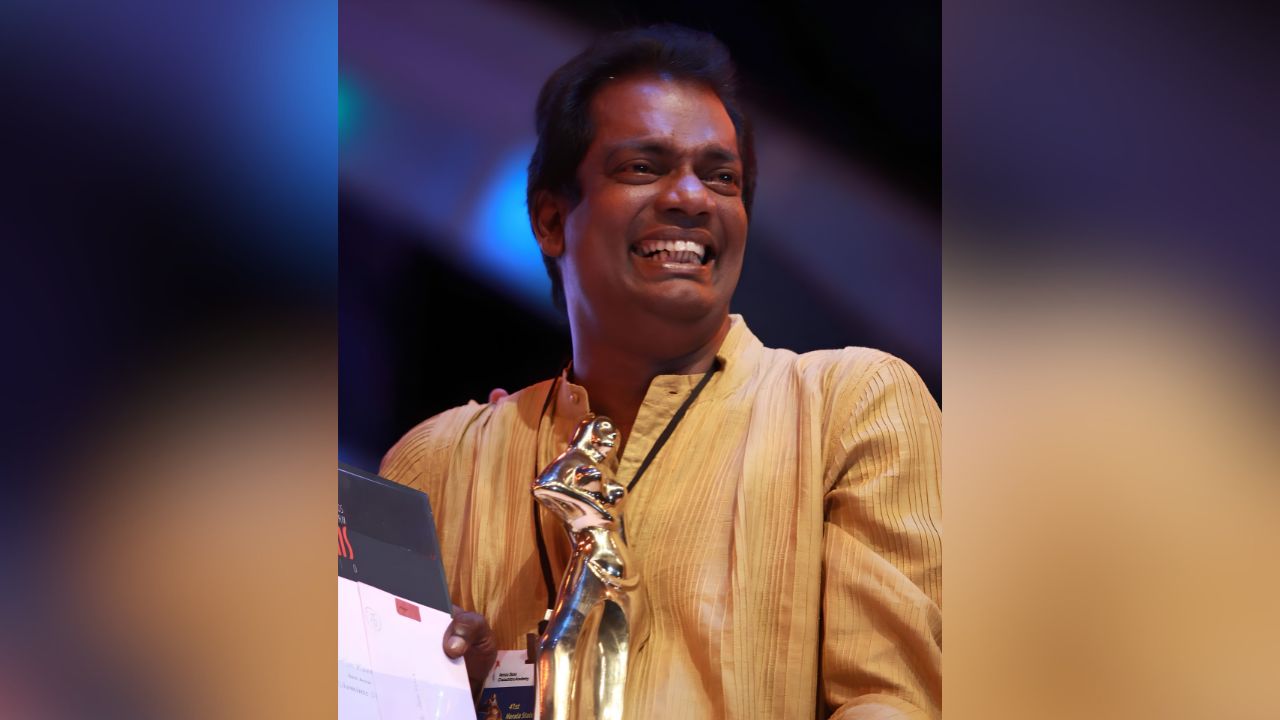
Salim Kumar.

Synopsis: Veteran Malayalam actor Salim Kumar passed away on 7 June. Long before social media transformed popular culture into a universe of memes and reaction images, Salim Kumar’s characters had already become part of Kerala’s vocabulary. For Malayalis, Salim Kumar was not simply an actor one watched. He was “an actor”, one quoted. His dialogues escaped the confines of cinema and entered everyday speech.
Some actors leave an empty space behind in the industry when they depart. Others leave a deeper absence — one that lingers in the collective memory of a society and momentarily stills its collective conversation. Salim Kumar belonged unmistakably to the latter category.
His demise, aged just 56, on Saturday, 7 June, is not merely the loss of an accomplished actor, a National Award winner, or one of Malayalam cinema’s most beloved comedians. It is the end of a remarkable chapter in Kerala’s cultural life — one that began on the mimicry stages of central Kerala, travelled through countless cinema halls and television screens, and eventually found its place in the eternal emotional memory of an entire generation.
For Malayalis, Salim Kumar was not simply an actor one watched. He was “an actor”, one quoted. His dialogues escaped the confines of cinema and entered everyday speech.
His expressions became shorthand for emotions that words struggled to convey. Long before social media transformed popular culture into a universe of memes and reaction images, Salim Kumar’s characters had already become part of Kerala’s vocabulary. Few performers achieve such intimacy with their audience. Fewer still sustain it for more than three decades.
Also Read: National Award-winning actor Salim Kumar passes away in Kochi
The temptation, in the aftermath of his passing, will be to remember him primarily through laughter. That would be understandable. After all, laughter was the gift he offered most generously. Yet it would also be incomplete.
The true measure of Salim Kumar’s achievement lies in the fact that he spent much of his career escaping the limitations imposed by his own success. Malayalam cinema first embraced him as a comedian. History will remember him as something considerably more significant: An actor of rare range who compelled audiences to reconsider what comic performers are capable of achieving.
His story possessed a distinctly Kerala quality. It was a story of talent rising from unlikely circumstances, of cultural institutions nurturing unconventional gifts, and of perseverance triumphing over inherited hierarchies. Born in North Paravur, he did not arrive in cinema through privilege, pedigree or carefully cultivated networks.
He emerged from the thriving mimicry movement that transformed Kerala’s entertainment landscape in the 1980s and 1990s. That movement has often been dismissed by cultural purists as lightweight popular entertainment. Yet it produced an extraordinary generation of performers who reshaped Malayalam cinema, and Salim Kumar was among its finest products.
Mimicry taught him lessons that no acting school could have offered. It trained his ear to detect the subtleties of speech, his eye to observe human eccentricities, and his instincts to recognise the fragile boundary separating humour from pathos.
Watching him perform, one often sensed that he carried an entire archive of ordinary lives within him. His characters were not inventions detached from reality. They were recognisable people encountered in their surroundings.
Audiences laughed because they knew these characters. More importantly, they laughed because they recognised parts of themselves.
When he entered the cinema in the 1990s, Malayalam films were passing through a period of transition. The great comic traditions established by performers such as Adoor Bhasi, Bahadoor, Jagathy Sreekumar and Innocent were evolving. A new generation was emerging from the mimicry stage.
Among them, Salim Kumar eventually distinguished himself through a style that combined physical comedy with linguistic precision. He could transform an ordinary line into a memorable one through nothing more than a pause, a glance or a slight alteration in tone. His performances possessed an unpredictability that made even familiar situations feel fresh.
His collaborations with stars across generations enriched some of Malayalam cinema’s most popular films. Whether sharing screen space with Mohanlal, Mammootty, Dileep, Suresh Gopi or Jayaram, he never seemed overawed by celebrity. Nor did he attempt to dominate scenes through theatrical excess.
Instead, he developed a unique ability to create comic characters who existed independently of the surrounding heroes. They were not merely sidekicks. They had their own internal worlds, ambitions, insecurities and absurdities.
The gallery of characters that Salim Kumar created across Malayalam cinema remains one of the richest comic repertoires assembled by any actor of his generation.
From Muthuraman in Thenkasipattanam, Bhaskaran in One Man Show, Koshy in Ee Parakkum Thalika, Advocate Mukundanunni in Meesha Madhavan, the unforgettable Pyari in Kalyanaraman, Chamba in Bamboo Boys, Usman in Kilichundan Mampazham, SI Gabbar Keshavan in Pattalam, Omanakkuttan in Thilakkam, Leelakrishnan in Soothradharan, Maayandi in Mazhathullikkilukkam, the hapless Manavalan in Pulival Kalyanam, Dance Master Vikram in Chathikkatha Chanthu, Umakandan in Pandippada, Rajakkannu in Thommanum Makkalum, and a succession of memorable appearances in films such as Mayavi and Chattambinaadu, he fashioned characters that transcended the films in which they appeared and acquired lives of their own in Kerala’s popular imagination.
What distinguished these performances was not merely their comic brilliance but their rootedness in recognisable human traits; beneath the eccentricities, exaggerations and absurd situations lay ordinary men driven by vanity, insecurity, aspiration, affection or simple misfortune.
Salim Kumar understood that the finest comedy emerges not from mocking people but from understanding them, and it was this instinctive empathy that enabled him to locate dignity even in the most ridiculous of characters.
Yet comedy, however brilliant, became both his greatest asset and his greatest challenge. Audiences adored him. Producers relied on him. Directors sought him whenever a film required laughter. Success arrived in abundance. But success can become a prison. The industry that celebrated him as a comedian often seemed reluctant to imagine him as anything else.
The first noted crack in that perception appeared in Achanurangatha Veedu, with a performance stripped of comic ornamentation, revealing depths of emotional intelligence that many had failed to notice. The transformation didn’t surprise those who had followed his journey closely. The sensitivity required to evoke laughter and to portray sorrow springs from the same source: An understanding of human vulnerability.
That understanding found its fullest expression in Adaminte Makan Abu. Malayalam cinema has produced many memorable performances. Few have possessed the quiet power of Salim Kumar’s portrayal of Abu, an ageing Muslim struggling to fulfil his lifelong dream of performing the Hajj.
The role demanded restraint rather than display. It required an actor capable of conveying hope, disappointment, faith and resignation through the smallest gestures. Salim Kumar rose magnificently to the challenge.
When the National Film Award for Best Actor came his way, it represented more than personal recognition. It corrected a longstanding injustice within Indian cinema. Comic actors have often been treated as lesser artists despite the immense skill their craft demands. Salim Kumar’s triumph affirmed what discerning audiences had already understood: That the actor who could make a theatre erupt in laughter was equally capable of moving it to silence.
There was something profoundly democratic about his career. He never cultivated the aura of an inaccessible star and remained unmistakably a man of the people, comfortable among ordinary citizens and unafraid to voice his convictions.
His political views occasionally generated debate, as all sincere political opinions do. Yet even critics acknowledged his authenticity. He spoke not with the caution of a celebrity protecting a brand but with the directness of someone who had spent a lifetime among ordinary people.
Also Read: Innocent has gone to a shooting location which is unreachable, says Salim Kumar
The measure of an actor’s legacy is not merely the number of films he leaves behind, but it is the extent to which he alters the emotional landscape of his audience. By that standard, Salim Kumar’s contribution was immense.
He gave laughter in difficult times, gifted some of its most memorable characters, expanded the horizons of what comic actors could achieve, and, above all, reminded us that the finest humour is inseparable from our shared humanity.
His life traced one of the most extraordinary arcs in Indian cinema, beginning on modest mimicry stages where he perfected the art of imitating others and culminating in a career so distinguished that he became a performer others sought to emulate, a journey marked not merely by fame but by persistence, reinvention and artistic courage.
Malayalam cinema has lost one of its most distinctive talents, a great son of Keralam. But the deeper loss belongs to the countless viewers for whom Salim Kumar’s presence had become a familiar and reassuring part of life itself.
The laughter remains. So do the performances. What is absent now is the man who gave them to us. And that absence will be felt for a very long time.
(Views are personal.)



