

Published Jun 07, 2026 | 1:02 AM ⚊ Updated Jun 07, 2026 | 8:54 AM

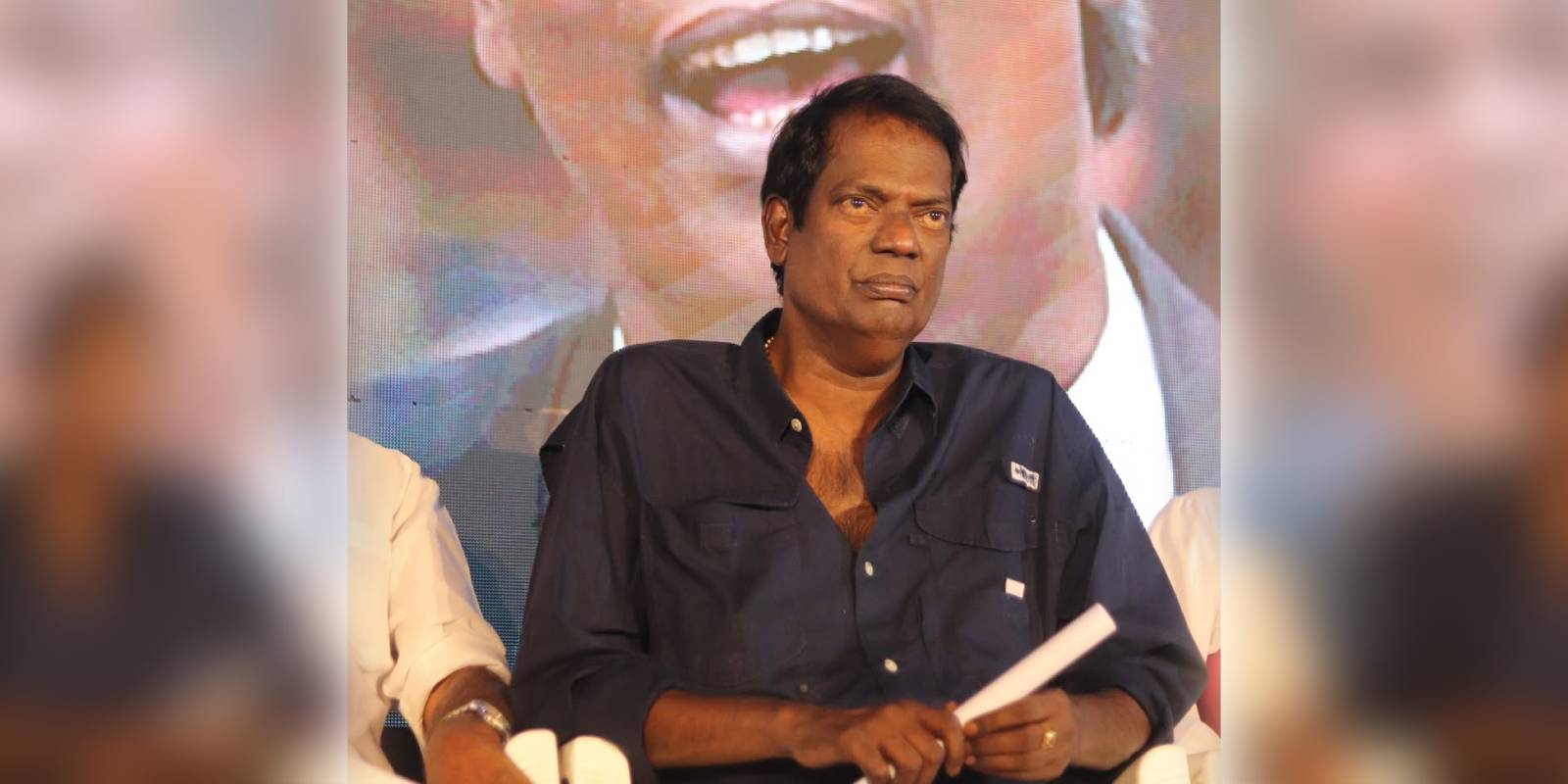
Salim Kumar (10 October 1969 to 7 June 2026).

Synopsis: Actor Salim Kumar passed away in Kochi late on Saturday. Known more for his comic roles, the versatile actor had handled character roles with ease.
National Award-winning Malayalam actor Salim Kumar passed away following liver-related complications late on Saturday, 6 June. He was 56.
Known for his comic roles, Salim Kumar was admitted to Amrita Hospital, Edapally, in Ernakulam early on Saturday. His end came around 10.45 pm.
Salim Kumar had undergone a liver transplant surgery a few years ago. He had said that liver cirrhosis was hereditary in his family and not related to alcohol consumption. His brother, too, had suffered the same illness. The actor had, for a while, followed naturopathy.
Earlier on Saturday, the news of his hospitalisation triggered concern among fans and the film fraternity, with several actors and industry colleagues expressing prayers and support for his recovery on social media.
Known for his impeccable comic timing and versatility, Salim Kumar had carved a unique space for himself in Malayalam cinema through a string of memorable performances across comedy and character roles.
He won the National Film Award for Best Actor for his acclaimed performance in the 2010 movie, Adaminte Makan Abu (Abu, son of Adam), a milestone that further cemented his stature as one of the industry’s finest performers. He had shared the award with Dhanush, who won it for Aadukalam.
Incidentally, Adaminte Makan Abu was India’s official entry to the 84th Academy Awards.
Over the years, the actor has appeared in hundreds of films and will remain a beloved figure among Malayalam cinema audiences.
Born in North Paravur on 10 October 1969, Salim Kumar had his primary education at the Government Lower Primary School at Chittattukara. He graduated from Maharajas College, Ernakulam, and started his stage career as a mimicry artist with Kalabhavan. He was also associated with the Kochi-based theatre group, Arathi Theatres.
Salim Kumar debuted in movies through Ishtamanu Nooru Vattam, a 1997 family drama directed by Siddique Shameer. He later did several supporting roles before acting in the 2000 movie Satyameva Jayathe. The role he played in the movie, Mattancherry Mammathu, brought him critical acclaim. Bha Bha Ba (2026) was his last released movie.
Besides Malayalam, Salim Kumar had acted in Tamil, Odiya, Hindi and Bengali movies. He had also directed three movies, Compartment, Karutha Joothan and Daivame Kaithozham K Kumar Akanam.
He had also dubbed his voice for several movies, besides acting in multiple television serials.
Salim Kumar had won the State’s Best Actor award for Adaminte Makan Abu, Second Best Actor for Achanurangatha Veedu (2005), and Best Comedian for Ayalum Njaanum Thammil (2013). Karutha Joothan (Black Jew) won him the state award for the Best Story.
Salim Kumar is survived by his wife, Sunitha and two children, Chandu Salim Kumar and Aromal Salim Kumar. His son Chandu is also an actor who has acted in acclaimed movies such as Manjummel Boys and Lokah Chapter 1: Chandra.
The mortal remains of the actor will be kept at the Paravur Town Hall at 9 am on Sunday, 7 June. His mortal remains will be laid to rest in the evening.
For years, Malayalam cinema laughed with him, laughed at him, and often laughed because of him.
But behind the trademark grin, the elastic expressions and the unforgettable comic timing stood a man who never hesitated to speak his mind — even when it made him unpopular.
From the crowded stages of mimicry troupes to the national honour, Salim Kumar’s journey remains one of Malayalam cinema’s most extraordinary success stories.
Few actors have travelled such a distance: from playing eccentric sidekicks and slapstick characters to winning the National Award for Best Actor with a performance that silenced every stereotype attached to him.
He entered the world of cinema as a comedian who could turn even ordinary dialogue into cultural memory. Soon, his mannerisms, pauses and improvised lines escaped the theatres and found permanent life among Malayalis.
In the age of social media, Salim Kumar became something more than an actor — he became a language of memes. Hardly a day passed on Malayalam Facebook or WhatsApp without one of his expressions surfacing somewhere.
Whether it was sarcasm, frustration, disbelief or political satire, the quintessential Malayali humour invariably found a Salim Kumar reaction for it.
Ironically, the man who made millions laugh was also “killed” countless times on social media through fake death messages that surfaced periodically over the years.
He handled even that with his trademark humour.
During a public interaction, when asked about a viral rumour surrounding gangster Dawood Ibrahim’s death, Salim Kumar responded in a way only he could. “The death of a man behind several riots may have made some people happy. But I never created riots anywhere in Kerala, yet I have been killed more than 15 times,” he said, even as the audience roared in laughter.
But Salim Kumar was never merely a comedian. He was among the rare actors who openly questioned the industry he belonged to. He often lamented the disappearance of genuine humour in cinema and argued that excessive political correctness had weakened comedy in films.
He also spoke bluntly about the nature of relationships within the industry.
“There are no real friendships in cinema. It is only a gathering that exists during the making of a film,” he once remarked, in a statement that reflected both his candour and disillusionment.
That honesty frequently pushed him into controversies. In 2014, after hinting at retirement, he surprised many by remaining active in cinema, public life and cultural discussions.
Unlike many stars who chose silence, Salim Kumar consistently voiced opinions on social and political matters.
A staunch supporter of the Congress party, he was often seen alongside the current Chief Minister, VD Satheesan, at party events. His political stand occasionally brought him into direct conflict with influential figures in the film fraternity as well.
He was last seen with Satheesan on 24 May at an event organised in Paravur to felicitate the latter’s elevation as the chief minister of Kerala.
In 2016, he resigned from A.M.M.A., protesting the organisation’s decision to support and campaign for LDF candidate KB Ganesh Kumar in the Pathanapuram assembly constituency.
Years earlier, he had publicly expressed disappointment over being excluded from a ceremonial event at the International Film Festival of Kerala.
The organisers had announced that the inaugural lamp would be lit by 25 National Award-winning actors. Salim Kumar pointed out that in Ernakulam district, only two actors had received the honour — the late PJ Antony and himself — yet he was not invited.
“I expressed my protest because they ignored me despite that,” he said at the time, refusing to soften his stand.
Even after becoming a National Award winner, director and producer, Salim Kumar retained the unpredictability that made him unique.
He could move from satire to philosophy within minutes. He could ridicule society while laughing at himself. He could perform absurd comedy on screen and then deliver deeply reflective observations off it.
Malayalam cinema has produced many comedians, but very few who became part of Kerala’s everyday emotional vocabulary. Salim Kumar did. His dialogues survived generations of films. His expressions outlived trends. His humour entered homes, tea shops, political debates and internet culture with equal ease.
He was never just comic relief. He was a performer who transformed ridicule into recognition, mockery into art, and laughter into a legacy.
Chief Minister VD Satheesan remembered actor Salim Kumar with deep emotion, describing him not merely as a film star but as a beloved member of his own family.
Satheesan said Salim Kumar was like a brother to him and recalled that the actor’s last public appearance was at the reception organised for him in Paravur after the elections.
He said Salim Kumar’s smiling face at the function remains etched in the minds of the people of Paravur.
Calling him the pride of North Paravur, Satheesan noted that Salim Kumar had always openly expressed his Congress politics without expecting any position or benefit in return.
The chief minister also remembered Salim Kumar as a rare talent who excelled not only in comedy but also in emotional and character roles that touched audiences.
From humble beginnings, he rose to national recognition, winning a National Award.
Recalling their close personal bond, Satheesan said Salim Kumar used to inaugurate his election committee offices in every election and considered it his own responsibility.
He added that the actor was genuinely happy about his recent political success.
Expressing grief over the loss, Satheesan said it was difficult to console Salim Kumar’s family and described the actor as a true representative of the people of Paravur — someone who made everyone laugh throughout his life, but whose departure has left many in tears.
AICC General Secretary and Alappuzha MP KC Venugopal recalled their long-standing friendship and the actor’s deep-rooted loyalty towards Congress.
Venugopal said Salim Kumar often remembered a childhood moment when his father took him to school, saying that someone was waiting to place a garland around his neck.
Later, he learnt that the affectionate hands that touched his cheeks belonged to former Chief Minister K Karunakaran.
Venugopal said that the incident shaped Salim Kumar into a committed Congressman from an early age.
Describing him as a courageous man who never treated personal setbacks as losses, Venugopal said Salim Kumar had the qualities of a true leader. He remembered him as a warm-hearted friend who discussed family matters, cinema and politics with equal passion.
Venugopal also recalled Salim Kumar’s active campaigning for the Congress during the Assembly elections.
Venugopal said Salim Kumar would continue to live forever in the hearts of people.



