

Published Sep 09, 2026 | 11:00 AM ⚊ Updated Sep 09, 2026 | 11:00 AM

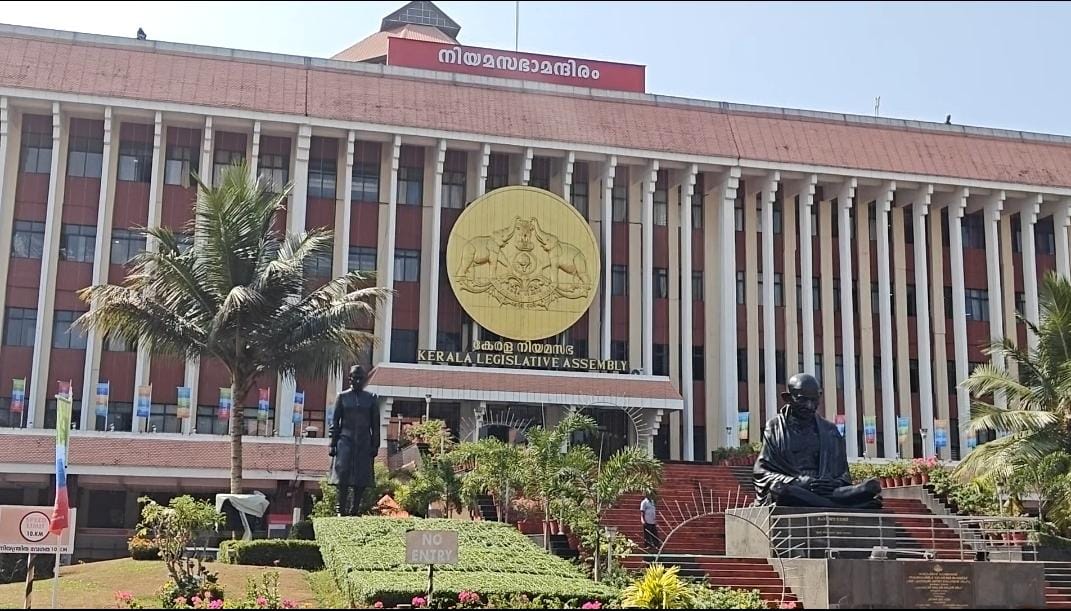
The Keralam Assembly estimated that the VB-G RAM G provisions could translate into an additional financial burden of around ₹3,500 crore.

Synopsis: Keralam’s Congress-led government is now implementing the VB-G RAM G scheme that the party has been fiercely opposing, saying it amounts to diluting MGNREGA. While Congress governments in Karnataka and Telangana have moved towards legal action against the Centre, Keralam has chosen implementation—raising questions over the party’s political stand and leaving the state to shoulder a much larger share of the scheme’s cost.
The political stand against the Centre’s new rural employment scheme and its implementation on the ground now make for an awkward contradiction in Keralam.
While the Congress-led United Democratic Front (UDF) government continues to oppose the Viksit Bharat Guarantee for Rozgar and Ajeevika Mission (Gramin) (VB-G RAM G) scheme publicly, it has issued detailed guidelines to put the Centre’s replacement for MGNREGA into effect, complete with funding norms, classifications and directions to local bodies.
The state also constituted a State Grameen Rozgar Guarantee Council (SGRGC) on 1 September to implement the new scheme, with 12 official members and 15 non-official members. Minister for Local Self Government Department KM Shaji heads the council.
The move comes after months of Congress protests demanding the restoration of MGNREGA in its original form, and a State Assembly resolution opposing the new framework.
It also puts Keralam in a curious position within the Congress setup, with the party-headed governments in Karnataka and Telangana indicating that they would challenge the scheme in the Supreme Court.
Earlier, in May, the Centre notified that all rules, notifications, schemes, orders and guidelines framed under the MGNREGA 2005 would stand repealed upon the implementation of the VB-G RAM G Act, 2025.
The VB-G RAM G Act, 2025 further requires each state government to formulate and notify, within six months of the Act’s commencement, a state-specific scheme aligned with the provisions and prescribed features of the new legislation.
Also Read: Kerala, Karnataka among the highest-paying
Congress has mounted a strong political campaign against the Centre’s replacement of MGNREGA with the VB-G RAM G — calling it an assault on the rural poor. But in Congress-ruled Keralam, the government has gone ahead with implementing the scheme the party has been opposing, without announcing any move to challenge it in court.
Earlier, Congress Parliamentary Party Chairperson Sonia Gandhi, speaking on 20 December 2025, described the VB-G RAM G Bill as an “attack” on crores of farmers, labourers and landless people. Recalling the passage of MGNREGA two decades ago, she accused the Centre of bulldozing the new legislation without adequate parliamentary deliberation or consultation with the Opposition.
The Congress subsequently intensified its campaign with the nationwide ‘MGNREGA Bachao Sangram’.
In Keralam, the party organised a two-day, day-and-night protest outside the Lok Bhavan in January, demanding restoration of MGNREGA in its original form and safeguards for workers.
Congress governments in other states have taken a more explicit position.
In May, the Karnataka government decided to approach the Supreme Court seeking permission to prepare and implement an employment action plan under the now-defunct MGNREGA Act, with state Law Minister HK Patil arguing that the Centre had neither notified the new law nor provided an alternative framework at the time.
In July, the Telangana Cabinet, too, decided to implement VB-G RAM G while simultaneously resolving to approach the Supreme Court to protect the state’s interests. It alleged that the Centre had pushed through the legislation despite objections from state governments, workers and other stakeholders.
Keralam, however, has taken a different route.
On 11 May, the Union Ministry of Rural Development formally withdrew MGNREGA and brought VB-G RAM G into force through a notification.
The Keralam Government subsequently issued its notification on 27 June, providing for implementation of the new scheme in the state from 1 July.
The Mission Director had already recommended on 16 June that implementation guidelines be issued, paving the way for the state’s move. The guidelines have now been released.
There has been no comparable announcement from the Keralam government that it would approach the Supreme Court against the new scheme.
However, the issue did come up in Chief Minister VD Satheesan’s ‘Revised Budget Speech’ presented on 19 June.
But rather than announcing a legal challenge, the speech focused on the financial burden placed on Keralam by the new arrangement.
Satheesan described MGNREGS as a “people-oriented programme” introduced by the UPA Government and said the Centre had weakened it by renaming it VB-G RAM G and increasing the state’s share to 40%. According to the Budget speech, Keralam’s contribution, which was ₹250 crore when the scheme operated as MGNREGS, has now risen to ₹2,090.96 crore.
The government provided ₹1,422.60 crore as the state’s contribution in the first phase to ensure implementation of the scheme.
This leaves Congress in Keralam facing an awkward political contrast: while the party continues to campaign against VB-G RAM G and Congress governments in Karnataka and Telangana have opted to implement it while taking the Centre to court, the Congress-led Keralam Government has accepted the new framework and begun implementing it, even constituting the SGRGC, for regular monitoring and reviewing the implementation of the provisions of the scheme at the state level.
Also Read: VB-G RAM G may weaken rural employment guarantee despite promises
At the same time, the state government is examining ways to manage the additional financial burden that could arise under the VB-G RAM G scheme, particularly when expenditure in a gram panchayat exceeds the Centre’s prescribed “Normative Allocation”.
Under the new scheme, the Centre and State will share the wage, material and administrative expenditure in the ratio of 60:40.
However, the state will have to meet the entire cost incurred beyond the normative allocation fixed by the Centre, making any excess demand for labour a potential additional liability for the state.
The new law also classifies gram panchayats into A, B and C categories based on various criteria.
Funds and other components under the VB-G RAM G scheme will be allocated based on each panchayat’s category and the Centre’s fixed normative allocation.
The state government has examined these provisions and their financial implications in detail.
Implementation of the scheme will have to be planned within the limits of the allocation available to each panchayat.
It has now been decided that, “If a gram panchayat generates demand for labour beyond its sanctioned share, the additional requirement will be met, as far as possible, by reallocating labour days from panchayats that have fallen short of their allotted targets.”
“The guarantee, therefore, acquires a little bit of musical-chairs economics. One panchayat’s unused employment days can become another panchayat’s additional employment days—provided, of course, the arithmetic works,” a state Rural Development Department official said.
Also Read: Explained: Key provisions in VB–G Ram G
The guideline requires that the Viksit Gram Panchayat Plan (VGPP) be prepared around projects eligible under the VB-G RAM G Act, 2025, and that gram panchayats ensure enough works are available to generate employment.
The guidelines require that the projects identified under the plan be permissible under the new Act and align with its objective of advancing the “National Vision of Viksit Bharat @2047.”
Meanwhile, the document stated that until the Centre issues detailed instructions on preparing the VGPP, Gram Panchayats can take up works already prepared under MGNREGS, provided they meet the VB-G RAM G eligibility requirements.
“Works prepared under MGNREGS in previous financial years can also be taken up and executed if the new framework permits them. If these works are insufficient to generate the required number of employment days, additional projects allowed under VB-G RAM G can be identified and taken up with the approval of the Gram Sabha,” the document says.
The Block Programme Officer (BPO) has been tasked with ensuring that gram panchayats have an adequate shelf of eligible works and that every work taken up conforms to the provisions laid down by the Centre.
The BPO will also have to ensure the entry and processing of work details in accordance with the prescribed arrangements in the Management Information System (MIS) for the VB-G RAM G programme.
Also Read: Tamil Nadu Assembly unanimously adopts resolution opposing VB-G Ram G
Earlier, in February, the Keralam Legislative Assembly flagged the financial burden that VB-G RAM G could impose on the state. It demanded that the Union government restore the MGNREGS framework.
A resolution moved by then Local Self-Government Minister MB Rajesh of the Left Democratic Front government, and passed by the House, argued that the new scheme diluted the rights-based character of the MGNREGS.
The resolution pointed out that the proposed system would shift several financial responsibilities to the states.
These included payment of unemployment allowance and compensation for delays in wage payments, while the Centre would retain the power to determine the states’ share of expenditure.
Under VB-G RAM G, the Centre would fix a ‘normative allocation’, with the states required to bear 40% of the expenditure within that allocation. Any employment generated beyond the prescribed allocation would have to be funded entirely by the state government.
For Keralam, the Assembly estimated that these provisions could translate into an additional financial burden of around ₹3,500 crore.
The resolution also underlined the scale of Keralam’s dependence on the rural employment programme. As many as 40.45 lakh families in the state are enrolled under MGNREGS, with 19.43 lakh families, comprising 22.66 lakh workers, classified as fully active.
Keralam has also consistently provided more employment under the scheme than the national average.
In 2024-25, the state generated an average of 66.17 person-days of employment, against the national average of 50.23 person-days, according to the resolution.
The Assembly said Keralam had been taking steps to maximise employment opportunities under MGNREGS and strengthen the livelihood security of rural households.
Against this backdrop, the House called on the Union government to withdraw VB-G RAM G and restore the existing MGNREGS framework, warning that the proposed funding structure could weaken both the scheme’s rights-based character and the state’s finances.
(Edited by Majnu Babu).



