

Published Jul 01, 2026 | 3:17 PM ⚊ Updated Jul 01, 2026 | 3:17 PM

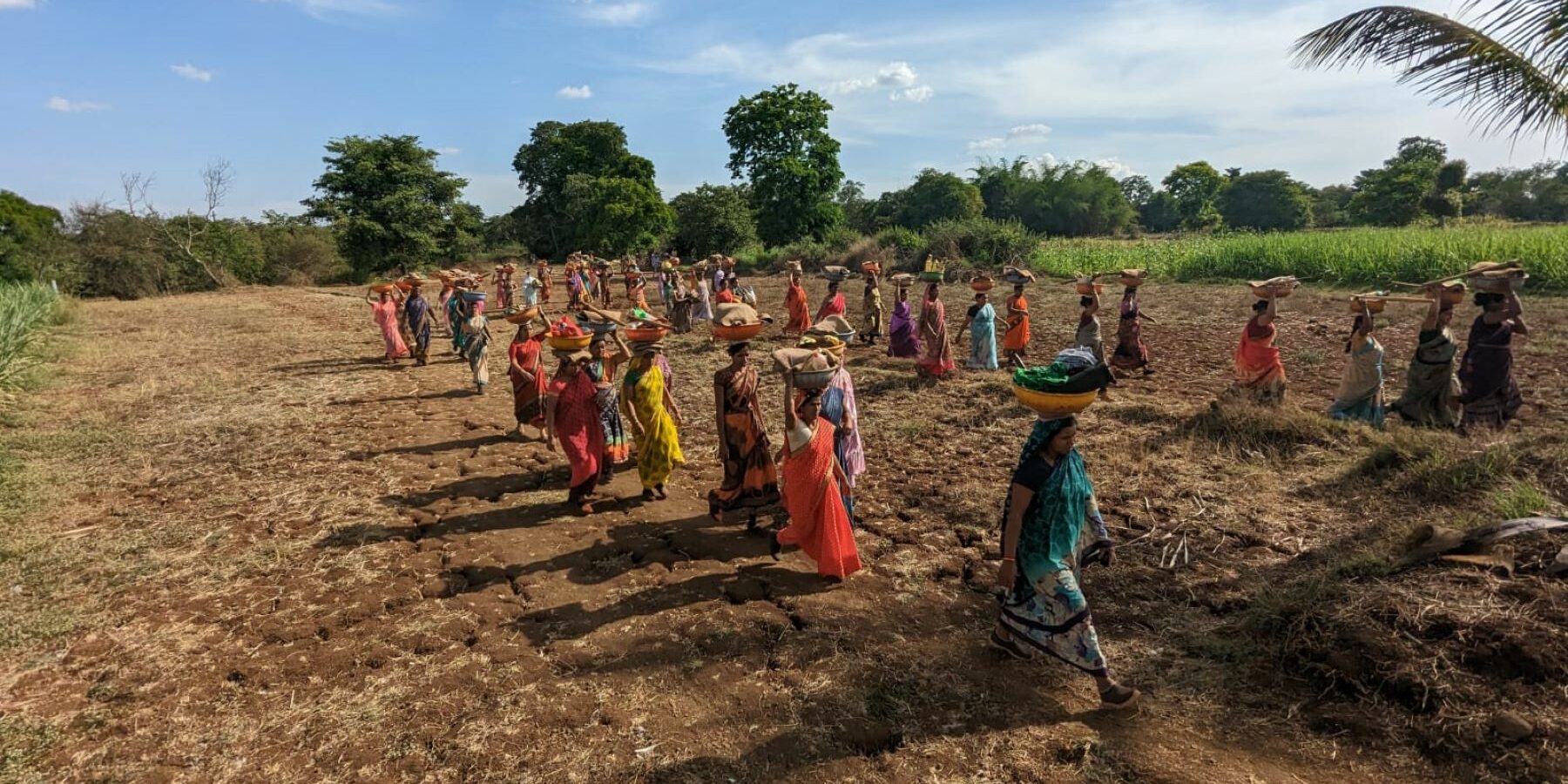
The national average notified wage has increased by ₹28.6 a day, from ₹298.8 a day under MGNREGA to ₹327.4 a day under the VB-G RAM G Act.

Synopsis: The Union Government has notified revised wage rates under the Viksit Bharat – Guarantee for Rozgar and Ajeevika Mission (Gramin) (VB-G RAM G) Act, 2025, from 1 July, introducing an interim base wage of ₹300 a day. The Centre has also released an interim fund of ₹95,692.31 crore to States and Union Territories for the rollout of the scheme.
The Union Government has notified revised wage rates under the Viksit Bharat – Guarantee for Rozgar and Ajeevika Mission (Gramin) (VB-G RAM G) Act, 2025, with effect from 1 July, coinciding with the nationwide rollout of the Act, which replaces the UPA-era Mahatma Gandhi National Rural Employment Guarantee Act, 2005 (MGNREGA).
The Ministry of Rural Development on Tuesday, 30 June, said the revised notification raises wage rates across all States, Union Territories and wage regions. It also introduces an interim base wage of ₹300 a day.
It added that the national average notified wage has increased by ₹28.6 a day, or more than 10 percent, from ₹298.8 a day under MGNREGA to ₹327.4 a day under the VB-G RAM G Act. Wage rates have been revised across all 34 States, Union Territories and wage regions, with 21 States, Union Territories and administrative units recording increases of more than 10 percent.
The VB-G RAM G Act provides 125 days of guaranteed employment annually to every eligible rural household, compared with 100 days under MGNREGA. It also provides for the payment of unemployment allowance if work is not provided within 15 days of an application, and compensation if wages are not paid within 15 days.
The Union Government has stated that all administrative and financial arrangements have been completed for the nationwide implementation of the scheme from 1 July.
The Congress government in Karnataka and the TVK government in Tamil Nadu both announced that they would implement the scheme from 1 July.
This is despite both States having earlier passed resolutions in their Assemblies against the Act, with Karnataka also preparing a legal challenge.
The VB-G RAM G Bill was passed by Parliament in December 2025 amid protests by Opposition parties, which contended that it would weaken employment guarantees for rural workers and shift the financial burden onto State governments. It received the President’s assent on 21 December 2025.
Also Read: VB-G RAM G may weaken rural employment guarantee despite promises
The Union Government said the largest wage increases under the new revision have been directed towards States where wages were historically lower. Arunachal Pradesh and Nagaland have received the highest percentage increase of nearly 24.5 percent, while Uttar Pradesh, Uttarakhand, Bihar, Jharkhand, Assam, Tripura, West Bengal, Chhattisgarh, Madhya Pradesh and Odisha are also among the States receiving substantial increases. Uttar Pradesh, Bihar, Jharkhand, West Bengal, Assam, Arunachal Pradesh and Himachal Pradesh will see increases ranging from 15 percent to 25 percent.
States that already had wage rates above the new interim base have also received upward revisions, according to the Ministry.
Haryana will have a notified wage rate of ₹409 a day, Goa ₹406, Kerala ₹401, and Sikkim’s high-altitude gram panchayats ₹450. Kerala, Haryana, Punjab and Karnataka will have wage rates ranging from more than ₹360 to ₹409 a day.
The Ministry of Rural Development said the revised wages were determined under the provisions of the VB-G RAM G Act, 2025, using a methodology that combines annual indexation with the newly introduced interim base wage to ensure fair wages while reducing historical regional disparities.
Union Minister for Rural Development and Agriculture and Farmers’ Welfare Shivraj Singh Chouhan termed the revisions “historic”, saying they would “strengthen rural livelihoods, increase purchasing power and accelerate inclusive development across rural India.”
Also Read: Explained: Key provisions in VB–G Ram G Bill which is set to replace MGNREGA
The Union Government said the Act and the revised wage notification were yet another milestone in its commitment to its Garib Kalyan, Antyodaya and the vision of Viksit Bharat @2047 visions.
Projects under the scheme will be taken up on the basis of development plans prepared by village panchayats under four broad categories: water resource conservation, rural infrastructure development, livelihood-enhancing assets, and disaster prevention works.
These include road construction, the restoration of ponds and water bodies, the construction of anganwadi centres, libraries, self-help group buildings, rainwater harvesting systems, flood prevention measures, and disaster management works.
The Ministry of Rural Development has released an interim fund of ₹95,692.31 crore to States and Union Territories for implementing the scheme.



