

Published Jun 25, 2026 | 11:35 PM ⚊ Updated Jun 25, 2026 | 11:35 PM

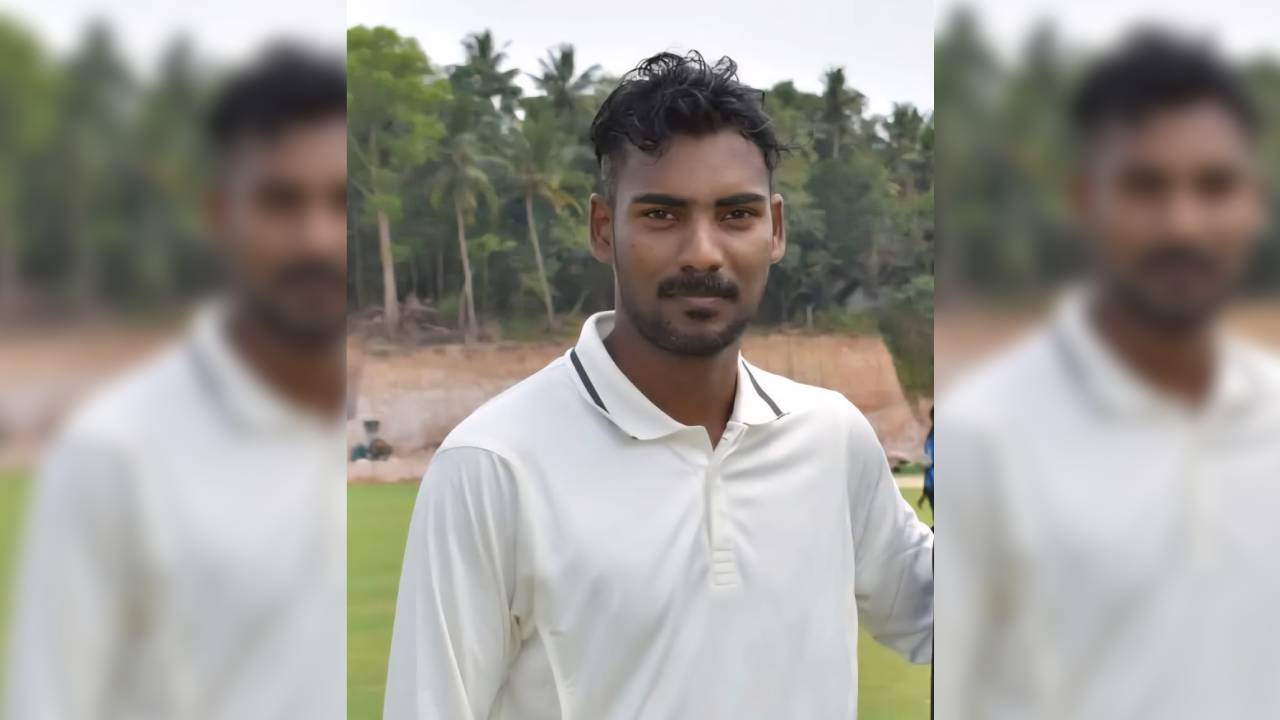
The trial exposed how M Manu systematically weaponised his authority to exploit aspiring athletes from 2012 to 2024.

Synopsis: The conviction of former TDCA coach M Manu in the second consecutive case reveals a disturbing pattern of grooming, intimidation, and sexual abuse carried out under the cover of professional cricket coaching, chasing multiple young traumatised athletes away from the sport. The court’s verdict not only punishes a serial offender but also celebrates the courage of survivors whose testimonies shattered years of silence and exposed a deep betrayal of trust within a prestigious sporting institution.
Inside the Fast-Track Special Court (POCSO) in Thiruvananthapuram on Thursday, 25 June, the structural shield that once protected one of local cricket’s most powerful figures further crumbled.
Special Judge Anju Meera Birla sentenced former Trivandrum District Cricket Association (TDCA) coach M Manu to 35 years in prison and imposed a ₹66,000 fine on him for the systematic sexual abuse and blackmail of a second minor trainee.
Significantly, the court ruled that the 35-year sentence will not run concurrently with his previous sentence. In a move that mirrors the severity of the institutional betrayal, Judge Birla ordered that the consecutive term will begin only after Manu finishes serving the 16-year sentence handed down to him a month ago.
Furthermore, the court found the 40-year-old resident of Vallakadavu Srivaraham guilty in a third POCSO case, with the formal sentencing scheduled for Saturday, 27 June.
The ruling in the second case is the result of a meticulous prosecution strategy led by Special Public Prosecutor Advocate RS Vijay Mohan.
Invoking Section 427 of the Code of Criminal Procedure, the state argued that a habitual predator who weaponised his position over a decade should serve separate, successive terms for every child he had harmed.
The court agreed, fundamentally altering Manu’s legal landscape from a brief stint behind bars to the stark reality of spending the rest of his life in prison.
Also Read: ‘Let female coaches train women cricketers’
The second trial painted a harrowing, highly localised picture of how Manu operated within the multi-storey Kerala Cricket Association (KCA) building in Thycaud.
The court records mapped a physical architecture of abuse, detailing precise locations where the coach isolated his victims away from parental sight.
The survivor entered the academy in 2018 as an ambitious young athlete. The abuse began that June.
The prosecution specified the exact locations of assaults within the state-of-the-art facility: a patch under a sheet-roof portion just northwest of the ground-floor staircase handrail; a cramped toilet cubicle near the northern dining hall washroom; and the fourth-floor gymnasium.
In those spaces, Manu systematically dismantled the child’s boundaries under the guise of sports science. He demanded the trainee strip to “assess her muscle movements,” and recorded illicit videos and photos on his phone as she complied out of fear. When the girl resisted, she was forced into striking semi-nude poses.
To normalise the abuse and break her psychological resistance, Manu showed her nude photographs of other minor trainees who had been similarly trapped.
When the young girl tried to pull away, the manipulation turned into a direct professional threat.
Manu told her bluntly that he held the keys to her selection and would destroy her cricketing career if she ever spoke out.
When she refused to capitulate fully, he stopped coaching her, starving her of the technical training she needed to progress.
Out of options and deeply traumatised, the child quietly abandoned the academy in December 2019.
To ensure no digital trail remained, Manu later disposed of the mobile phone used to record the videos—an act the court recorded as a willful destruction of criminal evidence.
Also Read: How a coach weaponised a 7th-grader’s ambitions and her fight for survival
For nearly five years, the survivor, along with five other young girls, endured near-identical treatment. They carried the weight of the abuse in absolute silence.
The girls watched their peers advance. They changed training grounds and tried to outrun the shadow of the Thycaud facility.
In her judgment, Special Judge Birla addressed the defence’s predictable attempt to question why the survivor took years to report the crimes.
The judge’s observations offered a profound, empathetic window into the psyche of an abused child athlete, writing a commentary on how trauma operates under institutional pressure:
“Offences of a sexual nature, and that when committed against children and especially when the perpetrator is in the position of a teacher or coach, are often a very difficult scenario for a child. In such a circumstance, it is only normal and natural that children who are themselves caught between adulthood and their teenage years and are required to shoulder responsibilities would bottle up a lot of emotions.”
The judge further noted: “Sometimes they act way beyond their age and are likely to hold things bottled up inside until there is a trigger, which results in a burst of emotions like in the instant case.”
The court noted that the survivor’s decision to finally confide in her family was entirely consistent with this psychological reality.
She didn’t stay silent because the abuse didn’t happen; she stayed silent because she was a child carrying an adult’s burden, waiting for a safe environment to speak.
Also Read: SHRC serves notice to Kerala Cricket Association
The long-awaited trigger arrived in April 2024.
During a local “Pink Cricket” tournament in Thiruvananthapuram, a former trainee who had fled the state years earlier to escape Manu returned to the city to compete.
Spotting her abuser still circling the ground, still wearing the official KCA colours, and still training a new generation of little girls, she refused to look away. Her public confrontation and immediate police complaint gave vent to decades-old pent-up fear.
Within days, the five other girls who had quietly vanished from the academy between 2018 and 2024 found the collective courage to speak.
Six independent cases were registered.
The Cantonment Police submitted comprehensive chargesheets, and with Thursday’s verdict, two of those trials have ended in heavy convictions, with a third sentence looming this weekend.
Also Read: Sexual crimes not new to Kerala cricket coach
Earlier, in a scathing rebuke to traditional defence tactics employed in sexual assault trials, the court held that an abuse survivor’s subsequent success and social standing in life cannot be used to discredit their past trauma.
The defence counsel had argued that the young cricketers’ current successful lives and pursuance of their sporting dreams proved they could not have suffered severe exploitation at the hands of the accused.
Rejecting the reasoning entirely, Judge Birla noted that accepting such a premise would mean locking survivors into an unyielding, permanent state of brokenness.
“The underlying aspect, if such an argument were to be accepted,” Judge Birla noted in the verdict, “would be that once a person has been victimised, they are supposed to remain as such victims and not break the shackles and move forward in their lives.”
The court pointed out that human history contradicts this cynical view of trauma, proving instead that individuals consistently emerge victorious whenever circumstances attempt to suppress them.
Turning specifically to the young cricketer who stood in the witness box, the judge wrote that she had vividly embodied this resilience: “It can be seen that these poor girls have had to walk over fire in the figurative sense to reach where they are today… [The survivor] has come forward and made an attempt to book the accused and, in the process, to have broken the shackles of being a victim to becoming a survivor who has survived the storm to become a stronger individual.”
The judgment also dismantled the defence’s theory that the survivors had conspired to falsely implicate Manu to support the initial whistleblower, who raised the alarm during the 2024 tournament.
The court pointed out a stark social reality: in the society we live in, a young woman tracking toward an established cricket career has absolutely everything to lose by publicly branding herself an abuse survivor.
At the time the news broke via the media, the survivor was training outside Kerala, well on her way to becoming an established cricketer. The court highlighted the immense courage the girl required to pause that hard-won momentum, call her father, and initiate a legal battle against a powerful figure who held immense social standing as a recognised coach under the KCA.
(Edited by Majnu Babu).



