

Published May 31, 2026 | 4:04 PM ⚊ Updated May 31, 2026 | 5:20 PM

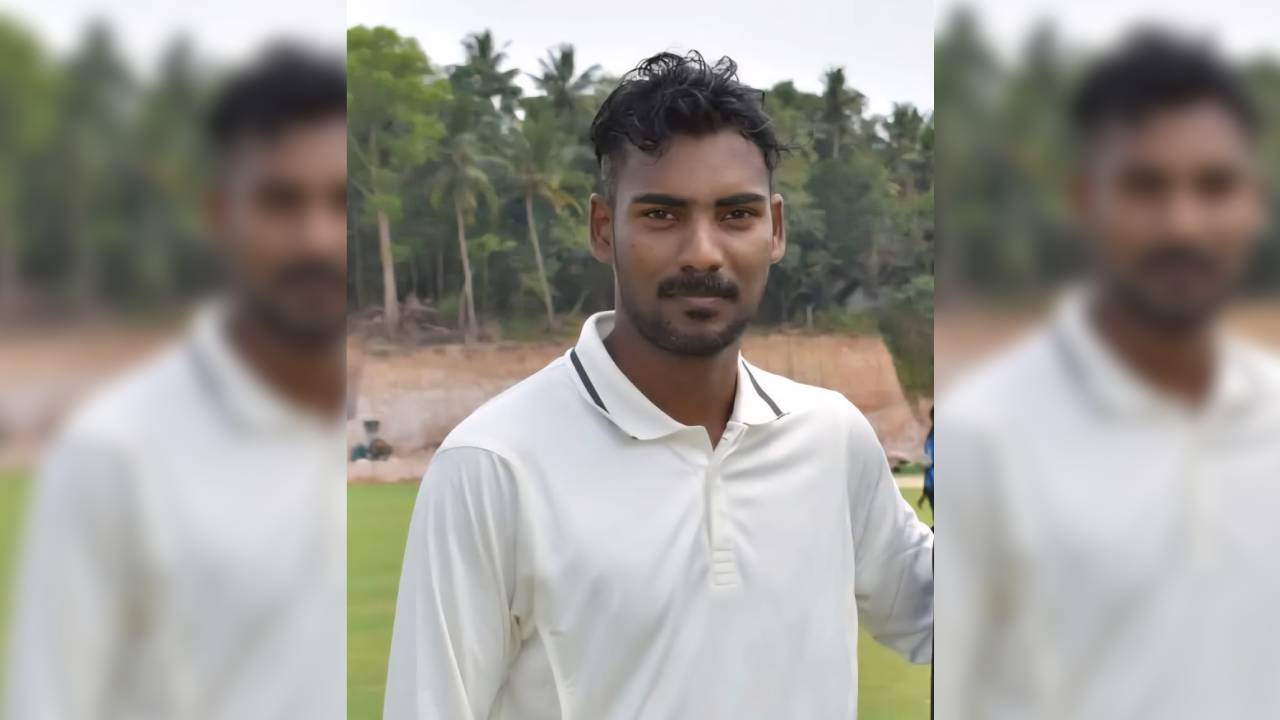
The trial exposed how M Manu systematically weaponised his authority to exploit aspiring athletes from 2012 to 2024.

Synopsis: A special court in Thiruvananthapuram has sentenced former Trivandrum District Cricket Association coach M Manu to rigorous imprisonment for systematically abusing a minor trainee inside unmonitored stadium facilities. The landmark verdict vindicates a young survivor’s extraordinary courage while exposing severe institutional negligence by the Kerala Cricket Association, which had repeatedly ignored parental warnings and allegedly shielded a habitual predator.
Former Trivandrum District Cricket Association (TDCA) coach M Manu has been sentenced to 16 years of rigorous imprisonment in a high-profile Protection of Children from Sexual Offences (POCSO) case.
Delivering the judgment, however, Fast-Track Special Court Judge Anju Meera Birla ruled that the 40-year-old native of Srivaraham will have to serve a total of five years concurrently, with provisions for mandatory financial compensation to the victim.
He has also been slapped with a penalty of ₹24,000 following his conviction
The verdict marks the completion of the first of six cases arising from a sweeping 2024 police investigation that ultimately uncovered a pattern of child exploitation, grooming, and institutional negligence at the KCA headquarters. Four cases’ trials were also completed.
Also Read: ‘Coach charged with POCSO may be part of larger criminal network’
The trial exposed how Manu systematically weaponised his authority as a trusted junior-level coach to exploit aspiring athletes with TDCA from 2012 to 2024.
The specific case that led to his conviction dates back to 2017-2021
The survivor, then a seventh-grade student, joined cricket coaching center run by KCA in Thiruvananthapuram with dreams of representing her state.
According to court depositions, Manu targeted the child within her first few days of training, leading her to the facility’s gymnasium on the pretext of specialised fitness work, where he abused her.
The prosecution detailed how Manu consciously chose the gymnasium run by the Kerala Cricket Association (KCA) and nearby rest rooms because he knew they were the only areas inside the KCA headquarters outside CCTV surveillance.
The court heard how Manu’s abuse extended into psychological coercion and blackmail.
He repeatedly demanded nude photographs of the child, falsely claiming that the Board of Control for Cricket in India (BCCI) mandated these images as part of their official fitness and selection evaluation metrics.
When the girl bravely refused to give in to his demands, Manu retaliated by intentionally withholding proper coaching, stifling her athletic development.
Terrified that exposing the abuse would permanently destroy her cricket career, the young girl quietly left the academy in 2021 to seek training elsewhere.
Her experience was far from isolated.
Investigations revealed that Manu was a habitual offender who used the exact same grooming techniques on at least five other minor trainees. These children, similarly crushed by the exploitation and desperate to escape their coach, left the facility without telling their families out of sheer fear of Manu’s influence.
Special Public Prosecutor Advocate RS Vijay Mohan noted that the accused used deeply hurtful words and psychological intimidation specifically designed to silence her and other survivors, ensuring they remained too terrified to reveal the harassment they suffered at his hands.
Through the survivor’s testimony, the court was presented with the raw, painful plight of a young sportswoman trying to carve out a space for herself in the competitive world of athletics, only to find herself forced to fight off the very person appointed to guide her.
It highlighted a dark reality where teachers transform into predators, directly exploiting the vulnerability and ambition of young athletes.
The prosecution emphasised that this was no solitary incident, but rather the familiar face of a predator taking advantage of young cricketers who, driven solely by their passion for the game, feel destined to remain mute spectators of their own abuse out of a desperate fear of losing the one opportunity they want most in life.
The prosecution presented 14 witnesses and 25 documentary pieces of evidence.
Also Read: Cricket coach arrested for sexual assault
The wall of silence finally broke in April 2024 during a “Pink Cricket” tournament held in Thiruvananthapuram.
One of Manu’s former victims, who had relocated to another state to continue her cricket training, returned to the capital for the competition.
She was shocked to discover Manu actively working on the field, continuing to coach young girls despite his predatory history.
Her public confrontation and subsequent formal complaint to the Cantonment Police on 19 April 2024, acted as a catalyst.
Seeing her step forward gave five other former trainees the courage to approach law enforcement, resulting in six separate POCSO cases being registered against the coach.
The Cantonment police arrested Manu and subsequently filed comprehensive chargesheets in those cases, of which the current verdict marks the first full trial completion.
As the scandal widened, the KCA faced intense public fury from parents and community members.
The association’s administration, led by President Jayesh George and Secretary Vinod S Kumar, held a press conference then denying allegations that they were shielding the perpetrator, promising full cooperation with the Kerala Police.
However, investigative timelines quickly contradicted the KCA’s public stance.
The association initially claimed it was completely unaware of any misconduct until police officers physically arrived at their premises during the Pink Tournament.
Documents soon emerged proving that the father of a trainee had submitted a detailed, written complaint about Manu’s inappropriate behavior —weeks before the tournament incident occurred.
The administration had ignored the father’s warning, failing to launch even a basic preliminary inquiry while allowing Manu to remain in direct contact with children.
The investigation into Manu’s decade-long tenure unraveled an even deeper layer of systemic negligence.
Parents discovered that Manu had been arrested and charge-sheeted in a separate POCSO molestation case just a year and a half prior to his 2024 arrest.
In that instance, he secured an acquittal only after the survivor reportedly retracted her statement under immense pressure.
Instead of severing ties with a man accused of exploiting minors, the Thiruvananthapuram Cricket Association allowed him to quietly step right back into his coaching duties.
Furious parents then pointed out that Manu’s connection to a local cricket club owned by a high-ranking KCA official likely provided him with an unearned layer of institutional protection.
This structural shield allowed his predatory behaviour to extend well beyond the borders of Kerala.
The police investigation revealed that Manu’s abuse was not confined to local nets and gyms.
He allegedly used his role as an official trip coordinator to take young athletes across state lines.
In one specific case from 2020, Manu took a minor trainee to Thenkasi in Tamil Nadu under the guise of an interstate tournament, where he allegedly isolated and sexually abused her inside a hotel room.
Because the jurisdictional boundary of that specific offense fell outside Kerala, the Thiruvananthapuram police formally transferred that file to the Courtallam police in Tamil Nadu for independent prosecution.
Beyond the technicalities of the law, the court’s judgment delivered a profound validation of the survivor’s resilience, directly challenging the societal expectation that victims of abuse must remain permanently broken.
Special Public Prosecutor Advocate RS Vijay Mohan highlighted a poignant section of the verdict where the court rejected any defense arguments attempting to diminish the girl’s account based on the delay or her subsequent actions.
The judgment noted that accepting such arguments would imply that “once a person has been victimized, they are supposed to remain as such victims and not break the shackles and move forward in their lives.”
Instead, the court observed that history shows humanity consistently emerges victorious whenever circumstances try to suppress it.
This spirit, the court stated, was vividly embodied by the survivor.
By stepping into the courtroom, she made a deliberate attempt to hold her abuser accountable, successfully breaking the shackles of victimisation to become a stronger individual who survived the storm.
Advocate Mohan noted that this inner strength was unmistakably clear during the deposition of the survivor.
The court explicitly commended her, recognising that naming the accused as the perpetrator of the crime in the face of institutional pressure required an extraordinary amount of courage.
(Edited by Majnu Babu).



