

Published Aug 28, 2026 | 7:00 AM ⚊ Updated Aug 28, 2026 | 7:00 AM

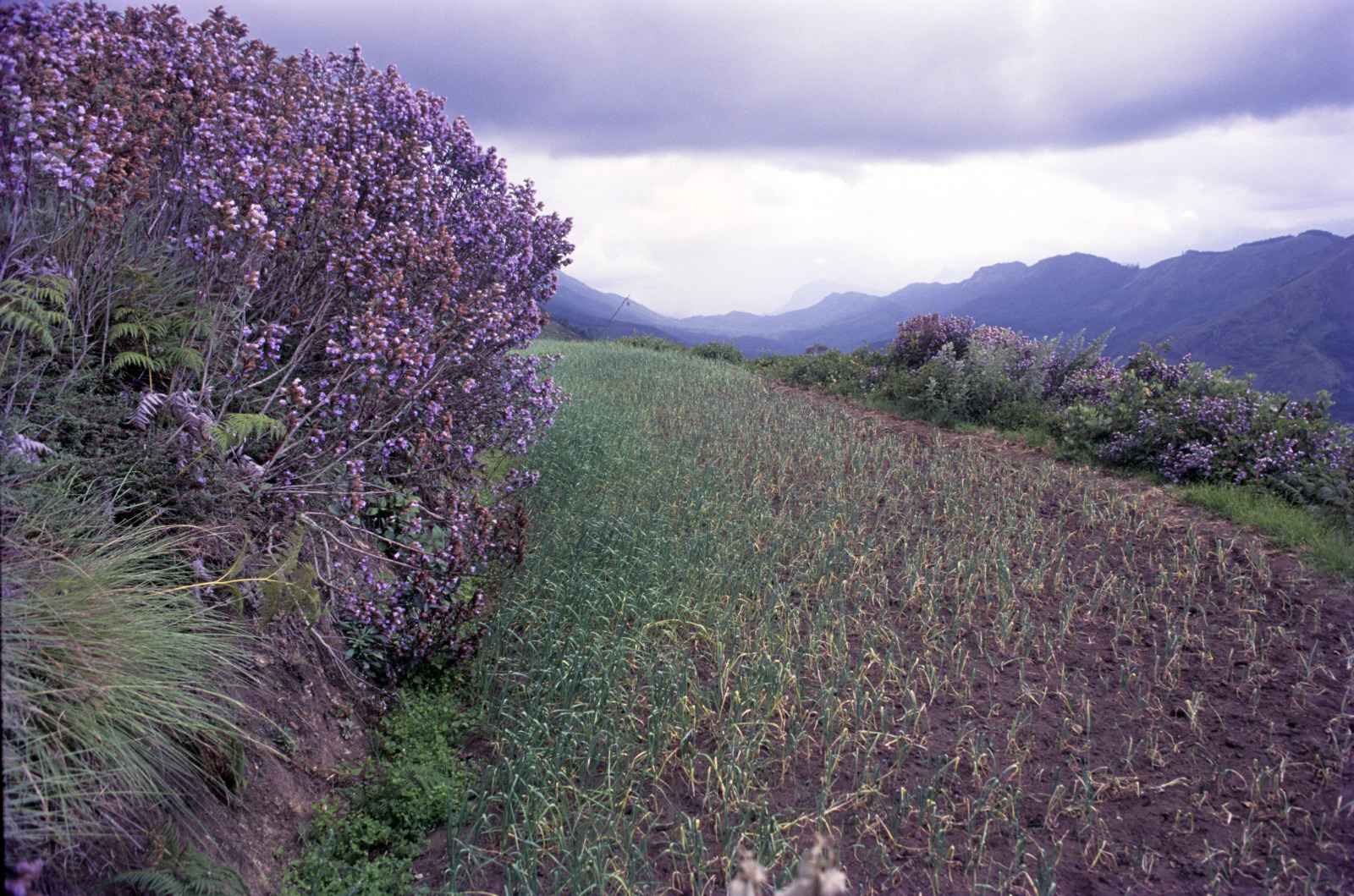
The Nilgiris, or the Blue Mountains, are traditionally associated with the colour of these flowers. (File photo)

Synopsis: As Neelakurinji paints the Chokramudi hills violet in its 12-year flowering cycle, its spectacular return revives a centuries-old ecological and cultural story rooted in the Western Ghats. But behind the seasonal spectacle lies a growing conservation concern, with habitat loss, invasive species, tourism pressure and other threats putting the fragile montane grasslands—and the flower’s survival—at risk.
The hills of Chokramudi in Munnar are beginning to turn violet as Neelakurinji flowers appear across the slopes.
The flowering, seen in the Devikulam Forest Range of Idukki since 24 August, is expected to spread more extensively across the hills by September, bringing back a spectacle associated with the high-altitude grasslands of the Western Ghats.
Neelakurinji, also known as Kurinji or Kurunji and botanically identified as Strobilanthes kunthiana, belongs to the Acanthaceae family. Its purplish-blue flowers appear in large clusters, covering mountain slopes in parts of Kerala, Tamil Nadu and Karnataka.
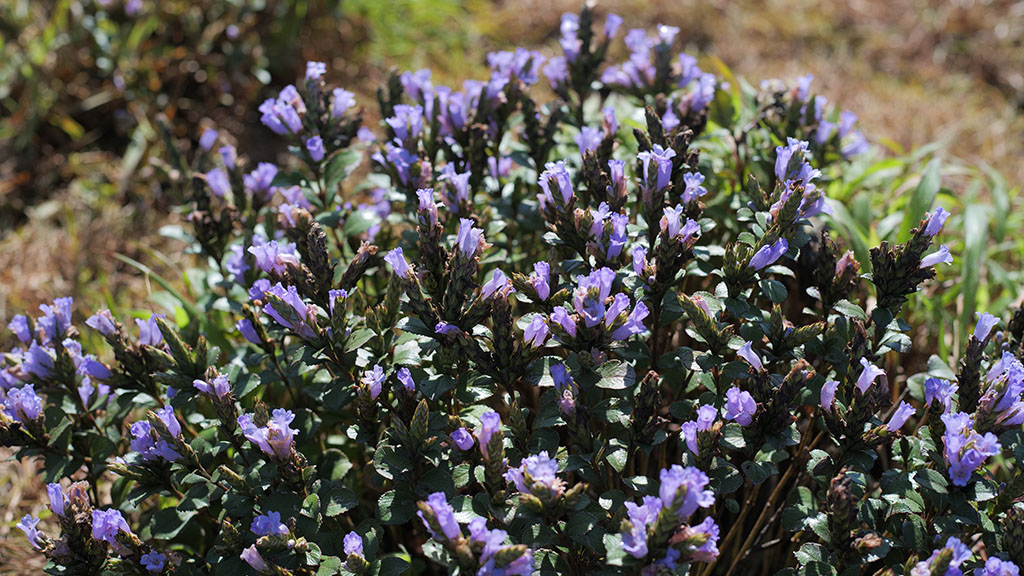
Neelakurinji
courtesy – Kerala Tourism (file pic)
While species of Strobilanthes have flowering cycles ranging from one to 16 years, Strobilanthes kunthiana is known for its 12-year cycle.
The Nilgiris, or the Blue Mountains, are traditionally associated with the colour of these flowers when the plants bloom across their slopes.
The return of the flowers this year also brings renewed attention to their conservation status.
In 2024, Strobilanthes kunthiana was assessed for the first time for the IUCN Red List of Threatened Species and included as a threatened species, drawing attention to the status of the montane grasslands that support the plant.
But Neelakurinji has a story that goes beyond its once-in-12-years flowering. Its place in the history, ecology and changing landscape of the Western Ghats brings with it several lesser-known stories—and conservation concerns that predate the latest violet carpet now appearing on the hills.
Also Read: Police enter mosque, lathicharge people during alleged clash in Vadakara; sparks criticism
The first sighting of this year’s Neelakurinji bloom was reported from Korandikkad near Mattupetty, in the Kanan Devan Hills Plantations (KDHP) area, where around 40% flowering has been recorded.
The flowering season was formally inaugurated on 24 August by Munnar Divisional Forest Officer Abhay Yadav at the Chokramudi Bison Valley Trail trekking centre. From Chokramudi, the flowering is expected to move towards Meesapulimala, with the blooms appearing progressively at higher elevations.
According to forest officials, the Munnar hills have two distinct Kurinji flowering cycles.
One occurs in Eravikulam National Park, while the other covers Chokramudi, Meesapulimala and adjoining areas.
The last flowering at Chokramudi was recorded in 2014, making 2026 the next cycle.
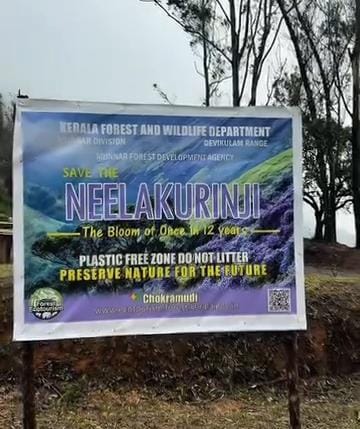
Kerala Forests welcoming the visitors to Chokramudi to witness the bloom
In Eravikulam National Park, the previous bloom was in 2018, and the next is expected in 2030.
Unlike the flowering in Eravikulam National Park, the 2026 cycle around Chokramudi and Meesapulimala is taking place outside protected wildlife areas. The flowering begins at lower elevations and progresses towards the higher reaches, eventually reaching Meesapulimala.
The flowering of Neelakurinji has been documented for nearly two centuries.
A 1936 paper by M. E. Robinson, titled Flowering of Strobilanthes in 1934 and published in the Journal of the Bombay Natural History Society, records earlier observations by European settlers in the Nilgiris. According to the paper, the flowering of Strobilanthes kunthianus was recorded across the Nilgiri Hills in 1826. Subsequent full blooms were documented in 1838, 1850, 1862, 1874, 1886, 1898, 1910, 1922 and 1934.
The scientific name of Neelakurinji underwent several changes before Strobilanthes kunthiana was finalised following the work of a team of German scientists. The species name kunthiana is associated with the German scientist Kunth and is also linked to the name of the Kunthi River.
The genus Strobilanthes derives its name from the Greek-derived terms strobilos, meaning cone, and anthos, meaning flower. It is the second-largest genus in the Acanthaceae family.
The genus was identified and described in India during the 19th century by Christian Gottfried Daniel Nees von Esenbeck. There are about 450 species of Strobilanthes worldwide, with more than 160 found in India. Around 72 species are endemic to the Western Ghats.
The flowering recorded in Korandikkad marks the beginning of the latest cycle in the Munnar hills, with Chokramudi now in bloom and Meesapulimala expected to follow.
Also Read: Explained: Pineapples, politics and a 40 year wait; Why Muvattupuzha wants a district
For several tribal communities, the flowering of Strobilanthes species has long been linked to age, seasons, honey and traditional beliefs.
References to Strobilanthes flowers can be traced to Tamil Sangam literature, where they find mention as early as the first century.
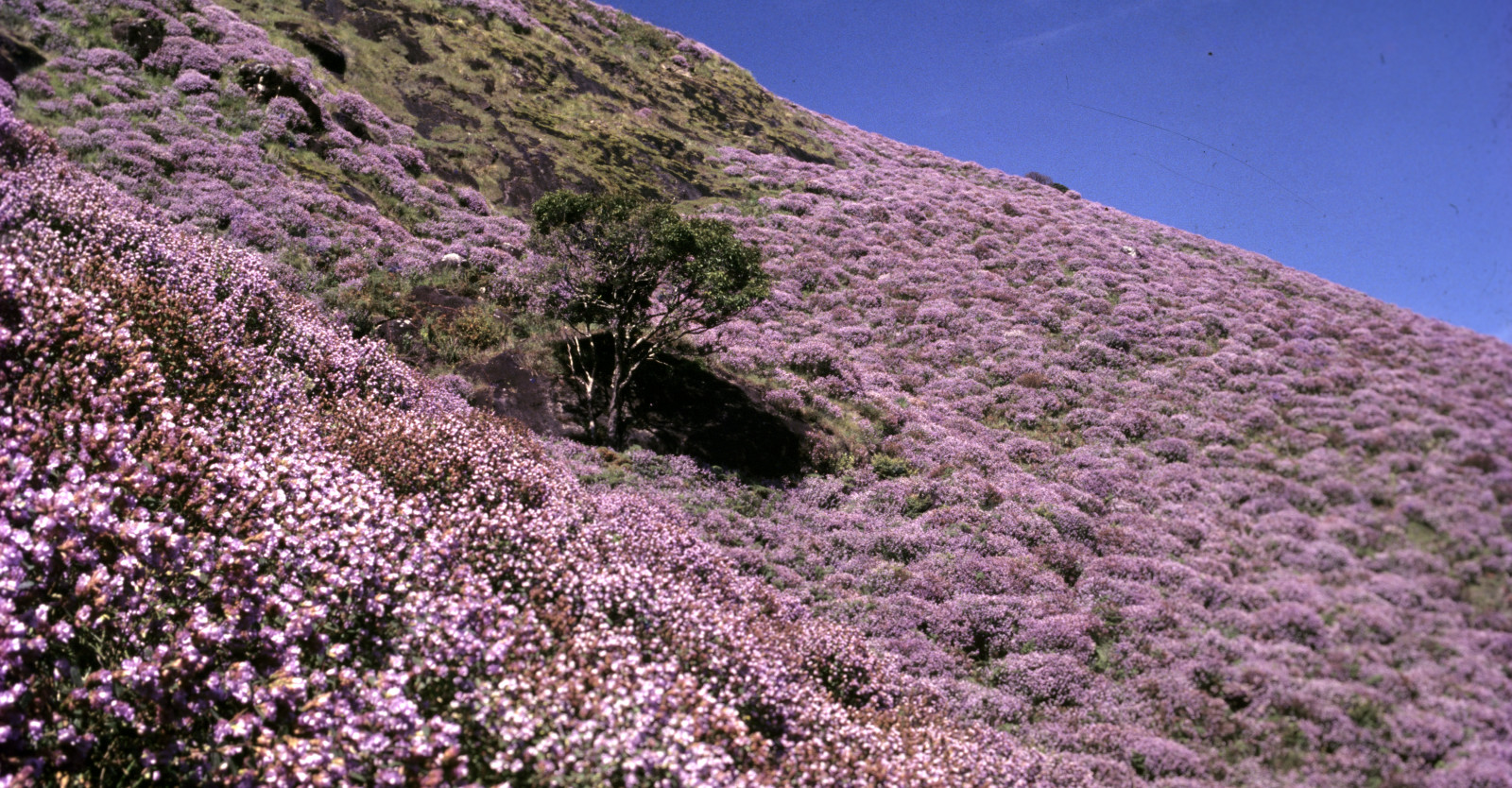
Neelakurinji bloom
file pic : Kerala Tourism
The plant, known for its 12-year flowering cycle, also occupies a place in the myths and beliefs of communities living in the Western Ghats. Its unusual life cycle, known as plietesial flowering, sees the plant remain in a vegetative stage for more than a decade before flowering just once. After producing seeds, the plant completes its life cycle and dies.
While some communities regard Neelakurinji as a flower of God, others associate its blooming with an abundance of honey in the region.
Among the Muthuvans and Paliyan communities of Tamil Nadu, the flowering has traditionally served as a marker for calculating age.
In their traditional reckoning of time, the Neelakurinji bloom functions as a biological calendar.
Beyond its ornamental value, Neelakurinji has also attracted scientific attention for its possible medicinal uses. Plants of the genus contain bioactive compounds that have been studied for anticancer, anti-inflammatory, anti-osteoarthritic and analgesic properties, as well as antioxidant activity.
The flowering also gives rise to Kurinjithen, a rare honey collected when Neelakurinji blooms in large numbers. Local communities have traditionally associated the honey with medicinal properties, including the belief that it can help clear heart blockages.
For communities that have lived alongside the Western Ghats for generations, therefore, the Neelakurinji bloom is closely tied to traditional ways of marking time and understanding the natural world.
The endangered shrub faces several challenges to its regeneration and survival, according to an order issued by the National Green Tribunal (NGT) in April in connection with a suo motu case related to Neelakurinji.
The order noted that regeneration between flowering cycles depends on pollinators, viable seeds and suitable soil conditions, as well as protection from grazing, trampling, invasive species and other disturbances. Unregulated collection and changes to the habitat during both flowering and non-flowering periods can also affect the recruitment of new plants.
Findings by the Jawaharlal Nehru Tropical Botanic Garden and Research Institute (JNTBGRI), Kerala, formed part of the order.
Historical records between 1832 and 2018 show the species occurring in 34 locations across 14 ecoregions covering five major landscapes of the Western and Eastern Ghats, including Brahmagiri, Nilgiri, Palani-Kodaikanal, Anamalai, Munnar-Idukki and Yercaud-Shevaroys.
The JNTBGRI said the loss of montane grasslands has been linked to the conversion of native grasslands into tea plantations and exotic tree plantations, particularly during the colonial period, after the grasslands were classified as “wastelands”. This led to the loss and fragmentation of parts of the shola-grassland ecosystem.
Afforestation programmes from the 1960s to the 1990s further altered these habitats through the extensive planting of Eucalyptus and Acacia mearnsii.
Road construction and tourism-related development have added to habitat fragmentation. The order also pointed to changes in fire practices, noting that the frequency and intensity of fires need to be scientifically regulated.
Invasive plants such as Acacia mearnsii, Pteridium aquilinum and Ageratina adenophora have spread across grasslands. Tourism-related pressure becomes particularly pronounced during mass flowering events, when heavy visitor inflow can result in trampling and waste accumulation, while associated construction and other infrastructure can further disturb the habitat and affect natural regeneration.
The JNTBGRI further called for habitat restoration, invasive-species control, regulated fire management, and oversight of tourism and development activities.
Recently, the Ministry of Environment, Forest and Climate Change approached the NGT seeking directions to Kerala, Tamil Nadu and Karnataka to prepare and submit annual plans of operation that include conservation action plans for Neelakurinji.
As part of the measures sought for the conservation of the species, the Ministry also requested that the three states incorporate specific conservation measures for Neelakurinji into their annual plans of operation and submit them to the appropriate authorities.



