

Published Aug 21, 2026 | 3:47 PM ⚊ Updated Aug 21, 2026 | 3:47 PM


Police violence after the Muthanga tribal agitation in Wayanad, Kerala (Supplied)

Synopsis: The Kerala High Court has put on hold the five-year jail terms of four convicts, including activist M Geethanandan, in the 2003 Muthanga land struggle case. The order follows questions raised by the court over the Sessions Court’s reasoning in convicting them for the violence, particularly its reliance on a prima facie criminal conspiracy theory.
The High Court of Kerala on Friday, 21 August, suspended the sentences of tribal rights activist M Geethanandan and three others convicted in a case arising from the violent confrontation during the 2003 Muthanga land struggle in Wayanad.
The court also granted them bail and stayed the five-year prison terms awarded by the Principal Sessions Court, Kalpetta.
Justice A Badharudeen passed the order while considering appeals filed by Geethanandan, Binu, Ramesan and Anilkumar, challenging their conviction and sentence. The four were among 57 people prosecuted in connection with the violence that erupted during a police operation to evict Adivasi protesters occupying forest land at the Muthanga Wildlife Sanctuary in 2003.
The High Court directed each appellant to deposit ₹42,000 towards the fine and furnish two sureties within a week as a condition for bail.
Related: Green ink that made teacher a Maoist
The order comes days after the High Court questioned how the trial court arrived at its findings against the four accused.
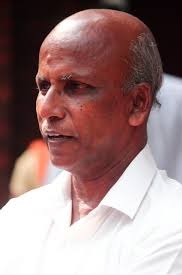
M. Geethanandan
During an earlier hearing on 6 August, Justice Badharudeen orally observed that the Sessions Court’s judgment required thorough scrutiny, particularly its treatment of the alleged criminal conspiracy.
The appellants argued that their conviction was legally unsustainable because the trial court relied on what it described as a “prima facie” finding of conspiracy under Section 120B of the Indian Penal Code, rather than arriving at a conclusive finding based on the evidence.
The High Court had directed the Sessions Court to forward a copy of the charges framed against the accused for its examination. The appeals were subsequently taken up for further hearing.
The four were convicted by the Principal Sessions Court, Kalpetta, in its 31 July judgment for a range of offences connected with the violence. These included unlawful assembly, rioting, wrongful restraint and confinement, voluntarily causing hurt and grievous hurt to public servants, criminal intimidation, kidnapping, causing hurt with dangerous weapons and attempt to murder.
The prosecution case included allegations that the accused attempted to kill Senior Civil Police Officer Abdul Salam and abducted Forest Range Officer PK Sasidharan. The Sessions Court sentenced them to five years of rigorous imprisonment and imposed a fine of ₹36,000 each.
However, the court acquitted the four of the charges connected with the death of police constable KV Vinod, who was killed during the violence.
Related: Why justice eludes Muthanga victims
The Muthanga confrontation occurred in February 2003 after Adivasi protesters, organised under the Adivasi Gothra Maha Sabha, occupied forest land demanding land rights and rehabilitation. The police launched an eviction operation at the sanctuary, which soon turned violent.
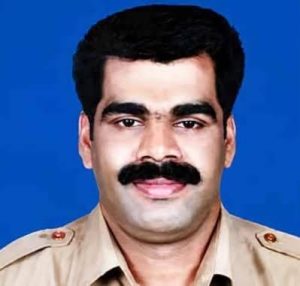
K V Vinod of Kerala Armed Police IV Battalion (Kannur)
Police opened fire during the confrontation. Two protesters were killed immediately, while the number of protesters who eventually died in connection with the violence rose to five. Constable Vinod was also killed.
The appellants maintained that the prosecution case against them could not stand based on the trial court’s finding on conspiracy. The High Court’s decision to suspend their sentences now allows them to remain out of prison while their appeals challenging the convictions are considered.
(Edited by Majnu Babu).



